For years, content planning followed a familiar process. Find a keyword, study the search results, build an article around the demand, and measure how much traffic comes back to the site.
That process still has value.
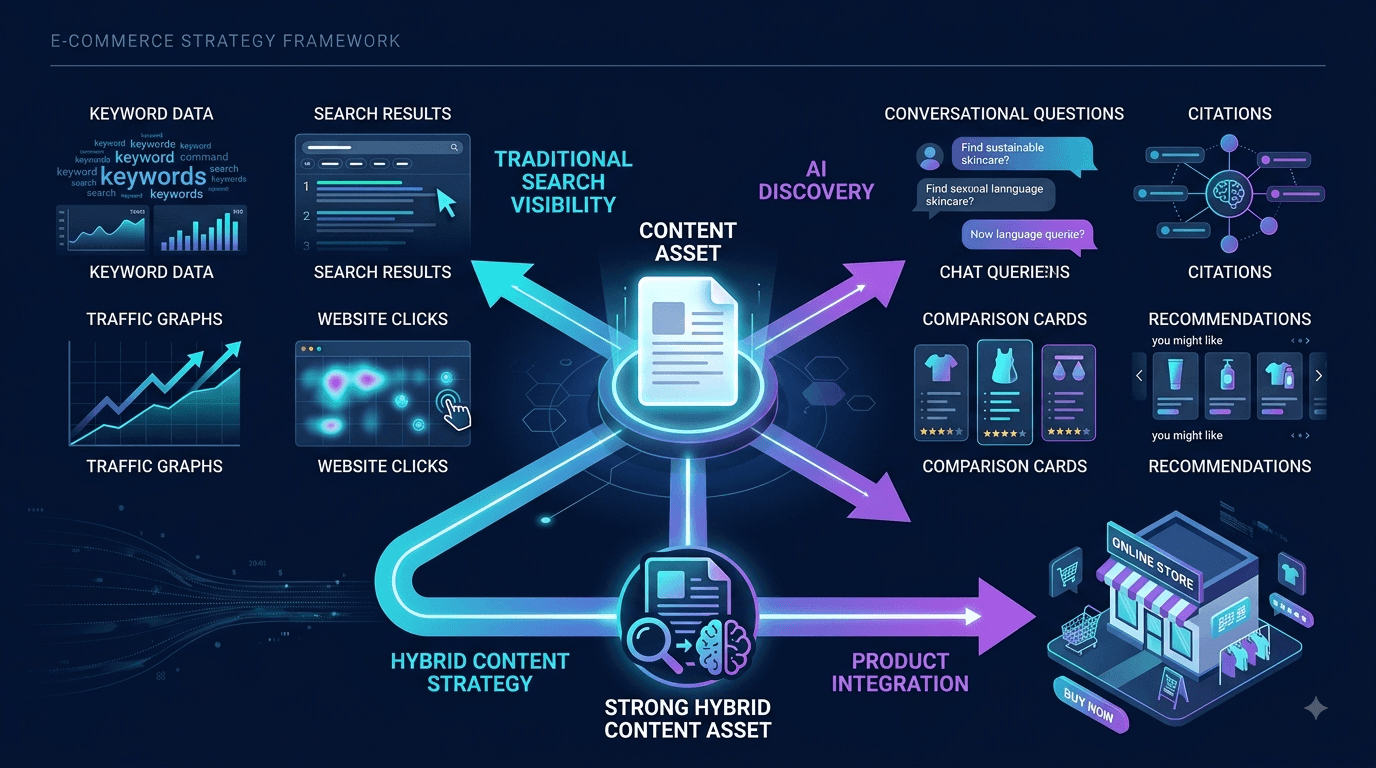
Content now has more places to appear. A useful article can bring in organic traffic, support product research, give AI systems clearer information about a brand, and help shape recommendations.
So content teams need to think beyond rankings when choosing the next topic.
The question becomes: What job does this piece need to do?
Some topics are built for traditional search demand. Others depend on detailed buying situations and work well in conversational search. Plenty can serve both.
This wider change in product discovery is covered in The AI Retail Search Shift in 2026, along with XENA's 2026 Ready E-commerce Playbook.

Start With the Type of Demand
Some topics already have clear search demand.
People use familiar phrases, search volume is easier to identify, and the search results give you a reasonable idea of what readers expect.
These topics tend to fit Google well.
A comparison, care guide, sizing question, tutorial, or category explainer can often be planned around an established query. The content team can then focus on covering the subject clearly and giving readers a useful next step.
Other topics depend on more context.
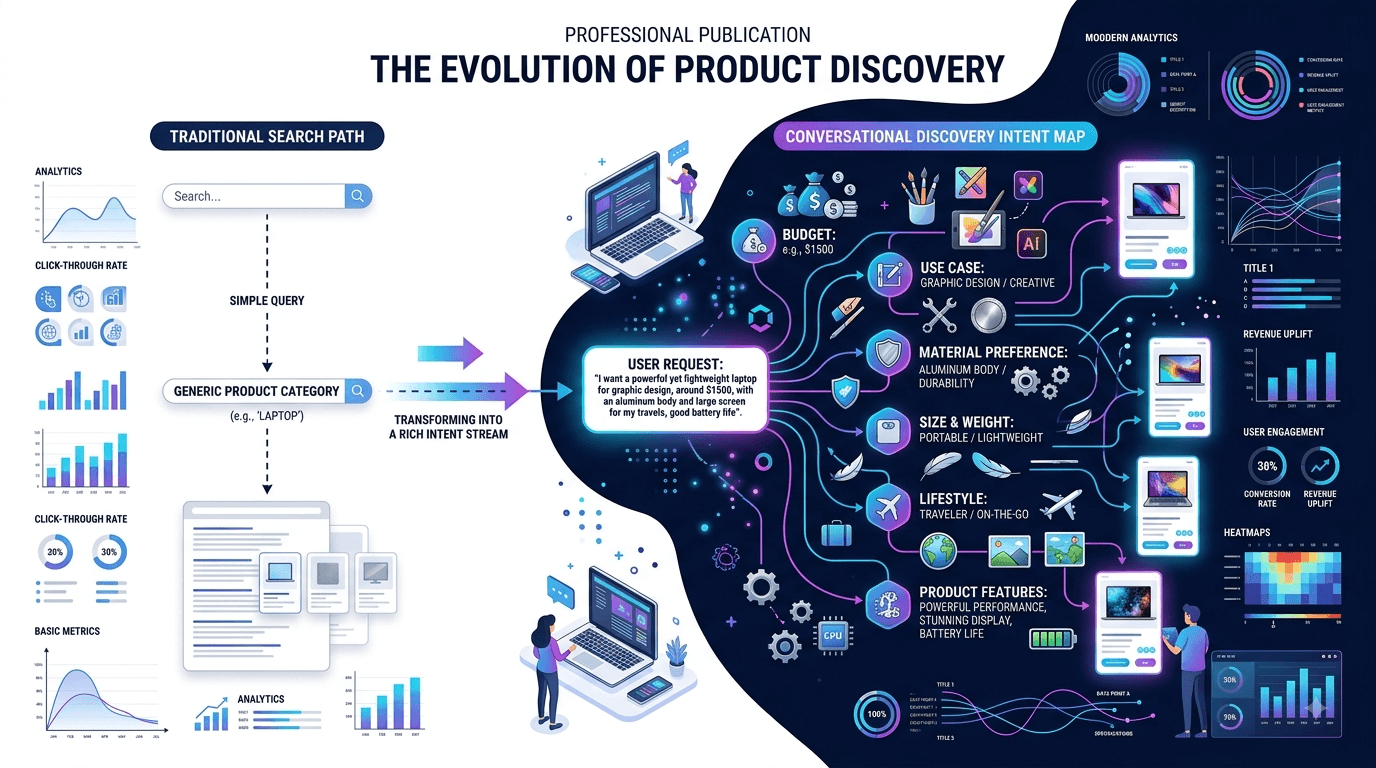
Budget may matter. So might compatibility, use case, size, material, frequency of use, or personal preference. Change one condition and the recommendation may change with it.
Those topics are well suited to conversational discovery because AI search can work with several pieces of intent at once. XENA's guide to optimising collection pages for conversational search shows how the same shift affects category and collection content.
Look at the demand first.
How clear is the topic? How many factors shape the answer? How close is the reader to making a choice?
Those questions help point the content in the right direction.
Choose Google When the Topic Is Well Defined
Google should usually lead when the topic has recognizable search demand and clear intent.
Think about topics such as “French press vs pour over,” “how to clean a coffee grinder,” or “best grinder for espresso.”
Each one is focused enough to support a dedicated article.
You can study the results, see which questions appear repeatedly, and find areas where existing pages leave readers wanting more.
Google also makes sense when the website visit plays an important role in the journey.
A comparison article can lead into product pages. A tutorial can introduce accessories. A category guide can help visitors narrow their options before they shop.
This connection between content and conversion matters. XENA's Product Detail Page Playbook looks at what happens after discovery, when product pages need to turn interest into action.
And if the article supports a marketplace or product listing strategy, How to Build High-Converting Product Listings in 2026 is a useful companion piece on matching content with shopper intent.
The article still needs substance.
A page can target the right keyword and give the reader very little reason to remember the brand.
Choose ChatGPT When the Answer Depends on Context
Some buying decisions depend on several details.
A moisturizer recommendation may change based on skin sensitivity, texture preference, climate, makeup use, or fragrance tolerance.
A cookware recommendation may depend on stove type, weight, cleaning habits, cooking style, and budget.
A travel bag recommendation can change based on trip length, airline rules, laptop size, packing habits, and how often the bag will be used.
These topics need more explanation.
Good content should cover use cases, tradeoffs, product details, common concerns, and the conditions that can change the recommendation.
This is closely tied to Answer Engine Optimization for D2C commerce. AEO focuses on making brand and product information clear enough for answer engines to understand and use when responding to detailed questions.
Product pages play a role too. How to Write Product Pages AI Actually Understands covers how clearer product facts, attributes, use cases, and supporting information can make a catalog easier for AI systems to interpret.
And for the product discovery side specifically, ChatGPT, Meet My Product: How to Get Your Catalog Seen and Recommended goes deeper into product pages, feeds, reviews, images, and supporting content.
Use Query Complexity as a Signal
Query complexity is one of the clearest clues.
“Ceramic vs stainless steel cookware” is a focused topic.
Once the decision includes induction compatibility, durability, weight, cleaning, heat control, and daily use, there are far more variables to address.
That calls for richer content.
You can find these topics inside your own customer data.
Support tickets reveal recurring concerns. Reviews show what buyers notice after using a product. Return reasons expose gaps between expectations and reality. On-site searches show where shoppers get stuck. Sales conversations and social comments often surface questions that don't appear neatly inside keyword tools.
Those sources can also improve product copy. XENA's guide to effective AI-powered product listing descriptions explores how clearer descriptions can connect product details with the questions customers care about.
The language your customers already use is often a strong source of content ideas.
Ask What Job the Content Needs to Do
Every article should have a clear purpose.
Some pieces need to capture existing search demand.
Some need to explain a complicated buying decision.
Some need to support product pages, comparison pages, or category pages.
Others may help strengthen the information AI systems can find about a brand.
Knowing the purpose makes the channel choice easier.
A broad educational guide with healthy search demand may lean toward Google. A detailed guide built around conditions, preferences, and product fit may deserve more focus on AI discovery.
A commercial guide can cover both when it has enough depth.
This fits the wider content and growth model in The Ecommerce Growth Playbook for 2026, where content, data, merchandising, and customer behavior work together across the shopping journey.
Original Information Gives the Content More Value
Generic explanations are easy to find.
Specific information is far more useful.
Brands have an advantage when they can publish details based on product testing, customer feedback, internal data, practical experience, or deep knowledge of the category.
A luggage company might publish real packing capacity for different trip lengths.
A cookware brand could compare materials during common cooking tasks.
An apparel seller could use return patterns to explain how certain fits behave across sizes.
That gives the article something concrete to offer.
Detailed product information also supports stronger listings and product pages. The same principle appears throughout XENA's guide to building high-converting product listings, where attributes, images, intent, and customer feedback all shape performance.
Good source material gives a piece more chances to be useful across different discovery channels.
Many Topics Should Be Built for Both
Separate articles aren't always necessary.
Some topics naturally work across Google and ChatGPT.
A guide called “How to Choose a Sleeping Bag for Cold Weather Camping” can cover a recognizable search topic while answering more detailed questions about temperature ratings, insulation, sleeping habits, weather conditions, weight, and packing size.
Comparison content works the same way.
An article about air fryers and convection ovens may attract broad search interest. Detailed sections covering capacity, kitchen size, cooking habits, speed, cleaning, and energy use can support more specific buying questions too.
This approach can extend beyond blog posts. Strong category pages can answer broad search intent while helping shoppers narrow choices based on real use cases, which XENA covers in How to Optimise Collection Pages for Conversational Search.
One strong resource can support several paths if the information is well organized.
Measure Each Channel Based on Its Role
Google gives teams a familiar set of performance signals.
Rankings, impressions, clicks, organic sessions, conversions, and revenue can all help show whether the content is working.
AI discovery needs a broader view.
A product can appear inside an AI recommendation without generating an immediate site visit. That makes brand mentions, product descriptions, recommendation frequency, citations, and competitive visibility useful signals alongside referral traffic.
XENA's SearchPanel tracks how AI platforms describe and recommend products at the SKU and query level, including AI visibility scores, citation rates, share of voice, and competitor comparisons.
Teams can also watch how competitors are approaching the same space. How to Know If Your Competitors Are Investing in AEO Before You Are covers signals that can reveal whether other brands are actively building for answer engine visibility.
Measurement gets more useful when it matches the role the content is supposed to play.
A Simple Way to Pick the Target
When the topic has clear search demand, a familiar query pattern, and a strong reason to bring readers onto your site, Google should usually lead.
When the answer depends on several conditions or needs a detailed recommendation, give ChatGPT and conversational discovery more weight.
When the topic has broad search demand and deeper buying questions, build a piece that can support both.
Then look at what you can actually contribute.
Can you add original data?
Can you explain a decision clearly?
Can you answer questions customers keep raising before they buy?
Can your product pages support the claims made in the article?
Can your catalog give search and AI platforms accurate, detailed information?
These questions help turn content planning into something more useful than chasing the latest traffic source.
AI search is also moving deeper into the buying process. XENA's Your Next Customer Has an AI Buyer explores what that could mean as AI assistants take a larger role in product research and purchase decisions.
And as brands connect search, analytics, content, and automation more closely, Agentic AI in E-commerce offers a useful view of how faster feedback loops can shape ongoing decisions.
Some discovery will begin with a keyword. Some will happen inside an AI conversation. A large number of buying journeys will move through several channels before the sale.
Your content should be useful wherever that journey picks it up.
For more guidance on AI search, e-commerce content, product listings, PPC, and product discovery, explore the XENA Intelligence blog.