The Silent Performance Killer in Modern PPC
Many ecommerce brands invest heavily in targeting, bidding strategies, and campaign expansion, yet performance still declines over time. Click-through rates slowly drop. Conversion efficiency weakens. Acquisition costs climb. Often, the root cause is not targeting or budget allocation. It is creative fatigue.
Creative fatigue happens when audiences see the same messaging repeatedly and stop engaging with it. In today’s high-speed digital environment, consumer attention cycles are shorter than ever. This shift mirrors trends discussed in Why Customer Attention Is the Most Valuable Currency in Ecommerce, where engagement windows continue shrinking across platforms.
When creatives fail to evolve, even well-optimized campaigns lose momentum.
Why Creative Fatigue Happens Faster in 2026
Advertising ecosystems now deliver content at unprecedented scale. Social platforms, marketplaces, and search channels constantly refresh feeds with new offers, trends, and product storytelling formats. Shoppers are exposed to hundreds of ads daily, making familiarity feel repetitive instead of reassuring.
Algorithm-driven platforms also accelerate creative fatigue. Once engagement declines, algorithms reduce ad delivery efficiency, causing costs to increase while reach quality declines. This performance pattern closely relates to insights explored in How Platform Algorithms Influence Ecommerce Advertising Performance.
Creative relevance is no longer a one-time achievement. It is a continuous optimization challenge.
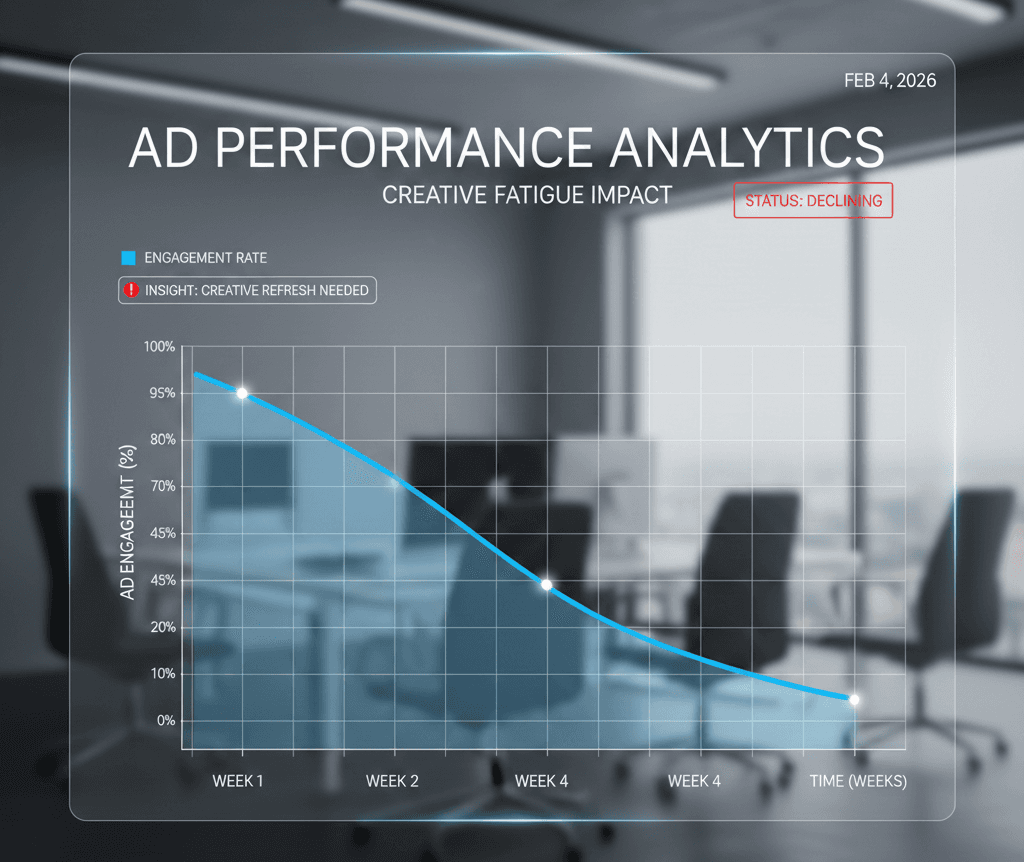
Ad performance timeline showing strong early engagement followed by gradual decline due to creative fatigue
The Difference Between Creative Refresh and Creative Strategy
Many brands respond to performance drops by simply replacing visuals or rewriting headlines. While refreshing assets helps temporarily, it rarely solves long-term fatigue.
Effective creative strategy begins with understanding audience psychology, intent stage, and behavioral signals. Each creative variation should serve a strategic purpose. Awareness creatives educate. Consideration creatives differentiate. Conversion creatives remove friction and reinforce trust.
This layered approach aligns closely with ideas discussed in How Full Funnel Marketing Improves Advertising Efficiency, where consistent storytelling across stages strengthens overall campaign performance.
Data Should Guide Creative Decisions
Creative success is often treated as subjective, but modern PPC performance proves otherwise. Engagement signals, scroll behavior, click-through trends, and conversion data reveal which storytelling elements resonate with specific audiences.
AI-driven platforms now analyze creative performance at granular levels. They identify visual themes, messaging tones, and product angles that drive engagement. Instead of guessing which creative will work, brands can predict performance based on historical behavior patterns.
XENA Intelligence uses predictive analytics to identify early signals of creative fatigue and recommend optimization strategies before performance declines. These predictive insights are strongly connected to principles explored in How AI Is Transforming Marketing Decision Making.
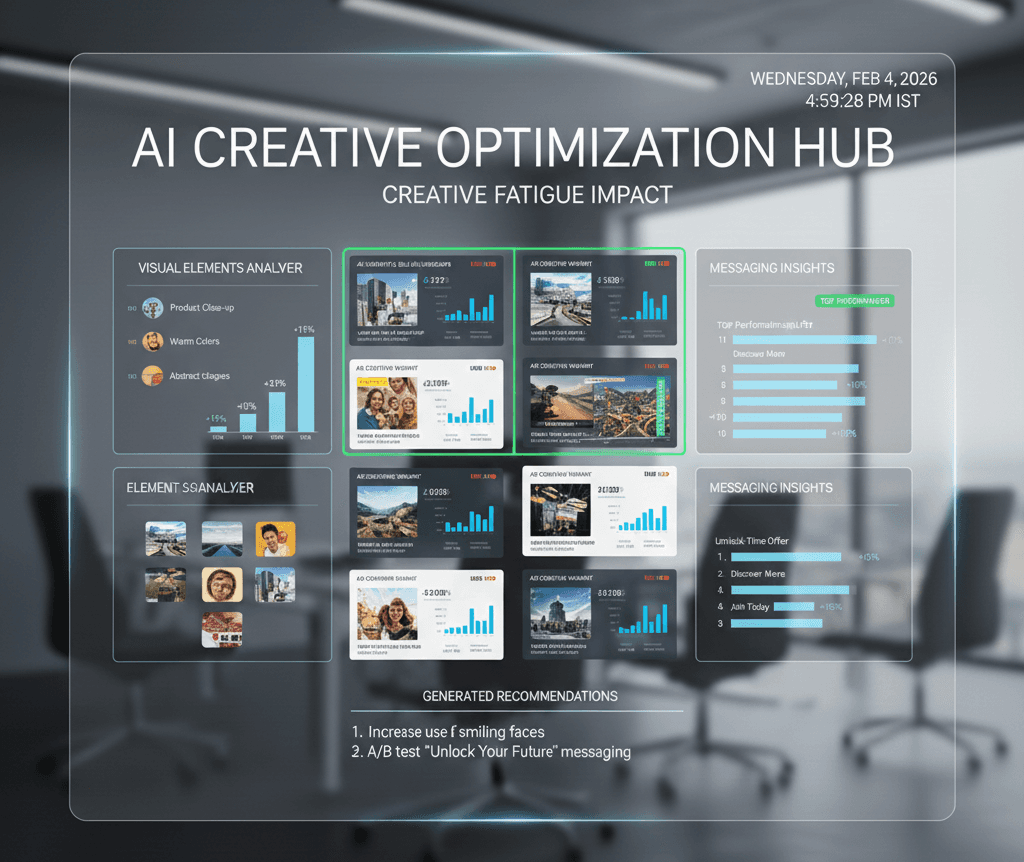
AI system analyzing multiple ad creatives and highlighting top-performing elements
Platform Context Matters More Than Ever
One of the most common creative mistakes is repurposing identical ads across every platform. Each advertising channel operates with unique engagement behavior, content expectations, and attention patterns.
Search ads rely heavily on clarity and intent matching. Social ads depend on emotional storytelling and visual appeal. Marketplace ads focus strongly on product credibility and purchase confidence. When creatives ignore platform context, engagement suffers even if targeting remains accurate.
This platform-specific optimization reflects themes discussed in Why Omnichannel Advertising Requires Platform Native Content, where adapting storytelling style improves cross-channel performance.
Creative Testing Must Evolve Beyond A/B Experiments
Traditional A/B testing compares two creative versions and selects a winner. While effective historically, modern PPC requires continuous multivariate testing because audience preferences shift rapidly.
Brands now test combinations of visuals, messaging frameworks, product positioning, and emotional triggers simultaneously. AI automation accelerates this process by identifying winning combinations faster than manual experimentation.
This evolution in testing methodology connects closely with the insights shared in How Continuous Testing Drives Sustainable Marketing Growth.
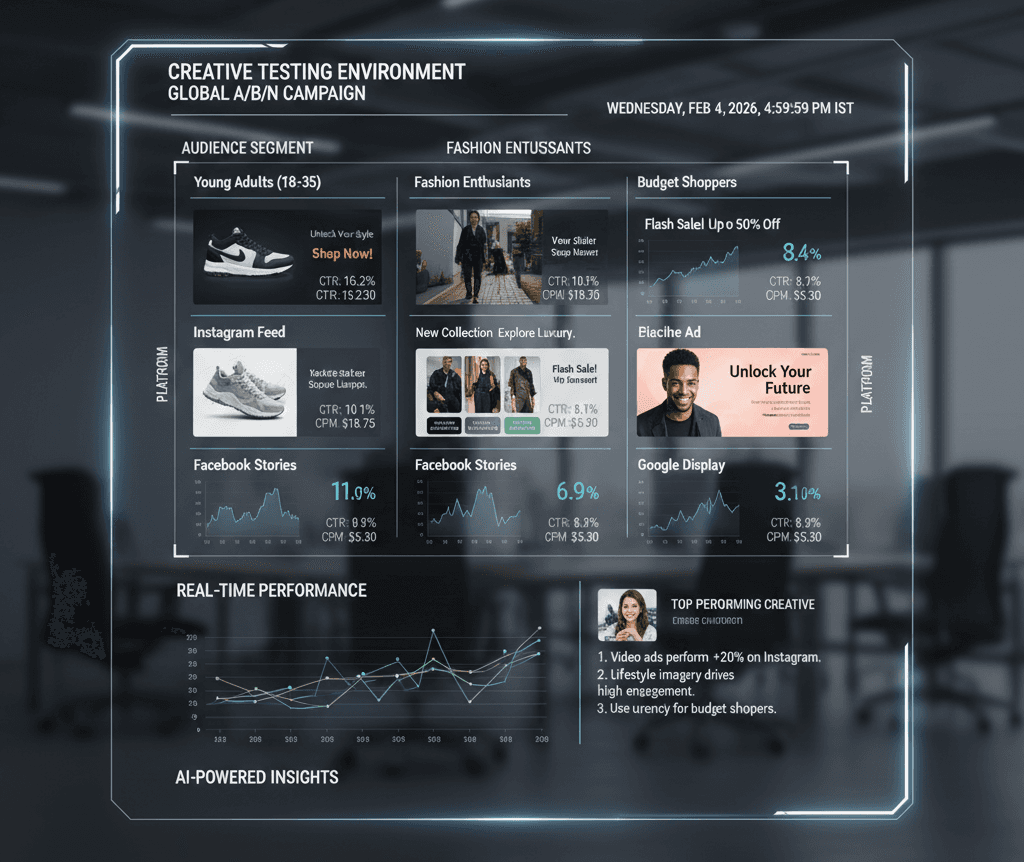
Multiple ad variations being tested simultaneously across different audience segments
The Role of Storytelling in Long-Term PPC Performance
High-performing brands understand that advertising is not just about promotion. It is about storytelling. Campaigns that consistently communicate brand values, product differentiation, and customer transformation create stronger emotional engagement.
Story-driven creatives also age better because they evolve with the brand narrative instead of focusing purely on promotional messaging. Over time, this builds recognition, trust, and repeat purchase behavior.
Brands that invest in storytelling consistently outperform those that rely on transactional advertising. This strategic approach aligns with lessons shared in How Brand Storytelling Improves Ecommerce Conversion Rates.
Final Thoughts on Winning the Creative Fatigue Battle
Creative fatigue is not a sign that advertising is failing. It is a signal that audiences are ready for the next narrative evolution. Brands that treat creatives as dynamic performance assets instead of static marketing materials maintain stronger engagement and ROI.
In 2026, PPC success belongs to advertisers who combine creativity with data, storytelling with predictive insights, and experimentation with automation. As attention spans shrink and competition intensifies, the ability to evolve creative messaging continuously will define marketing leadership.
The Silent Performance Killer in Modern PPC
Many ecommerce brands invest heavily in targeting, bidding strategies, and campaign expansion, yet performance still declines over time. Click-through rates slowly drop. Conversion efficiency weakens. Acquisition costs climb. Often, the root cause is not targeting or budget allocation. It is creative fatigue.
Creative fatigue happens when audiences see the same messaging repeatedly and stop engaging with it. In today’s high-speed digital environment, consumer attention cycles are shorter than ever. This shift mirrors trends discussed in Why Customer Attention Is the Most Valuable Currency in Ecommerce, where engagement windows continue shrinking across platforms.
When creatives fail to evolve, even well-optimized campaigns lose momentum.
Why Creative Fatigue Happens Faster in 2026
Advertising ecosystems now deliver content at unprecedented scale. Social platforms, marketplaces, and search channels constantly refresh feeds with new offers, trends, and product storytelling formats. Shoppers are exposed to hundreds of ads daily, making familiarity feel repetitive instead of reassuring.
Algorithm-driven platforms also accelerate creative fatigue. Once engagement declines, algorithms reduce ad delivery efficiency, causing costs to increase while reach quality declines. This performance pattern closely relates to insights explored in How Platform Algorithms Influence Ecommerce Advertising Performance.
Creative relevance is no longer a one-time achievement. It is a continuous optimization challenge.

Ad performance timeline showing strong early engagement followed by gradual decline due to creative fatigue
The Difference Between Creative Refresh and Creative Strategy
Many brands respond to performance drops by simply replacing visuals or rewriting headlines. While refreshing assets helps temporarily, it rarely solves long-term fatigue.
Effective creative strategy begins with understanding audience psychology, intent stage, and behavioral signals. Each creative variation should serve a strategic purpose. Awareness creatives educate. Consideration creatives differentiate. Conversion creatives remove friction and reinforce trust.
This layered approach aligns closely with ideas discussed in How Full Funnel Marketing Improves Advertising Efficiency, where consistent storytelling across stages strengthens overall campaign performance.
Data Should Guide Creative Decisions
Creative success is often treated as subjective, but modern PPC performance proves otherwise. Engagement signals, scroll behavior, click-through trends, and conversion data reveal which storytelling elements resonate with specific audiences.
AI-driven platforms now analyze creative performance at granular levels. They identify visual themes, messaging tones, and product angles that drive engagement. Instead of guessing which creative will work, brands can predict performance based on historical behavior patterns.
XENA Intelligence uses predictive analytics to identify early signals of creative fatigue and recommend optimization strategies before performance declines. These predictive insights are strongly connected to principles explored in How AI Is Transforming Marketing Decision Making.

AI system analyzing multiple ad creatives and highlighting top-performing elements
Platform Context Matters More Than Ever
One of the most common creative mistakes is repurposing identical ads across every platform. Each advertising channel operates with unique engagement behavior, content expectations, and attention patterns.
Search ads rely heavily on clarity and intent matching. Social ads depend on emotional storytelling and visual appeal. Marketplace ads focus strongly on product credibility and purchase confidence. When creatives ignore platform context, engagement suffers even if targeting remains accurate.
This platform-specific optimization reflects themes discussed in Why Omnichannel Advertising Requires Platform Native Content, where adapting storytelling style improves cross-channel performance.
Creative Testing Must Evolve Beyond A/B Experiments
Traditional A/B testing compares two creative versions and selects a winner. While effective historically, modern PPC requires continuous multivariate testing because audience preferences shift rapidly.
Brands now test combinations of visuals, messaging frameworks, product positioning, and emotional triggers simultaneously. AI automation accelerates this process by identifying winning combinations faster than manual experimentation.
This evolution in testing methodology connects closely with the insights shared in How Continuous Testing Drives Sustainable Marketing Growth.

Multiple ad variations being tested simultaneously across different audience segments
The Role of Storytelling in Long-Term PPC Performance
High-performing brands understand that advertising is not just about promotion. It is about storytelling. Campaigns that consistently communicate brand values, product differentiation, and customer transformation create stronger emotional engagement.
Story-driven creatives also age better because they evolve with the brand narrative instead of focusing purely on promotional messaging. Over time, this builds recognition, trust, and repeat purchase behavior.
Brands that invest in storytelling consistently outperform those that rely on transactional advertising. This strategic approach aligns with lessons shared in How Brand Storytelling Improves Ecommerce Conversion Rates.
Final Thoughts on Winning the Creative Fatigue Battle
Creative fatigue is not a sign that advertising is failing. It is a signal that audiences are ready for the next narrative evolution. Brands that treat creatives as dynamic performance assets instead of static marketing materials maintain stronger engagement and ROI.
In 2026, PPC success belongs to advertisers who combine creativity with data, storytelling with predictive insights, and experimentation with automation. As attention spans shrink and competition intensifies, the ability to evolve creative messaging continuously will define marketing leadership.
The Silent Performance Killer in Modern PPC
Many ecommerce brands invest heavily in targeting, bidding strategies, and campaign expansion, yet performance still declines over time. Click-through rates slowly drop. Conversion efficiency weakens. Acquisition costs climb. Often, the root cause is not targeting or budget allocation. It is creative fatigue.
Creative fatigue happens when audiences see the same messaging repeatedly and stop engaging with it. In today’s high-speed digital environment, consumer attention cycles are shorter than ever. This shift mirrors trends discussed in Why Customer Attention Is the Most Valuable Currency in Ecommerce, where engagement windows continue shrinking across platforms.
When creatives fail to evolve, even well-optimized campaigns lose momentum.
Why Creative Fatigue Happens Faster in 2026
Advertising ecosystems now deliver content at unprecedented scale. Social platforms, marketplaces, and search channels constantly refresh feeds with new offers, trends, and product storytelling formats. Shoppers are exposed to hundreds of ads daily, making familiarity feel repetitive instead of reassuring.
Algorithm-driven platforms also accelerate creative fatigue. Once engagement declines, algorithms reduce ad delivery efficiency, causing costs to increase while reach quality declines. This performance pattern closely relates to insights explored in How Platform Algorithms Influence Ecommerce Advertising Performance.
Creative relevance is no longer a one-time achievement. It is a continuous optimization challenge.

Ad performance timeline showing strong early engagement followed by gradual decline due to creative fatigue
The Difference Between Creative Refresh and Creative Strategy
Many brands respond to performance drops by simply replacing visuals or rewriting headlines. While refreshing assets helps temporarily, it rarely solves long-term fatigue.
Effective creative strategy begins with understanding audience psychology, intent stage, and behavioral signals. Each creative variation should serve a strategic purpose. Awareness creatives educate. Consideration creatives differentiate. Conversion creatives remove friction and reinforce trust.
This layered approach aligns closely with ideas discussed in How Full Funnel Marketing Improves Advertising Efficiency, where consistent storytelling across stages strengthens overall campaign performance.
Data Should Guide Creative Decisions
Creative success is often treated as subjective, but modern PPC performance proves otherwise. Engagement signals, scroll behavior, click-through trends, and conversion data reveal which storytelling elements resonate with specific audiences.
AI-driven platforms now analyze creative performance at granular levels. They identify visual themes, messaging tones, and product angles that drive engagement. Instead of guessing which creative will work, brands can predict performance based on historical behavior patterns.
XENA Intelligence uses predictive analytics to identify early signals of creative fatigue and recommend optimization strategies before performance declines. These predictive insights are strongly connected to principles explored in How AI Is Transforming Marketing Decision Making.

AI system analyzing multiple ad creatives and highlighting top-performing elements
Platform Context Matters More Than Ever
One of the most common creative mistakes is repurposing identical ads across every platform. Each advertising channel operates with unique engagement behavior, content expectations, and attention patterns.
Search ads rely heavily on clarity and intent matching. Social ads depend on emotional storytelling and visual appeal. Marketplace ads focus strongly on product credibility and purchase confidence. When creatives ignore platform context, engagement suffers even if targeting remains accurate.
This platform-specific optimization reflects themes discussed in Why Omnichannel Advertising Requires Platform Native Content, where adapting storytelling style improves cross-channel performance.
Creative Testing Must Evolve Beyond A/B Experiments
Traditional A/B testing compares two creative versions and selects a winner. While effective historically, modern PPC requires continuous multivariate testing because audience preferences shift rapidly.
Brands now test combinations of visuals, messaging frameworks, product positioning, and emotional triggers simultaneously. AI automation accelerates this process by identifying winning combinations faster than manual experimentation.
This evolution in testing methodology connects closely with the insights shared in How Continuous Testing Drives Sustainable Marketing Growth.

Multiple ad variations being tested simultaneously across different audience segments
The Role of Storytelling in Long-Term PPC Performance
High-performing brands understand that advertising is not just about promotion. It is about storytelling. Campaigns that consistently communicate brand values, product differentiation, and customer transformation create stronger emotional engagement.
Story-driven creatives also age better because they evolve with the brand narrative instead of focusing purely on promotional messaging. Over time, this builds recognition, trust, and repeat purchase behavior.
Brands that invest in storytelling consistently outperform those that rely on transactional advertising. This strategic approach aligns with lessons shared in How Brand Storytelling Improves Ecommerce Conversion Rates.
Final Thoughts on Winning the Creative Fatigue Battle
Creative fatigue is not a sign that advertising is failing. It is a signal that audiences are ready for the next narrative evolution. Brands that treat creatives as dynamic performance assets instead of static marketing materials maintain stronger engagement and ROI.
In 2026, PPC success belongs to advertisers who combine creativity with data, storytelling with predictive insights, and experimentation with automation. As attention spans shrink and competition intensifies, the ability to evolve creative messaging continuously will define marketing leadership.
The Silent Performance Killer in Modern PPC
Many ecommerce brands invest heavily in targeting, bidding strategies, and campaign expansion, yet performance still declines over time. Click-through rates slowly drop. Conversion efficiency weakens. Acquisition costs climb. Often, the root cause is not targeting or budget allocation. It is creative fatigue.
Creative fatigue happens when audiences see the same messaging repeatedly and stop engaging with it. In today’s high-speed digital environment, consumer attention cycles are shorter than ever. This shift mirrors trends discussed in Why Customer Attention Is the Most Valuable Currency in Ecommerce, where engagement windows continue shrinking across platforms.
When creatives fail to evolve, even well-optimized campaigns lose momentum.
Why Creative Fatigue Happens Faster in 2026
Advertising ecosystems now deliver content at unprecedented scale. Social platforms, marketplaces, and search channels constantly refresh feeds with new offers, trends, and product storytelling formats. Shoppers are exposed to hundreds of ads daily, making familiarity feel repetitive instead of reassuring.
Algorithm-driven platforms also accelerate creative fatigue. Once engagement declines, algorithms reduce ad delivery efficiency, causing costs to increase while reach quality declines. This performance pattern closely relates to insights explored in How Platform Algorithms Influence Ecommerce Advertising Performance.
Creative relevance is no longer a one-time achievement. It is a continuous optimization challenge.

Ad performance timeline showing strong early engagement followed by gradual decline due to creative fatigue
The Difference Between Creative Refresh and Creative Strategy
Many brands respond to performance drops by simply replacing visuals or rewriting headlines. While refreshing assets helps temporarily, it rarely solves long-term fatigue.
Effective creative strategy begins with understanding audience psychology, intent stage, and behavioral signals. Each creative variation should serve a strategic purpose. Awareness creatives educate. Consideration creatives differentiate. Conversion creatives remove friction and reinforce trust.
This layered approach aligns closely with ideas discussed in How Full Funnel Marketing Improves Advertising Efficiency, where consistent storytelling across stages strengthens overall campaign performance.
Data Should Guide Creative Decisions
Creative success is often treated as subjective, but modern PPC performance proves otherwise. Engagement signals, scroll behavior, click-through trends, and conversion data reveal which storytelling elements resonate with specific audiences.
AI-driven platforms now analyze creative performance at granular levels. They identify visual themes, messaging tones, and product angles that drive engagement. Instead of guessing which creative will work, brands can predict performance based on historical behavior patterns.
XENA Intelligence uses predictive analytics to identify early signals of creative fatigue and recommend optimization strategies before performance declines. These predictive insights are strongly connected to principles explored in How AI Is Transforming Marketing Decision Making.

AI system analyzing multiple ad creatives and highlighting top-performing elements
Platform Context Matters More Than Ever
One of the most common creative mistakes is repurposing identical ads across every platform. Each advertising channel operates with unique engagement behavior, content expectations, and attention patterns.
Search ads rely heavily on clarity and intent matching. Social ads depend on emotional storytelling and visual appeal. Marketplace ads focus strongly on product credibility and purchase confidence. When creatives ignore platform context, engagement suffers even if targeting remains accurate.
This platform-specific optimization reflects themes discussed in Why Omnichannel Advertising Requires Platform Native Content, where adapting storytelling style improves cross-channel performance.
Creative Testing Must Evolve Beyond A/B Experiments
Traditional A/B testing compares two creative versions and selects a winner. While effective historically, modern PPC requires continuous multivariate testing because audience preferences shift rapidly.
Brands now test combinations of visuals, messaging frameworks, product positioning, and emotional triggers simultaneously. AI automation accelerates this process by identifying winning combinations faster than manual experimentation.
This evolution in testing methodology connects closely with the insights shared in How Continuous Testing Drives Sustainable Marketing Growth.

Multiple ad variations being tested simultaneously across different audience segments
The Role of Storytelling in Long-Term PPC Performance
High-performing brands understand that advertising is not just about promotion. It is about storytelling. Campaigns that consistently communicate brand values, product differentiation, and customer transformation create stronger emotional engagement.
Story-driven creatives also age better because they evolve with the brand narrative instead of focusing purely on promotional messaging. Over time, this builds recognition, trust, and repeat purchase behavior.
Brands that invest in storytelling consistently outperform those that rely on transactional advertising. This strategic approach aligns with lessons shared in How Brand Storytelling Improves Ecommerce Conversion Rates.
Final Thoughts on Winning the Creative Fatigue Battle
Creative fatigue is not a sign that advertising is failing. It is a signal that audiences are ready for the next narrative evolution. Brands that treat creatives as dynamic performance assets instead of static marketing materials maintain stronger engagement and ROI.
In 2026, PPC success belongs to advertisers who combine creativity with data, storytelling with predictive insights, and experimentation with automation. As attention spans shrink and competition intensifies, the ability to evolve creative messaging continuously will define marketing leadership.
Trending Blogs

Creative Fatigue in PPC: How to Maintain Ad Performance in 2026

Creative Fatigue in PPC: How to Maintain Ad Performance in 2026

Creative Fatigue in PPC: How to Maintain Ad Performance in 2026

Creative Fatigue in PPC: How to Maintain Ad Performance in 2026

The 2026 Amazon PPC Growth Stack: Creative speed, profit control, and hourly optimization

The 2026 Amazon PPC Growth Stack: Creative speed, profit control, and hourly optimization

The 2026 Amazon PPC Growth Stack: Creative speed, profit control, and hourly optimization

The 2026 Amazon PPC Growth Stack: Creative speed, profit control, and hourly optimization

Win December on Amazon: A Last-Mile Playbook for Holiday Sales

Win December on Amazon: A Last-Mile Playbook for Holiday Sales

Win December on Amazon: A Last-Mile Playbook for Holiday Sales