The new e-commerce problem is not insight, it is latency
Most teams are not failing because they lack dashboards. They are failing because they see the problem after it already costs them money.
A competitor raises bids at 10 a.m. Your CPC climbs by lunch. Your conversion rate softens by dinner. You react next week, because reporting and meetings run on a human schedule, not a marketplace schedule.
That gap between signal and action is the real enemy in 2026. And it is exactly where agentic AI is changing the game.
If you are new to the concept, start here for the big picture: https://xenaintelligence.com/blog/agentic-ai-is-rewriting-ecommerce-in-2025

What agentic AI really means for operators
Agentic AI is not a chatbot that writes a product description. It is a system that can notice a change, decide what it means, and take a safe action inside the rules you set.
In e-commerce, those actions usually live in three places.
Ads that adjust before you notice
Retail media moves fast. Placements shift, competitors test aggressively, and intent changes hourly. When budgets and bids only get reviewed once a day, you are basically donating spend to the noisiest moments.
This is why hourly optimization is becoming the default cadence for serious brands, especially on marketplaces. Here is a deeper read on what that looks like in practice: https://xenaintelligence.com/blog/the-2026-ppc-playbook-for-e-commerce-brands-hourly-optimization-smarter-budgets-bigger-wins
With XENA Intelligence, hourly campaign optimization is designed to keep pace with the market. Xenalytics helps you see which levers matter right now, and automation handles the repetitive updates so your team can focus on strategy, not spreadsheet babysitting.
If you want a more Amazon-specific view, this one connects the dots between AI targeting, bid automation, and what actually drives ROI: https://xenaintelligence.com/blog/amazon-advertising-in-2025-strategies-that-actually-deliver-roi
Inventory that protects profit, not just availability
Inventory is not just a supply chain concern anymore. It is a profit lever. Stockouts kill ranking and momentum. Overstocks quietly bleed fees and cash. And the worst part is that both can happen while you are “doing fine” on the top line.
Predictive demand flips this around. Instead of reacting to yesterday’s sales, you forecast where demand is going, then allocate inventory like a portfolio.
This is a strong companion read if you are planning 2026 inventory decisions: https://xenaintelligence.com/blog/inventory-as-a-growth-lever-in-2026-predictive-demand-and-smart-allocation

Content that evolves with intent, not gut feel
Product content has always mattered, but in 2026 it is moving from a static asset to a dynamic performance lever. Search behavior changes fast. Customer objections show up in reviews. Competitors reposition. Your content needs to keep up.
The practical way to do this is to treat content like a performance loop. You pull signals from ads, reviews, and search terms, then you update titles, bullets, A plus content, and creatives to match what shoppers are telling you now.
For a solid foundation on where AI fits into content and operations, you can reference this overview: https://xenaintelligence.com/blog/the-evolution-of-ai-in-e-commerce
The “single feedback loop” strategy that makes AI actually work
Here is what separates brands that “use AI” from brands that win with AI.
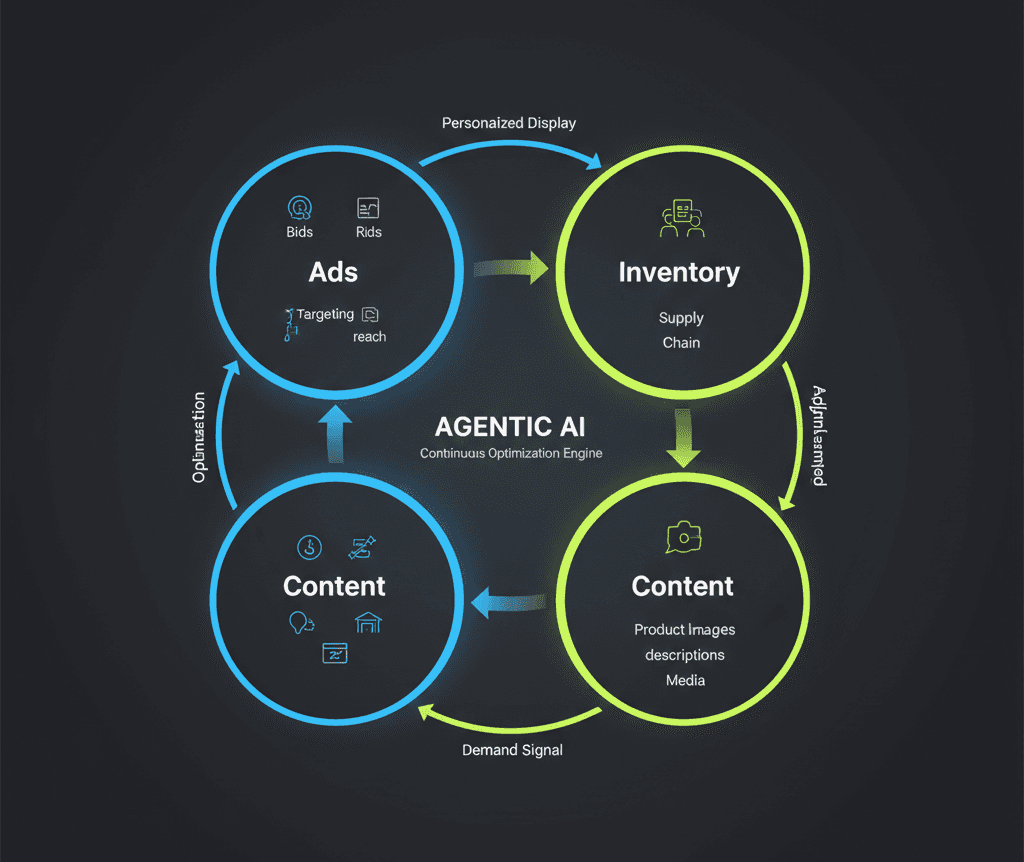
They connect ads, inventory, and content into one loop.
When ad data shows a keyword is converting but inventory is tight, you do not just push bids higher. You pace.
When inventory is healthy but conversion is softening, you do not just spend more. You fix the listing and creative first.
When content updates lift conversion rate, you amplify with budget shifts while the signal is fresh.
This is the same thinking behind the XENA approach described here: https://xenaintelligence.com/blog/5-game-changing-ways-ai-is-fueling-e-commerce-innovation
A realistic 2026 adoption path, without chaos
Most teams do not need a full overhaul. They need a controlled upgrade.
Start by choosing one area where reaction time is currently costing you profit. For many brands, that is PPC, because spend is immediate and mistakes are expensive.
Then set guardrails. Define targets like ACOS, TACOS, margin floors, and inventory constraints. Let automation handle the frequent adjustments, while humans focus on creative strategy, expansion, and new product decisions.
If you are launching or relaunching products this year, this blueprint shows how predictive analytics and hourly optimization fit into a launch cadence: https://xenaintelligence.com/blog/the-30-60-90-day-amazon-launch-blueprint-for-2025
What to watch out for, so AI does not become a black box
AI should not replace judgment. It should reduce busywork and compress decision time.
The safest setups share three traits.
They are transparent, so you can see why actions happened.
They are constrained, so automation stays inside your profitability rules.
They are supervised, so experts can step in when the market behaves weirdly.
This is why XENA pairs automation with always-on expert assistance, so you can move fast without feeling like you handed the keys to a mystery system.
If you are also thinking beyond marketplaces into omnichannel growth, this one shows how predictive signals can guide expansion: https://xenaintelligence.com/blog/the-90-day-social-commerce-expansion-plan-from-marketplace-dependence-to-omnichannel-momentum
The takeaway
E-commerce in 2026 rewards speed with discipline.
Agentic AI is not about doing more. It is about acting sooner, with guardrails, so you keep more profit when the market shifts.
If you want a simple benchmark, ask one question: how long does it take your team to go from “we noticed” to “we changed something”?
If the answer is days, AI will feel like a superpower. If the answer is hours, you are already playing the 2026 game.
The new e-commerce problem is not insight, it is latency
Most teams are not failing because they lack dashboards. They are failing because they see the problem after it already costs them money.
A competitor raises bids at 10 a.m. Your CPC climbs by lunch. Your conversion rate softens by dinner. You react next week, because reporting and meetings run on a human schedule, not a marketplace schedule.
That gap between signal and action is the real enemy in 2026. And it is exactly where agentic AI is changing the game.
If you are new to the concept, start here for the big picture: https://xenaintelligence.com/blog/agentic-ai-is-rewriting-ecommerce-in-2025

What agentic AI really means for operators
Agentic AI is not a chatbot that writes a product description. It is a system that can notice a change, decide what it means, and take a safe action inside the rules you set.
In e-commerce, those actions usually live in three places.
Ads that adjust before you notice
Retail media moves fast. Placements shift, competitors test aggressively, and intent changes hourly. When budgets and bids only get reviewed once a day, you are basically donating spend to the noisiest moments.
This is why hourly optimization is becoming the default cadence for serious brands, especially on marketplaces. Here is a deeper read on what that looks like in practice: https://xenaintelligence.com/blog/the-2026-ppc-playbook-for-e-commerce-brands-hourly-optimization-smarter-budgets-bigger-wins
With XENA Intelligence, hourly campaign optimization is designed to keep pace with the market. Xenalytics helps you see which levers matter right now, and automation handles the repetitive updates so your team can focus on strategy, not spreadsheet babysitting.
If you want a more Amazon-specific view, this one connects the dots between AI targeting, bid automation, and what actually drives ROI: https://xenaintelligence.com/blog/amazon-advertising-in-2025-strategies-that-actually-deliver-roi
Inventory that protects profit, not just availability
Inventory is not just a supply chain concern anymore. It is a profit lever. Stockouts kill ranking and momentum. Overstocks quietly bleed fees and cash. And the worst part is that both can happen while you are “doing fine” on the top line.
Predictive demand flips this around. Instead of reacting to yesterday’s sales, you forecast where demand is going, then allocate inventory like a portfolio.
This is a strong companion read if you are planning 2026 inventory decisions: https://xenaintelligence.com/blog/inventory-as-a-growth-lever-in-2026-predictive-demand-and-smart-allocation

Content that evolves with intent, not gut feel
Product content has always mattered, but in 2026 it is moving from a static asset to a dynamic performance lever. Search behavior changes fast. Customer objections show up in reviews. Competitors reposition. Your content needs to keep up.
The practical way to do this is to treat content like a performance loop. You pull signals from ads, reviews, and search terms, then you update titles, bullets, A plus content, and creatives to match what shoppers are telling you now.
For a solid foundation on where AI fits into content and operations, you can reference this overview: https://xenaintelligence.com/blog/the-evolution-of-ai-in-e-commerce
The “single feedback loop” strategy that makes AI actually work
Here is what separates brands that “use AI” from brands that win with AI.
They connect ads, inventory, and content into one loop.
When ad data shows a keyword is converting but inventory is tight, you do not just push bids higher. You pace.
When inventory is healthy but conversion is softening, you do not just spend more. You fix the listing and creative first.
When content updates lift conversion rate, you amplify with budget shifts while the signal is fresh.
This is the same thinking behind the XENA approach described here: https://xenaintelligence.com/blog/5-game-changing-ways-ai-is-fueling-e-commerce-innovation

A realistic 2026 adoption path, without chaos
Most teams do not need a full overhaul. They need a controlled upgrade.
Start by choosing one area where reaction time is currently costing you profit. For many brands, that is PPC, because spend is immediate and mistakes are expensive.
Then set guardrails. Define targets like ACOS, TACOS, margin floors, and inventory constraints. Let automation handle the frequent adjustments, while humans focus on creative strategy, expansion, and new product decisions.
If you are launching or relaunching products this year, this blueprint shows how predictive analytics and hourly optimization fit into a launch cadence: https://xenaintelligence.com/blog/the-30-60-90-day-amazon-launch-blueprint-for-2025
What to watch out for, so AI does not become a black box
AI should not replace judgment. It should reduce busywork and compress decision time.
The safest setups share three traits.
They are transparent, so you can see why actions happened.
They are constrained, so automation stays inside your profitability rules.
They are supervised, so experts can step in when the market behaves weirdly.
This is why XENA pairs automation with always-on expert assistance, so you can move fast without feeling like you handed the keys to a mystery system.
If you are also thinking beyond marketplaces into omnichannel growth, this one shows how predictive signals can guide expansion: https://xenaintelligence.com/blog/the-90-day-social-commerce-expansion-plan-from-marketplace-dependence-to-omnichannel-momentum
The takeaway
E-commerce in 2026 rewards speed with discipline.
Agentic AI is not about doing more. It is about acting sooner, with guardrails, so you keep more profit when the market shifts.
If you want a simple benchmark, ask one question: how long does it take your team to go from “we noticed” to “we changed something”?
If the answer is days, AI will feel like a superpower. If the answer is hours, you are already playing the 2026 game.
The new e-commerce problem is not insight, it is latency
Most teams are not failing because they lack dashboards. They are failing because they see the problem after it already costs them money.
A competitor raises bids at 10 a.m. Your CPC climbs by lunch. Your conversion rate softens by dinner. You react next week, because reporting and meetings run on a human schedule, not a marketplace schedule.
That gap between signal and action is the real enemy in 2026. And it is exactly where agentic AI is changing the game.
If you are new to the concept, start here for the big picture: https://xenaintelligence.com/blog/agentic-ai-is-rewriting-ecommerce-in-2025

What agentic AI really means for operators
Agentic AI is not a chatbot that writes a product description. It is a system that can notice a change, decide what it means, and take a safe action inside the rules you set.
In e-commerce, those actions usually live in three places.
Ads that adjust before you notice
Retail media moves fast. Placements shift, competitors test aggressively, and intent changes hourly. When budgets and bids only get reviewed once a day, you are basically donating spend to the noisiest moments.
This is why hourly optimization is becoming the default cadence for serious brands, especially on marketplaces. Here is a deeper read on what that looks like in practice: https://xenaintelligence.com/blog/the-2026-ppc-playbook-for-e-commerce-brands-hourly-optimization-smarter-budgets-bigger-wins
With XENA Intelligence, hourly campaign optimization is designed to keep pace with the market. Xenalytics helps you see which levers matter right now, and automation handles the repetitive updates so your team can focus on strategy, not spreadsheet babysitting.
If you want a more Amazon-specific view, this one connects the dots between AI targeting, bid automation, and what actually drives ROI: https://xenaintelligence.com/blog/amazon-advertising-in-2025-strategies-that-actually-deliver-roi
Inventory that protects profit, not just availability
Inventory is not just a supply chain concern anymore. It is a profit lever. Stockouts kill ranking and momentum. Overstocks quietly bleed fees and cash. And the worst part is that both can happen while you are “doing fine” on the top line.
Predictive demand flips this around. Instead of reacting to yesterday’s sales, you forecast where demand is going, then allocate inventory like a portfolio.
This is a strong companion read if you are planning 2026 inventory decisions: https://xenaintelligence.com/blog/inventory-as-a-growth-lever-in-2026-predictive-demand-and-smart-allocation

Content that evolves with intent, not gut feel
Product content has always mattered, but in 2026 it is moving from a static asset to a dynamic performance lever. Search behavior changes fast. Customer objections show up in reviews. Competitors reposition. Your content needs to keep up.
The practical way to do this is to treat content like a performance loop. You pull signals from ads, reviews, and search terms, then you update titles, bullets, A plus content, and creatives to match what shoppers are telling you now.
For a solid foundation on where AI fits into content and operations, you can reference this overview: https://xenaintelligence.com/blog/the-evolution-of-ai-in-e-commerce
The “single feedback loop” strategy that makes AI actually work
Here is what separates brands that “use AI” from brands that win with AI.
They connect ads, inventory, and content into one loop.
When ad data shows a keyword is converting but inventory is tight, you do not just push bids higher. You pace.
When inventory is healthy but conversion is softening, you do not just spend more. You fix the listing and creative first.
When content updates lift conversion rate, you amplify with budget shifts while the signal is fresh.
This is the same thinking behind the XENA approach described here: https://xenaintelligence.com/blog/5-game-changing-ways-ai-is-fueling-e-commerce-innovation

A realistic 2026 adoption path, without chaos
Most teams do not need a full overhaul. They need a controlled upgrade.
Start by choosing one area where reaction time is currently costing you profit. For many brands, that is PPC, because spend is immediate and mistakes are expensive.
Then set guardrails. Define targets like ACOS, TACOS, margin floors, and inventory constraints. Let automation handle the frequent adjustments, while humans focus on creative strategy, expansion, and new product decisions.
If you are launching or relaunching products this year, this blueprint shows how predictive analytics and hourly optimization fit into a launch cadence: https://xenaintelligence.com/blog/the-30-60-90-day-amazon-launch-blueprint-for-2025
What to watch out for, so AI does not become a black box
AI should not replace judgment. It should reduce busywork and compress decision time.
The safest setups share three traits.
They are transparent, so you can see why actions happened.
They are constrained, so automation stays inside your profitability rules.
They are supervised, so experts can step in when the market behaves weirdly.
This is why XENA pairs automation with always-on expert assistance, so you can move fast without feeling like you handed the keys to a mystery system.
If you are also thinking beyond marketplaces into omnichannel growth, this one shows how predictive signals can guide expansion: https://xenaintelligence.com/blog/the-90-day-social-commerce-expansion-plan-from-marketplace-dependence-to-omnichannel-momentum
The takeaway
E-commerce in 2026 rewards speed with discipline.
Agentic AI is not about doing more. It is about acting sooner, with guardrails, so you keep more profit when the market shifts.
If you want a simple benchmark, ask one question: how long does it take your team to go from “we noticed” to “we changed something”?
If the answer is days, AI will feel like a superpower. If the answer is hours, you are already playing the 2026 game.
The new e-commerce problem is not insight, it is latency
Most teams are not failing because they lack dashboards. They are failing because they see the problem after it already costs them money.
A competitor raises bids at 10 a.m. Your CPC climbs by lunch. Your conversion rate softens by dinner. You react next week, because reporting and meetings run on a human schedule, not a marketplace schedule.
That gap between signal and action is the real enemy in 2026. And it is exactly where agentic AI is changing the game.
If you are new to the concept, start here for the big picture: https://xenaintelligence.com/blog/agentic-ai-is-rewriting-ecommerce-in-2025

What agentic AI really means for operators
Agentic AI is not a chatbot that writes a product description. It is a system that can notice a change, decide what it means, and take a safe action inside the rules you set.
In e-commerce, those actions usually live in three places.
Ads that adjust before you notice
Retail media moves fast. Placements shift, competitors test aggressively, and intent changes hourly. When budgets and bids only get reviewed once a day, you are basically donating spend to the noisiest moments.
This is why hourly optimization is becoming the default cadence for serious brands, especially on marketplaces. Here is a deeper read on what that looks like in practice: https://xenaintelligence.com/blog/the-2026-ppc-playbook-for-e-commerce-brands-hourly-optimization-smarter-budgets-bigger-wins
With XENA Intelligence, hourly campaign optimization is designed to keep pace with the market. Xenalytics helps you see which levers matter right now, and automation handles the repetitive updates so your team can focus on strategy, not spreadsheet babysitting.
If you want a more Amazon-specific view, this one connects the dots between AI targeting, bid automation, and what actually drives ROI: https://xenaintelligence.com/blog/amazon-advertising-in-2025-strategies-that-actually-deliver-roi
Inventory that protects profit, not just availability
Inventory is not just a supply chain concern anymore. It is a profit lever. Stockouts kill ranking and momentum. Overstocks quietly bleed fees and cash. And the worst part is that both can happen while you are “doing fine” on the top line.
Predictive demand flips this around. Instead of reacting to yesterday’s sales, you forecast where demand is going, then allocate inventory like a portfolio.
This is a strong companion read if you are planning 2026 inventory decisions: https://xenaintelligence.com/blog/inventory-as-a-growth-lever-in-2026-predictive-demand-and-smart-allocation

Content that evolves with intent, not gut feel
Product content has always mattered, but in 2026 it is moving from a static asset to a dynamic performance lever. Search behavior changes fast. Customer objections show up in reviews. Competitors reposition. Your content needs to keep up.
The practical way to do this is to treat content like a performance loop. You pull signals from ads, reviews, and search terms, then you update titles, bullets, A plus content, and creatives to match what shoppers are telling you now.
For a solid foundation on where AI fits into content and operations, you can reference this overview: https://xenaintelligence.com/blog/the-evolution-of-ai-in-e-commerce
The “single feedback loop” strategy that makes AI actually work
Here is what separates brands that “use AI” from brands that win with AI.
They connect ads, inventory, and content into one loop.
When ad data shows a keyword is converting but inventory is tight, you do not just push bids higher. You pace.
When inventory is healthy but conversion is softening, you do not just spend more. You fix the listing and creative first.
When content updates lift conversion rate, you amplify with budget shifts while the signal is fresh.
This is the same thinking behind the XENA approach described here: https://xenaintelligence.com/blog/5-game-changing-ways-ai-is-fueling-e-commerce-innovation

A realistic 2026 adoption path, without chaos
Most teams do not need a full overhaul. They need a controlled upgrade.
Start by choosing one area where reaction time is currently costing you profit. For many brands, that is PPC, because spend is immediate and mistakes are expensive.
Then set guardrails. Define targets like ACOS, TACOS, margin floors, and inventory constraints. Let automation handle the frequent adjustments, while humans focus on creative strategy, expansion, and new product decisions.
If you are launching or relaunching products this year, this blueprint shows how predictive analytics and hourly optimization fit into a launch cadence: https://xenaintelligence.com/blog/the-30-60-90-day-amazon-launch-blueprint-for-2025
What to watch out for, so AI does not become a black box
AI should not replace judgment. It should reduce busywork and compress decision time.
The safest setups share three traits.
They are transparent, so you can see why actions happened.
They are constrained, so automation stays inside your profitability rules.
They are supervised, so experts can step in when the market behaves weirdly.
This is why XENA pairs automation with always-on expert assistance, so you can move fast without feeling like you handed the keys to a mystery system.
If you are also thinking beyond marketplaces into omnichannel growth, this one shows how predictive signals can guide expansion: https://xenaintelligence.com/blog/the-90-day-social-commerce-expansion-plan-from-marketplace-dependence-to-omnichannel-momentum
The takeaway
E-commerce in 2026 rewards speed with discipline.
Agentic AI is not about doing more. It is about acting sooner, with guardrails, so you keep more profit when the market shifts.
If you want a simple benchmark, ask one question: how long does it take your team to go from “we noticed” to “we changed something”?
If the answer is days, AI will feel like a superpower. If the answer is hours, you are already playing the 2026 game.
Trending Blogs

Creative Fatigue in PPC: How to Maintain Ad Performance in 2026

Creative Fatigue in PPC: How to Maintain Ad Performance in 2026

Creative Fatigue in PPC: How to Maintain Ad Performance in 2026

Creative Fatigue in PPC: How to Maintain Ad Performance in 2026

The 2026 Amazon PPC Growth Stack: Creative speed, profit control, and hourly optimization

The 2026 Amazon PPC Growth Stack: Creative speed, profit control, and hourly optimization

The 2026 Amazon PPC Growth Stack: Creative speed, profit control, and hourly optimization

The 2026 Amazon PPC Growth Stack: Creative speed, profit control, and hourly optimization

Win December on Amazon: A Last-Mile Playbook for Holiday Sales

Win December on Amazon: A Last-Mile Playbook for Holiday Sales

Win December on Amazon: A Last-Mile Playbook for Holiday Sales