View More Blogs

PPC & Marketing

The 2026 Amazon PPC Growth Stack: Creative speed, profit control, and hourly optimization

Amazon PPC Strategy for 2026, Creative speed and profit control

Why 2026 rewards fast movers, not big spenders

The winners on Amazon this year share a simple pattern. They ship new creative fast, they protect profit at the campaign level, and they let automation react to demand changes in hours, not weeks. If you build your PPC plan around those three habits, you can keep growing even when CPCs climb. If you are new to PPC fundamentals, start with a quick refresher on auction mechanics and bidding principles, then come back to this blueprint for the next layer of scale. You can read a primer here on the XENA blog that explains PPC basics in plain English, including second price auctions and why intent alignment matters. Visit An Introduction to Pay Per Click on XENA to ground yourself before you build.
Link: https://xenaintelligence.com/blog/an-introduction-to-pay-per-click-ppc-paid-advertising

A profit first budget you can actually operate

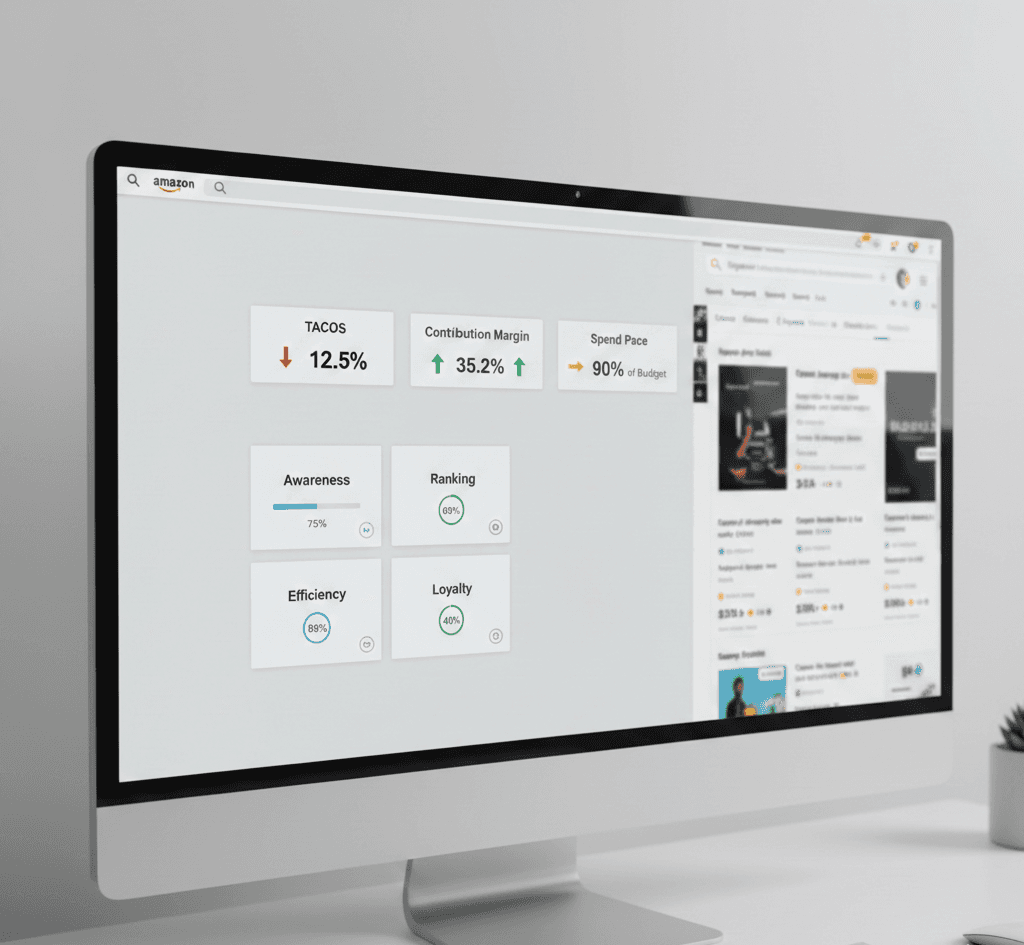
Most brands say they are profit focused, but their campaigns are organized around spend, not contribution. Flip that model. Set targets by TACoS bands and contribution margin, then group campaigns by the outcome they are responsible for. Treat ranking pushes and awareness as investment accounts with an exit plan, and hold efficiency campaigns to strict guardrails on CPC and ROAS. If you want a deeper walkthrough on this budgeting approach across channels, the XENA PPC Playbook outlines a practical structure that helps you keep spend elastic while protecting contribution.
Link: https://xenaintelligence.com/blog/the-2025-ppc-playbook-profit-first-growth-with-ai-and-retail-media

Creative velocity beats creative perfection

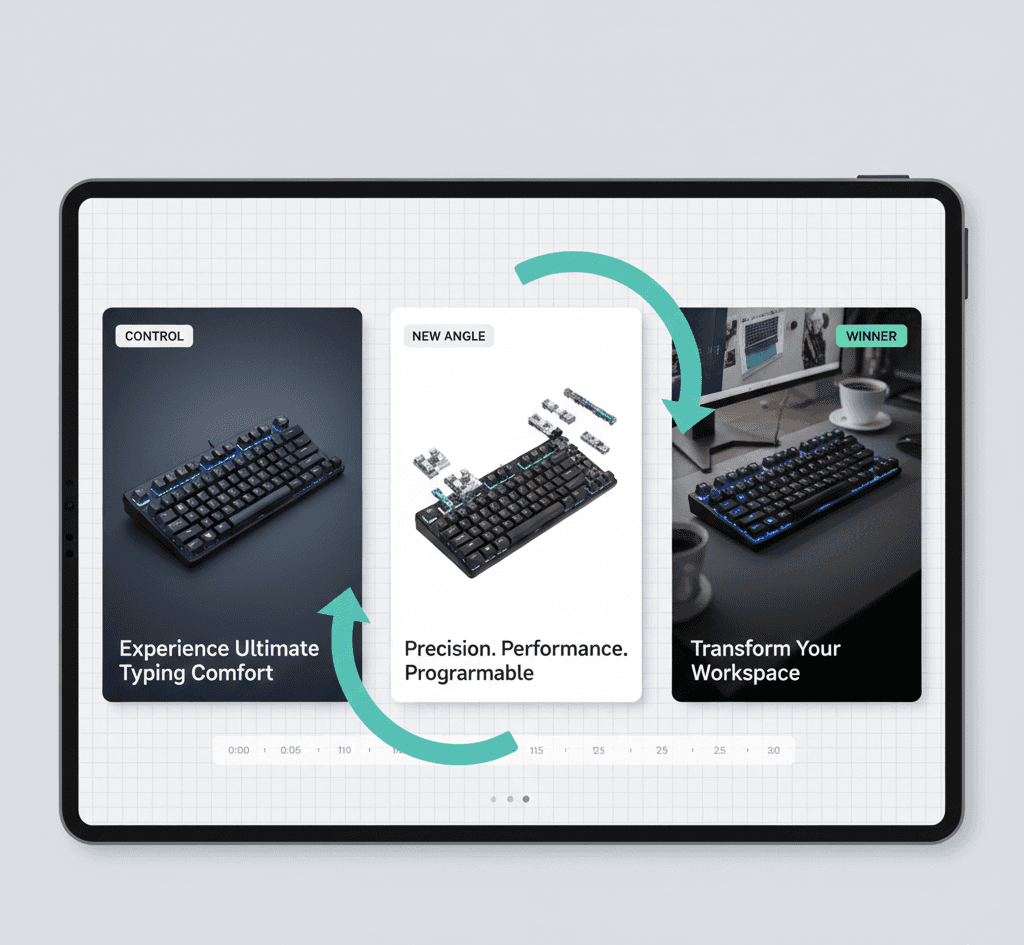
On Amazon, every impression is a test of message, offer, and context. The brand that cycles through angles faster usually outruns the brand that tries to guess the perfect ad. Build a creative rhythm where each product has a library of hooks, visuals, and proof assets ready to rotate. Use short learning windows to identify early winners, then expand coverage through additional match types and placements. When a creative unit fades, retire it quickly, pull the insight, and ship the next variant. To see how this plays with hourly bidding changes, check the XENA 2026 PPC Playbook which shows how to pair creative sprints with rapid optimization.
Link: https://xenaintelligence.com/blog/the-2026-ppc-playbook-for-e-commerce-brands-hourly-optimization-smarter-budgets-bigger-wins

Intent led coverage, not keyword sprawl

Campaigns get bloated when every search term ends up in the same bucket. Instead, map your coverage to shopper intent. Use precise single keyword ad groups for high intent queries that drive unit economics today. Use exploratory structures for rising queries, product targets, and complementary categories that reveal new pockets of demand. Keep branded, competitor, and category terms separated so budgets never cannibalize each other. If you need a straightforward starter plan to get this separation right, review XENA’s guide to outranking competitors on Amazon which includes simple patterns for intent grouping and query triage.
Link: https://xenaintelligence.com/blog/5-amazon-ppc-strategies-to-outrank-competitors

Hourly optimization that respects your margin

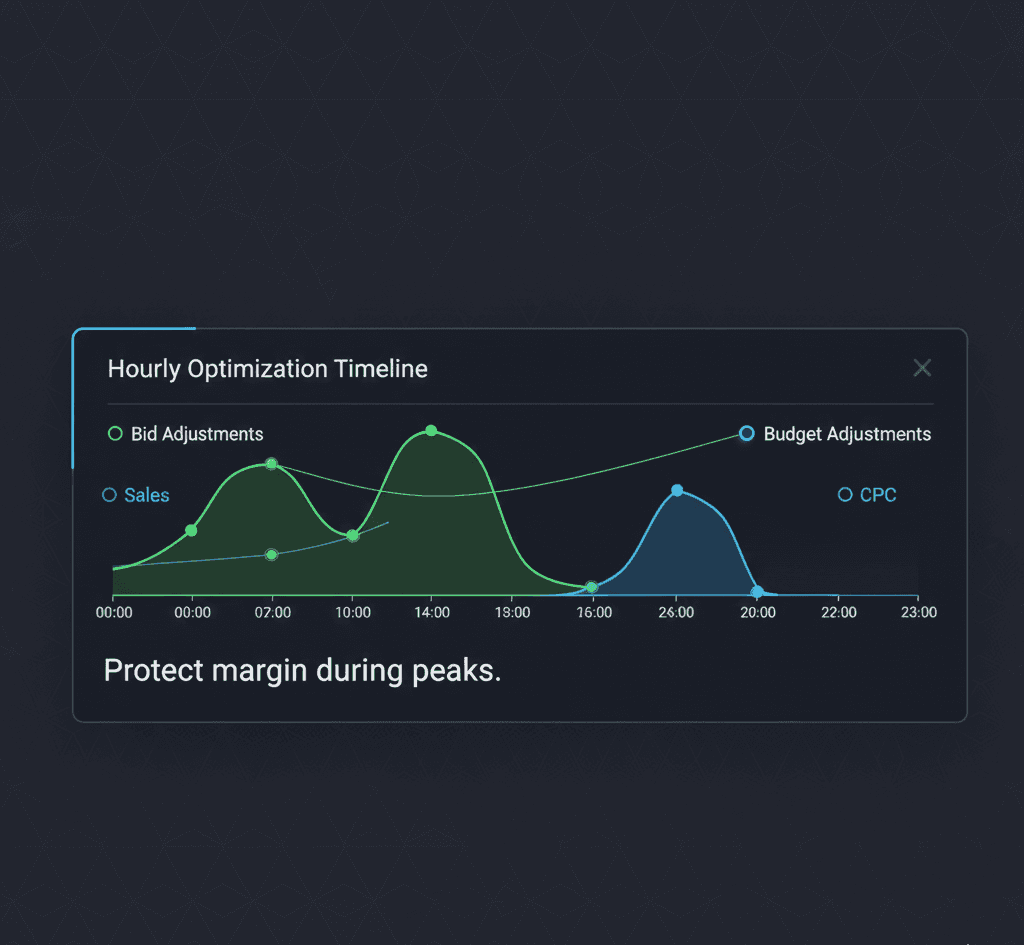
Daily changes are not enough when traffic and price swing during the day. Bids and budgets should flex with velocity, inventory, and contribution, especially during promotions or lightning deals. This is where XENA Intelligence helps in a noticeable way. XENA’s optimization engine monitors signals continuously and adjusts bids, budgets, and placements on an hourly cycle, which keeps you in the sweet spot between growth and profitability. When the system sees diminishing returns, it cools spend. When it sees high intent momentum, it leans in, all while respecting your profit thresholds and inventory constraints.

Measurement that guides decisions, not debates

The fastest way to stall growth is to argue about attribution. Pick a measurement frame that your team can operate. For most brands, that means using blended TACoS for top level steering, campaign level contribution for control, and periodic incrementality checks during big moments. Create simple decision rules. If a ranking campaign crosses its time bound target without measurable lift in organic share, stop and recycle the learning. If an efficiency campaign consistently beats contribution targets, grant it more budget and expand adjacent intent zones.

A weekly operating cadence that compounds

Scaling is less about big swings and more about a clean weekly loop. Start the week by reviewing contribution by campaign and intent zone. Promote the winners, fix the maybes, and cut the drains. Midweek, ship new creative and refresh product pages to match the angles that are converting. End the week with a light round of search term mining to promote proven queries into exact match control groups. Over time, this cadence compounds gains and prevents waste from creeping back in.

Put it together with one simple checklist

Make profit your north star, structure your campaigns around intent, ship creative on a schedule, let automation handle the hour to hour adjustments, and keep a clean measurement plan that everyone understands. If you want a deeper hands on framework, read the XENA PPC Playbook for 2025 for budgeting and the 2026 companion for hourly optimization, then layer in the competitors guide for intent separation.
Links:
https://xenaintelligence.com/blog/the-2025-ppc-playbook-profit-first-growth-with-ai-and-retail-media
https://xenaintelligence.com/blog/the-2026-ppc-playbook-for-e-commerce-brands-hourly-optimization-smarter-budgets-bigger-wins
https://xenaintelligence.com/blog/5-amazon-ppc-strategies-to-outrank-competitors

Where XENA fits in your stack

Think of XENA as the control tower for your Amazon growth. You set profit targets and creative priorities. XENA automates the hourly changes, surfaces which angles are working, and guards your margin when demand shifts. You still make the big calls. You just do it with better visibility and faster execution.

Why 2026 rewards fast movers, not big spenders

The winners on Amazon this year share a simple pattern. They ship new creative fast, they protect profit at the campaign level, and they let automation react to demand changes in hours, not weeks. If you build your PPC plan around those three habits, you can keep growing even when CPCs climb. If you are new to PPC fundamentals, start with a quick refresher on auction mechanics and bidding principles, then come back to this blueprint for the next layer of scale. You can read a primer here on the XENA blog that explains PPC basics in plain English, including second price auctions and why intent alignment matters. Visit An Introduction to Pay Per Click on XENA to ground yourself before you build.
Link: https://xenaintelligence.com/blog/an-introduction-to-pay-per-click-ppc-paid-advertising


A profit first budget you can actually operate

Most brands say they are profit focused, but their campaigns are organized around spend, not contribution. Flip that model. Set targets by TACoS bands and contribution margin, then group campaigns by the outcome they are responsible for. Treat ranking pushes and awareness as investment accounts with an exit plan, and hold efficiency campaigns to strict guardrails on CPC and ROAS. If you want a deeper walkthrough on this budgeting approach across channels, the XENA PPC Playbook outlines a practical structure that helps you keep spend elastic while protecting contribution.
Link: https://xenaintelligence.com/blog/the-2025-ppc-playbook-profit-first-growth-with-ai-and-retail-media

Creative velocity beats creative perfection

On Amazon, every impression is a test of message, offer, and context. The brand that cycles through angles faster usually outruns the brand that tries to guess the perfect ad. Build a creative rhythm where each product has a library of hooks, visuals, and proof assets ready to rotate. Use short learning windows to identify early winners, then expand coverage through additional match types and placements. When a creative unit fades, retire it quickly, pull the insight, and ship the next variant. To see how this plays with hourly bidding changes, check the XENA 2026 PPC Playbook which shows how to pair creative sprints with rapid optimization.
Link: https://xenaintelligence.com/blog/the-2026-ppc-playbook-for-e-commerce-brands-hourly-optimization-smarter-budgets-bigger-wins


Intent led coverage, not keyword sprawl

Campaigns get bloated when every search term ends up in the same bucket. Instead, map your coverage to shopper intent. Use precise single keyword ad groups for high intent queries that drive unit economics today. Use exploratory structures for rising queries, product targets, and complementary categories that reveal new pockets of demand. Keep branded, competitor, and category terms separated so budgets never cannibalize each other. If you need a straightforward starter plan to get this separation right, review XENA’s guide to outranking competitors on Amazon which includes simple patterns for intent grouping and query triage.
Link: https://xenaintelligence.com/blog/5-amazon-ppc-strategies-to-outrank-competitors

Hourly optimization that respects your margin

Daily changes are not enough when traffic and price swing during the day. Bids and budgets should flex with velocity, inventory, and contribution, especially during promotions or lightning deals. This is where XENA Intelligence helps in a noticeable way. XENA’s optimization engine monitors signals continuously and adjusts bids, budgets, and placements on an hourly cycle, which keeps you in the sweet spot between growth and profitability. When the system sees diminishing returns, it cools spend. When it sees high intent momentum, it leans in, all while respecting your profit thresholds and inventory constraints.


Measurement that guides decisions, not debates

The fastest way to stall growth is to argue about attribution. Pick a measurement frame that your team can operate. For most brands, that means using blended TACoS for top level steering, campaign level contribution for control, and periodic incrementality checks during big moments. Create simple decision rules. If a ranking campaign crosses its time bound target without measurable lift in organic share, stop and recycle the learning. If an efficiency campaign consistently beats contribution targets, grant it more budget and expand adjacent intent zones.

A weekly operating cadence that compounds

Scaling is less about big swings and more about a clean weekly loop. Start the week by reviewing contribution by campaign and intent zone. Promote the winners, fix the maybes, and cut the drains. Midweek, ship new creative and refresh product pages to match the angles that are converting. End the week with a light round of search term mining to promote proven queries into exact match control groups. Over time, this cadence compounds gains and prevents waste from creeping back in.

Put it together with one simple checklist

Make profit your north star, structure your campaigns around intent, ship creative on a schedule, let automation handle the hour to hour adjustments, and keep a clean measurement plan that everyone understands. If you want a deeper hands on framework, read the XENA PPC Playbook for 2025 for budgeting and the 2026 companion for hourly optimization, then layer in the competitors guide for intent separation.
Links:
https://xenaintelligence.com/blog/the-2025-ppc-playbook-profit-first-growth-with-ai-and-retail-media
https://xenaintelligence.com/blog/the-2026-ppc-playbook-for-e-commerce-brands-hourly-optimization-smarter-budgets-bigger-wins
https://xenaintelligence.com/blog/5-amazon-ppc-strategies-to-outrank-competitors

Where XENA fits in your stack

Think of XENA as the control tower for your Amazon growth. You set profit targets and creative priorities. XENA automates the hourly changes, surfaces which angles are working, and guards your margin when demand shifts. You still make the big calls. You just do it with better visibility and faster execution.
Why 2026 rewards fast movers, not big spenders

The winners on Amazon this year share a simple pattern. They ship new creative fast, they protect profit at the campaign level, and they let automation react to demand changes in hours, not weeks. If you build your PPC plan around those three habits, you can keep growing even when CPCs climb. If you are new to PPC fundamentals, start with a quick refresher on auction mechanics and bidding principles, then come back to this blueprint for the next layer of scale. You can read a primer here on the XENA blog that explains PPC basics in plain English, including second price auctions and why intent alignment matters. Visit An Introduction to Pay Per Click on XENA to ground yourself before you build.
Link: https://xenaintelligence.com/blog/an-introduction-to-pay-per-click-ppc-paid-advertising


A profit first budget you can actually operate

Most brands say they are profit focused, but their campaigns are organized around spend, not contribution. Flip that model. Set targets by TACoS bands and contribution margin, then group campaigns by the outcome they are responsible for. Treat ranking pushes and awareness as investment accounts with an exit plan, and hold efficiency campaigns to strict guardrails on CPC and ROAS. If you want a deeper walkthrough on this budgeting approach across channels, the XENA PPC Playbook outlines a practical structure that helps you keep spend elastic while protecting contribution.
Link: https://xenaintelligence.com/blog/the-2025-ppc-playbook-profit-first-growth-with-ai-and-retail-media

Creative velocity beats creative perfection

On Amazon, every impression is a test of message, offer, and context. The brand that cycles through angles faster usually outruns the brand that tries to guess the perfect ad. Build a creative rhythm where each product has a library of hooks, visuals, and proof assets ready to rotate. Use short learning windows to identify early winners, then expand coverage through additional match types and placements. When a creative unit fades, retire it quickly, pull the insight, and ship the next variant. To see how this plays with hourly bidding changes, check the XENA 2026 PPC Playbook which shows how to pair creative sprints with rapid optimization.
Link: https://xenaintelligence.com/blog/the-2026-ppc-playbook-for-e-commerce-brands-hourly-optimization-smarter-budgets-bigger-wins


Intent led coverage, not keyword sprawl

Campaigns get bloated when every search term ends up in the same bucket. Instead, map your coverage to shopper intent. Use precise single keyword ad groups for high intent queries that drive unit economics today. Use exploratory structures for rising queries, product targets, and complementary categories that reveal new pockets of demand. Keep branded, competitor, and category terms separated so budgets never cannibalize each other. If you need a straightforward starter plan to get this separation right, review XENA’s guide to outranking competitors on Amazon which includes simple patterns for intent grouping and query triage.
Link: https://xenaintelligence.com/blog/5-amazon-ppc-strategies-to-outrank-competitors

Hourly optimization that respects your margin

Daily changes are not enough when traffic and price swing during the day. Bids and budgets should flex with velocity, inventory, and contribution, especially during promotions or lightning deals. This is where XENA Intelligence helps in a noticeable way. XENA’s optimization engine monitors signals continuously and adjusts bids, budgets, and placements on an hourly cycle, which keeps you in the sweet spot between growth and profitability. When the system sees diminishing returns, it cools spend. When it sees high intent momentum, it leans in, all while respecting your profit thresholds and inventory constraints.


Measurement that guides decisions, not debates

The fastest way to stall growth is to argue about attribution. Pick a measurement frame that your team can operate. For most brands, that means using blended TACoS for top level steering, campaign level contribution for control, and periodic incrementality checks during big moments. Create simple decision rules. If a ranking campaign crosses its time bound target without measurable lift in organic share, stop and recycle the learning. If an efficiency campaign consistently beats contribution targets, grant it more budget and expand adjacent intent zones.

A weekly operating cadence that compounds

Scaling is less about big swings and more about a clean weekly loop. Start the week by reviewing contribution by campaign and intent zone. Promote the winners, fix the maybes, and cut the drains. Midweek, ship new creative and refresh product pages to match the angles that are converting. End the week with a light round of search term mining to promote proven queries into exact match control groups. Over time, this cadence compounds gains and prevents waste from creeping back in.

Put it together with one simple checklist

Make profit your north star, structure your campaigns around intent, ship creative on a schedule, let automation handle the hour to hour adjustments, and keep a clean measurement plan that everyone understands. If you want a deeper hands on framework, read the XENA PPC Playbook for 2025 for budgeting and the 2026 companion for hourly optimization, then layer in the competitors guide for intent separation.
Links:
https://xenaintelligence.com/blog/the-2025-ppc-playbook-profit-first-growth-with-ai-and-retail-media
https://xenaintelligence.com/blog/the-2026-ppc-playbook-for-e-commerce-brands-hourly-optimization-smarter-budgets-bigger-wins
https://xenaintelligence.com/blog/5-amazon-ppc-strategies-to-outrank-competitors

Where XENA fits in your stack

Think of XENA as the control tower for your Amazon growth. You set profit targets and creative priorities. XENA automates the hourly changes, surfaces which angles are working, and guards your margin when demand shifts. You still make the big calls. You just do it with better visibility and faster execution.

Why 2026 rewards fast movers, not big spenders

The winners on Amazon this year share a simple pattern. They ship new creative fast, they protect profit at the campaign level, and they let automation react to demand changes in hours, not weeks. If you build your PPC plan around those three habits, you can keep growing even when CPCs climb. If you are new to PPC fundamentals, start with a quick refresher on auction mechanics and bidding principles, then come back to this blueprint for the next layer of scale. You can read a primer here on the XENA blog that explains PPC basics in plain English, including second price auctions and why intent alignment matters. Visit An Introduction to Pay Per Click on XENA to ground yourself before you build.
Link: https://xenaintelligence.com/blog/an-introduction-to-pay-per-click-ppc-paid-advertising


A profit first budget you can actually operate

Most brands say they are profit focused, but their campaigns are organized around spend, not contribution. Flip that model. Set targets by TACoS bands and contribution margin, then group campaigns by the outcome they are responsible for. Treat ranking pushes and awareness as investment accounts with an exit plan, and hold efficiency campaigns to strict guardrails on CPC and ROAS. If you want a deeper walkthrough on this budgeting approach across channels, the XENA PPC Playbook outlines a practical structure that helps you keep spend elastic while protecting contribution.
Link: https://xenaintelligence.com/blog/the-2025-ppc-playbook-profit-first-growth-with-ai-and-retail-media

Creative velocity beats creative perfection

On Amazon, every impression is a test of message, offer, and context. The brand that cycles through angles faster usually outruns the brand that tries to guess the perfect ad. Build a creative rhythm where each product has a library of hooks, visuals, and proof assets ready to rotate. Use short learning windows to identify early winners, then expand coverage through additional match types and placements. When a creative unit fades, retire it quickly, pull the insight, and ship the next variant. To see how this plays with hourly bidding changes, check the XENA 2026 PPC Playbook which shows how to pair creative sprints with rapid optimization.
Link: https://xenaintelligence.com/blog/the-2026-ppc-playbook-for-e-commerce-brands-hourly-optimization-smarter-budgets-bigger-wins


Intent led coverage, not keyword sprawl

Campaigns get bloated when every search term ends up in the same bucket. Instead, map your coverage to shopper intent. Use precise single keyword ad groups for high intent queries that drive unit economics today. Use exploratory structures for rising queries, product targets, and complementary categories that reveal new pockets of demand. Keep branded, competitor, and category terms separated so budgets never cannibalize each other. If you need a straightforward starter plan to get this separation right, review XENA’s guide to outranking competitors on Amazon which includes simple patterns for intent grouping and query triage.
Link: https://xenaintelligence.com/blog/5-amazon-ppc-strategies-to-outrank-competitors

Hourly optimization that respects your margin

Daily changes are not enough when traffic and price swing during the day. Bids and budgets should flex with velocity, inventory, and contribution, especially during promotions or lightning deals. This is where XENA Intelligence helps in a noticeable way. XENA’s optimization engine monitors signals continuously and adjusts bids, budgets, and placements on an hourly cycle, which keeps you in the sweet spot between growth and profitability. When the system sees diminishing returns, it cools spend. When it sees high intent momentum, it leans in, all while respecting your profit thresholds and inventory constraints.


Measurement that guides decisions, not debates

The fastest way to stall growth is to argue about attribution. Pick a measurement frame that your team can operate. For most brands, that means using blended TACoS for top level steering, campaign level contribution for control, and periodic incrementality checks during big moments. Create simple decision rules. If a ranking campaign crosses its time bound target without measurable lift in organic share, stop and recycle the learning. If an efficiency campaign consistently beats contribution targets, grant it more budget and expand adjacent intent zones.

A weekly operating cadence that compounds

Scaling is less about big swings and more about a clean weekly loop. Start the week by reviewing contribution by campaign and intent zone. Promote the winners, fix the maybes, and cut the drains. Midweek, ship new creative and refresh product pages to match the angles that are converting. End the week with a light round of search term mining to promote proven queries into exact match control groups. Over time, this cadence compounds gains and prevents waste from creeping back in.

Put it together with one simple checklist

Make profit your north star, structure your campaigns around intent, ship creative on a schedule, let automation handle the hour to hour adjustments, and keep a clean measurement plan that everyone understands. If you want a deeper hands on framework, read the XENA PPC Playbook for 2025 for budgeting and the 2026 companion for hourly optimization, then layer in the competitors guide for intent separation.
Links:
https://xenaintelligence.com/blog/the-2025-ppc-playbook-profit-first-growth-with-ai-and-retail-media
https://xenaintelligence.com/blog/the-2026-ppc-playbook-for-e-commerce-brands-hourly-optimization-smarter-budgets-bigger-wins
https://xenaintelligence.com/blog/5-amazon-ppc-strategies-to-outrank-competitors

Where XENA fits in your stack

Think of XENA as the control tower for your Amazon growth. You set profit targets and creative priorities. XENA automates the hourly changes, surfaces which angles are working, and guards your margin when demand shifts. You still make the big calls. You just do it with better visibility and faster execution.

Ready to Take Your E-Commerce Growth to the Next Level?

Discover how XENA helps brands and sellers optimize listings, boost visibility, and stay ahead in competitive marketplaces.

Book a Meeting

2025 XENA Intelligence Inc.

Louisville, Kentucky

2025 XENA Intelligence Inc.

Louisville, Kentucky