Why Omnichannel PPC Is No Longer Optional
Paid advertising in 2026 looks very different from just a few years ago. Shoppers no longer follow a straight path from search to checkout. They move fluidly between marketplaces, search engines, social feeds, and brand websites before making a decision. Treating PPC channels as isolated silos leads to wasted spend and missed opportunities.
This evolution closely aligns with insights shared in How Modern Ecommerce Brands Are Building Smarter Growth Engines, where unified data and faster decision cycles consistently outperform fragmented strategies.
Omnichannel PPC connects every paid touchpoint into a single performance ecosystem. Instead of optimizing channels independently, brands begin optimizing the customer journey itself.
Cross-Platform Advertising and the New Buyer Journey
The modern buyer journey is fragmented by design. A shopper may first encounter a product through a short video, later search for comparisons, and finally convert after seeing a marketplace ad. Each interaction contributes to intent, even when the conversion happens elsewhere.
Cross-platform advertising ensures your brand remains visible across these moments with consistent messaging and intent alignment. When insights move freely between channels, performance compounds rather than resets. This directly reflects the challenges discussed in Why Attribution Models Are Failing Modern Ecommerce Brands, where last-click measurement no longer represents how customers actually buy.
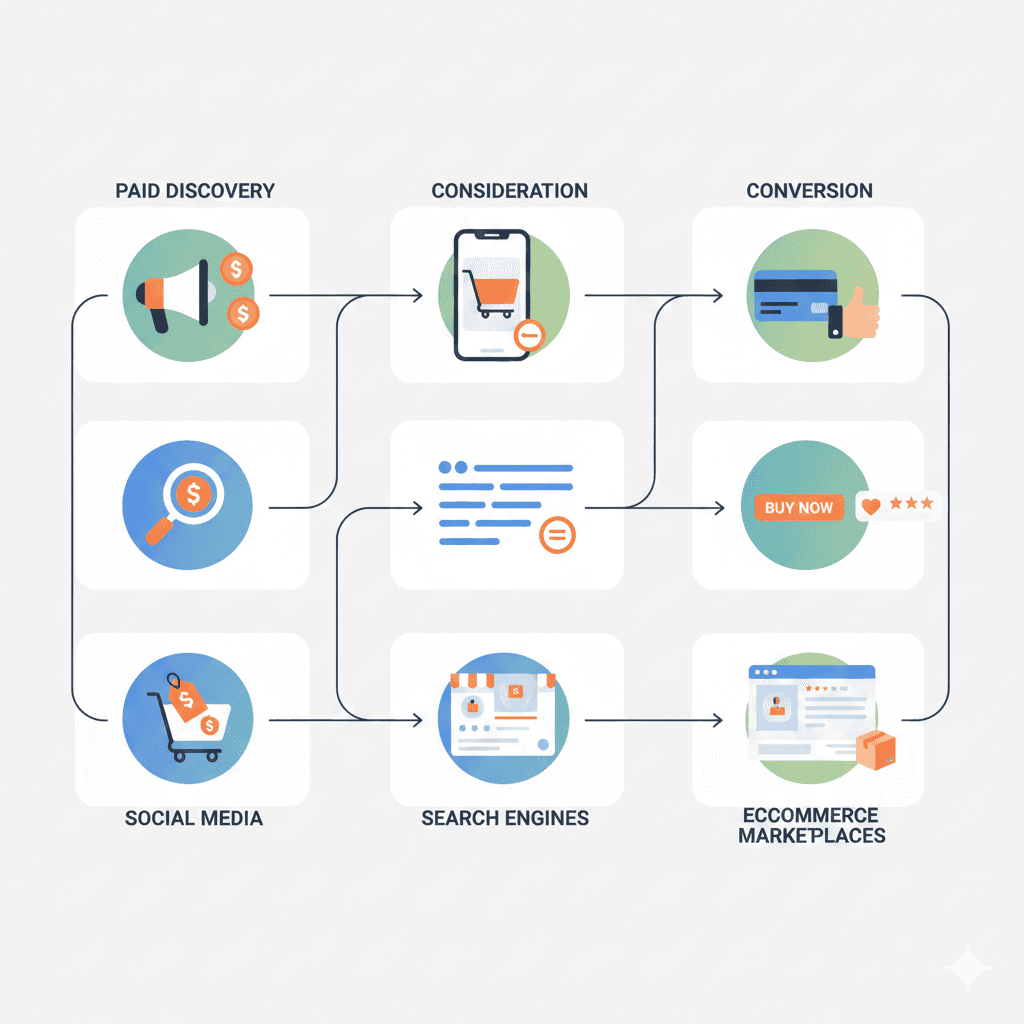
Customer journey visualization showing discovery, consideration, and conversion across multiple paid channels
AI and Automation Are Powering Omnichannel PPC
Running omnichannel campaigns manually is no longer realistic. The volume of signals across platforms makes human-only optimization slow and reactive. AI-driven systems now analyze intent, demand shifts, competition, and timing in real time.
Automation enables hourly optimizations instead of weekly adjustments. Budgets rebalance dynamically. Bids shift based on opportunity rather than assumptions. Creative variations are tested continuously. These principles strongly connect with How Predictive Analytics Is Changing PPC Performance Forever, where forward-looking insights outperform reactive reporting.
XENA Intelligence applies this same philosophy by aligning paid media decisions with predictive demand signals, helping brands act before performance drops instead of after.
Creative Consistency Across Every Paid Touchpoint
Creative fragmentation is one of the most common reasons omnichannel PPC underperforms. When messaging changes dramatically across platforms, trust erodes and conversions slow.
High-performing brands maintain narrative consistency while adapting creatives to each platform’s context. A shopper who discovers your brand on social should instantly recognize it in search results or marketplace placements. This idea is reinforced in How Listing Optimization and Paid Media Work Better Together, where aligned messaging between ads and product pages consistently improves conversion rates.
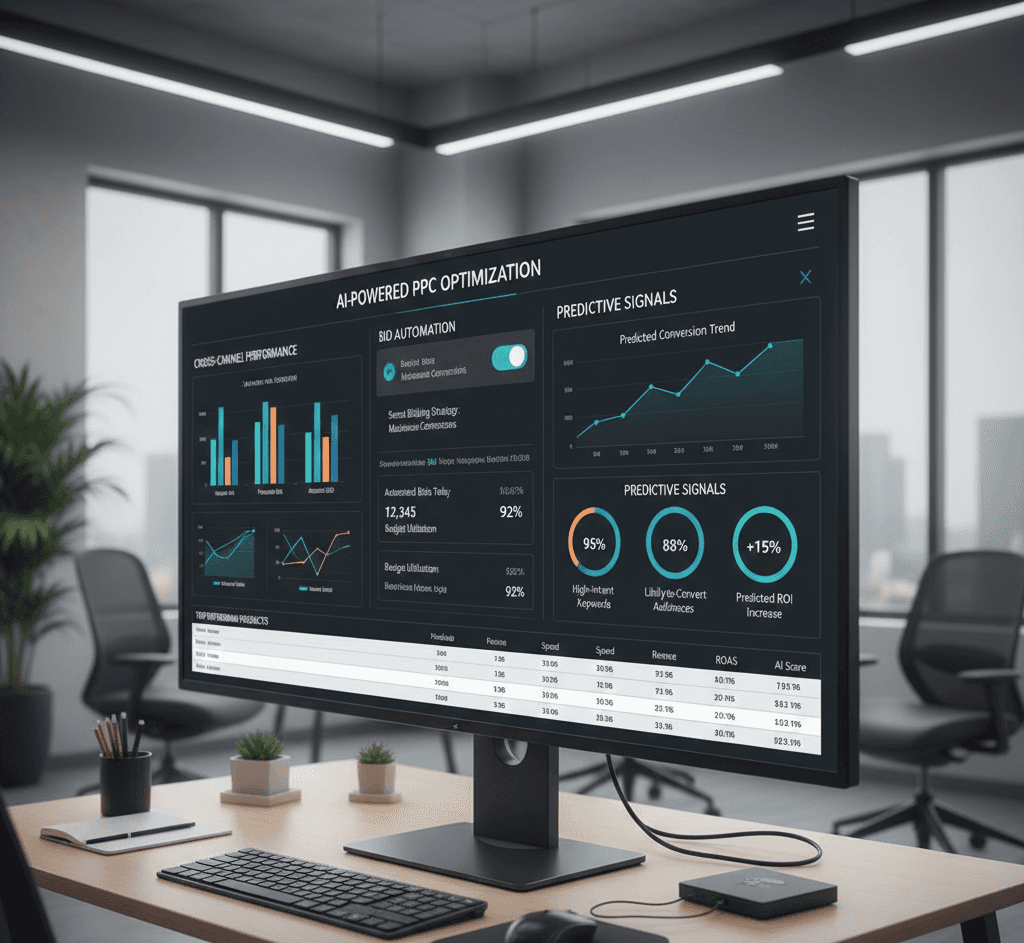
AI-powered PPC dashboard optimizing bids and creatives across channels in real time
First-Party Data and Privacy-Forward Targeting
As privacy regulations tighten and third-party cookies disappear, first-party data has become the foundation of effective PPC. Brands that deeply understand their customers can personalize messaging without relying on invasive tracking.
Omnichannel PPC thrives when first-party signals such as browsing behavior, purchase patterns, and engagement history inform targeting decisions. This shift mirrors the insights explored in The Rise of First-Party Data in Ecommerce Marketing, where sustainable growth depends on owning and activating your data responsibly.
Predictive modeling built on first-party inputs also allows marketers to anticipate demand rather than chase it.
What Omnichannel PPC Looks Like in the Real World
In practice, omnichannel PPC is not about being present everywhere. It is about showing up at the right moments with the right intent.
A shopper might discover a product through a lifestyle-driven video ad. Later, they search for features and encounter a relevant search campaign. Finally, a marketplace ad closes the loop when purchase intent peaks. Because these campaigns are connected, insights from each stage continuously refine the next.
This system-level optimization approach aligns with Why High-Growth Brands Optimize the Funnel as a System, where performance improves when teams stop optimizing channels in isolation.
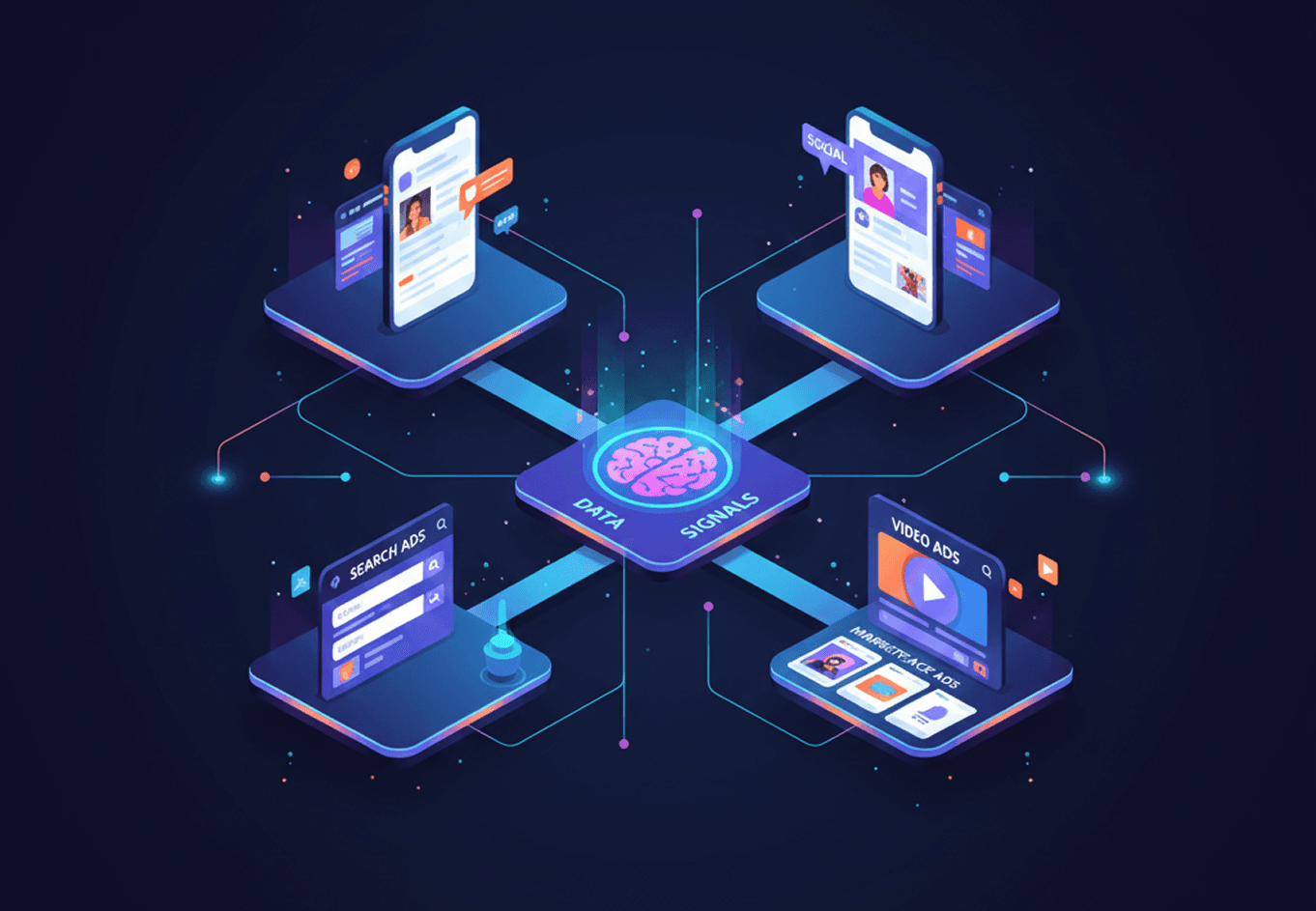
Unified omnichannel ad ecosystem connecting search, social, and marketplace advertising
Final Thoughts on the Future of PPC
Omnichannel PPC is no longer an advanced tactic. It is becoming the baseline for brands that want predictable, scalable growth. Cross-platform visibility, AI-driven optimization, and consistent creative execution now separate leaders from laggards.
As paid media complexity increases, platforms that simplify decisions while improving accuracy become strategic advantages. The future of PPC belongs to brands that treat advertising as a connected growth engine rather than a collection of disconnected campaigns.
Why Omnichannel PPC Is No Longer Optional
Paid advertising in 2026 looks very different from just a few years ago. Shoppers no longer follow a straight path from search to checkout. They move fluidly between marketplaces, search engines, social feeds, and brand websites before making a decision. Treating PPC channels as isolated silos leads to wasted spend and missed opportunities.
This evolution closely aligns with insights shared in How Modern Ecommerce Brands Are Building Smarter Growth Engines, where unified data and faster decision cycles consistently outperform fragmented strategies.
Omnichannel PPC connects every paid touchpoint into a single performance ecosystem. Instead of optimizing channels independently, brands begin optimizing the customer journey itself.
Cross-Platform Advertising and the New Buyer Journey
The modern buyer journey is fragmented by design. A shopper may first encounter a product through a short video, later search for comparisons, and finally convert after seeing a marketplace ad. Each interaction contributes to intent, even when the conversion happens elsewhere.
Cross-platform advertising ensures your brand remains visible across these moments with consistent messaging and intent alignment. When insights move freely between channels, performance compounds rather than resets. This directly reflects the challenges discussed in Why Attribution Models Are Failing Modern Ecommerce Brands, where last-click measurement no longer represents how customers actually buy.

Customer journey visualization showing discovery, consideration, and conversion across multiple paid channels
AI and Automation Are Powering Omnichannel PPC
Running omnichannel campaigns manually is no longer realistic. The volume of signals across platforms makes human-only optimization slow and reactive. AI-driven systems now analyze intent, demand shifts, competition, and timing in real time.
Automation enables hourly optimizations instead of weekly adjustments. Budgets rebalance dynamically. Bids shift based on opportunity rather than assumptions. Creative variations are tested continuously. These principles strongly connect with How Predictive Analytics Is Changing PPC Performance Forever, where forward-looking insights outperform reactive reporting.
XENA Intelligence applies this same philosophy by aligning paid media decisions with predictive demand signals, helping brands act before performance drops instead of after.
Creative Consistency Across Every Paid Touchpoint
Creative fragmentation is one of the most common reasons omnichannel PPC underperforms. When messaging changes dramatically across platforms, trust erodes and conversions slow.
High-performing brands maintain narrative consistency while adapting creatives to each platform’s context. A shopper who discovers your brand on social should instantly recognize it in search results or marketplace placements. This idea is reinforced in How Listing Optimization and Paid Media Work Better Together, where aligned messaging between ads and product pages consistently improves conversion rates.

AI-powered PPC dashboard optimizing bids and creatives across channels in real time
First-Party Data and Privacy-Forward Targeting
As privacy regulations tighten and third-party cookies disappear, first-party data has become the foundation of effective PPC. Brands that deeply understand their customers can personalize messaging without relying on invasive tracking.
Omnichannel PPC thrives when first-party signals such as browsing behavior, purchase patterns, and engagement history inform targeting decisions. This shift mirrors the insights explored in The Rise of First-Party Data in Ecommerce Marketing, where sustainable growth depends on owning and activating your data responsibly.
Predictive modeling built on first-party inputs also allows marketers to anticipate demand rather than chase it.
What Omnichannel PPC Looks Like in the Real World
In practice, omnichannel PPC is not about being present everywhere. It is about showing up at the right moments with the right intent.
A shopper might discover a product through a lifestyle-driven video ad. Later, they search for features and encounter a relevant search campaign. Finally, a marketplace ad closes the loop when purchase intent peaks. Because these campaigns are connected, insights from each stage continuously refine the next.
This system-level optimization approach aligns with Why High-Growth Brands Optimize the Funnel as a System, where performance improves when teams stop optimizing channels in isolation.

Unified omnichannel ad ecosystem connecting search, social, and marketplace advertising
Final Thoughts on the Future of PPC
Omnichannel PPC is no longer an advanced tactic. It is becoming the baseline for brands that want predictable, scalable growth. Cross-platform visibility, AI-driven optimization, and consistent creative execution now separate leaders from laggards.
As paid media complexity increases, platforms that simplify decisions while improving accuracy become strategic advantages. The future of PPC belongs to brands that treat advertising as a connected growth engine rather than a collection of disconnected campaigns.
Why Omnichannel PPC Is No Longer Optional
Paid advertising in 2026 looks very different from just a few years ago. Shoppers no longer follow a straight path from search to checkout. They move fluidly between marketplaces, search engines, social feeds, and brand websites before making a decision. Treating PPC channels as isolated silos leads to wasted spend and missed opportunities.
This evolution closely aligns with insights shared in How Modern Ecommerce Brands Are Building Smarter Growth Engines, where unified data and faster decision cycles consistently outperform fragmented strategies.
Omnichannel PPC connects every paid touchpoint into a single performance ecosystem. Instead of optimizing channels independently, brands begin optimizing the customer journey itself.
Cross-Platform Advertising and the New Buyer Journey
The modern buyer journey is fragmented by design. A shopper may first encounter a product through a short video, later search for comparisons, and finally convert after seeing a marketplace ad. Each interaction contributes to intent, even when the conversion happens elsewhere.
Cross-platform advertising ensures your brand remains visible across these moments with consistent messaging and intent alignment. When insights move freely between channels, performance compounds rather than resets. This directly reflects the challenges discussed in Why Attribution Models Are Failing Modern Ecommerce Brands, where last-click measurement no longer represents how customers actually buy.

Customer journey visualization showing discovery, consideration, and conversion across multiple paid channels
AI and Automation Are Powering Omnichannel PPC
Running omnichannel campaigns manually is no longer realistic. The volume of signals across platforms makes human-only optimization slow and reactive. AI-driven systems now analyze intent, demand shifts, competition, and timing in real time.
Automation enables hourly optimizations instead of weekly adjustments. Budgets rebalance dynamically. Bids shift based on opportunity rather than assumptions. Creative variations are tested continuously. These principles strongly connect with How Predictive Analytics Is Changing PPC Performance Forever, where forward-looking insights outperform reactive reporting.
XENA Intelligence applies this same philosophy by aligning paid media decisions with predictive demand signals, helping brands act before performance drops instead of after.
Creative Consistency Across Every Paid Touchpoint
Creative fragmentation is one of the most common reasons omnichannel PPC underperforms. When messaging changes dramatically across platforms, trust erodes and conversions slow.
High-performing brands maintain narrative consistency while adapting creatives to each platform’s context. A shopper who discovers your brand on social should instantly recognize it in search results or marketplace placements. This idea is reinforced in How Listing Optimization and Paid Media Work Better Together, where aligned messaging between ads and product pages consistently improves conversion rates.

AI-powered PPC dashboard optimizing bids and creatives across channels in real time
First-Party Data and Privacy-Forward Targeting
As privacy regulations tighten and third-party cookies disappear, first-party data has become the foundation of effective PPC. Brands that deeply understand their customers can personalize messaging without relying on invasive tracking.
Omnichannel PPC thrives when first-party signals such as browsing behavior, purchase patterns, and engagement history inform targeting decisions. This shift mirrors the insights explored in The Rise of First-Party Data in Ecommerce Marketing, where sustainable growth depends on owning and activating your data responsibly.
Predictive modeling built on first-party inputs also allows marketers to anticipate demand rather than chase it.
What Omnichannel PPC Looks Like in the Real World
In practice, omnichannel PPC is not about being present everywhere. It is about showing up at the right moments with the right intent.
A shopper might discover a product through a lifestyle-driven video ad. Later, they search for features and encounter a relevant search campaign. Finally, a marketplace ad closes the loop when purchase intent peaks. Because these campaigns are connected, insights from each stage continuously refine the next.
This system-level optimization approach aligns with Why High-Growth Brands Optimize the Funnel as a System, where performance improves when teams stop optimizing channels in isolation.

Unified omnichannel ad ecosystem connecting search, social, and marketplace advertising
Final Thoughts on the Future of PPC
Omnichannel PPC is no longer an advanced tactic. It is becoming the baseline for brands that want predictable, scalable growth. Cross-platform visibility, AI-driven optimization, and consistent creative execution now separate leaders from laggards.
As paid media complexity increases, platforms that simplify decisions while improving accuracy become strategic advantages. The future of PPC belongs to brands that treat advertising as a connected growth engine rather than a collection of disconnected campaigns.
Why Omnichannel PPC Is No Longer Optional
Paid advertising in 2026 looks very different from just a few years ago. Shoppers no longer follow a straight path from search to checkout. They move fluidly between marketplaces, search engines, social feeds, and brand websites before making a decision. Treating PPC channels as isolated silos leads to wasted spend and missed opportunities.
This evolution closely aligns with insights shared in How Modern Ecommerce Brands Are Building Smarter Growth Engines, where unified data and faster decision cycles consistently outperform fragmented strategies.
Omnichannel PPC connects every paid touchpoint into a single performance ecosystem. Instead of optimizing channels independently, brands begin optimizing the customer journey itself.
Cross-Platform Advertising and the New Buyer Journey
The modern buyer journey is fragmented by design. A shopper may first encounter a product through a short video, later search for comparisons, and finally convert after seeing a marketplace ad. Each interaction contributes to intent, even when the conversion happens elsewhere.
Cross-platform advertising ensures your brand remains visible across these moments with consistent messaging and intent alignment. When insights move freely between channels, performance compounds rather than resets. This directly reflects the challenges discussed in Why Attribution Models Are Failing Modern Ecommerce Brands, where last-click measurement no longer represents how customers actually buy.

Customer journey visualization showing discovery, consideration, and conversion across multiple paid channels
AI and Automation Are Powering Omnichannel PPC
Running omnichannel campaigns manually is no longer realistic. The volume of signals across platforms makes human-only optimization slow and reactive. AI-driven systems now analyze intent, demand shifts, competition, and timing in real time.
Automation enables hourly optimizations instead of weekly adjustments. Budgets rebalance dynamically. Bids shift based on opportunity rather than assumptions. Creative variations are tested continuously. These principles strongly connect with How Predictive Analytics Is Changing PPC Performance Forever, where forward-looking insights outperform reactive reporting.
XENA Intelligence applies this same philosophy by aligning paid media decisions with predictive demand signals, helping brands act before performance drops instead of after.
Creative Consistency Across Every Paid Touchpoint
Creative fragmentation is one of the most common reasons omnichannel PPC underperforms. When messaging changes dramatically across platforms, trust erodes and conversions slow.
High-performing brands maintain narrative consistency while adapting creatives to each platform’s context. A shopper who discovers your brand on social should instantly recognize it in search results or marketplace placements. This idea is reinforced in How Listing Optimization and Paid Media Work Better Together, where aligned messaging between ads and product pages consistently improves conversion rates.

AI-powered PPC dashboard optimizing bids and creatives across channels in real time
First-Party Data and Privacy-Forward Targeting
As privacy regulations tighten and third-party cookies disappear, first-party data has become the foundation of effective PPC. Brands that deeply understand their customers can personalize messaging without relying on invasive tracking.
Omnichannel PPC thrives when first-party signals such as browsing behavior, purchase patterns, and engagement history inform targeting decisions. This shift mirrors the insights explored in The Rise of First-Party Data in Ecommerce Marketing, where sustainable growth depends on owning and activating your data responsibly.
Predictive modeling built on first-party inputs also allows marketers to anticipate demand rather than chase it.
What Omnichannel PPC Looks Like in the Real World
In practice, omnichannel PPC is not about being present everywhere. It is about showing up at the right moments with the right intent.
A shopper might discover a product through a lifestyle-driven video ad. Later, they search for features and encounter a relevant search campaign. Finally, a marketplace ad closes the loop when purchase intent peaks. Because these campaigns are connected, insights from each stage continuously refine the next.
This system-level optimization approach aligns with Why High-Growth Brands Optimize the Funnel as a System, where performance improves when teams stop optimizing channels in isolation.

Unified omnichannel ad ecosystem connecting search, social, and marketplace advertising
Final Thoughts on the Future of PPC
Omnichannel PPC is no longer an advanced tactic. It is becoming the baseline for brands that want predictable, scalable growth. Cross-platform visibility, AI-driven optimization, and consistent creative execution now separate leaders from laggards.
As paid media complexity increases, platforms that simplify decisions while improving accuracy become strategic advantages. The future of PPC belongs to brands that treat advertising as a connected growth engine rather than a collection of disconnected campaigns.
Trending Blogs

The 2026 Amazon PPC Growth Stack: Creative speed, profit control, and hourly optimization

The 2026 Amazon PPC Growth Stack: Creative speed, profit control, and hourly optimization

The 2026 Amazon PPC Growth Stack: Creative speed, profit control, and hourly optimization

The 2026 Amazon PPC Growth Stack: Creative speed, profit control, and hourly optimization

Win December on Amazon: A Last-Mile Playbook for Holiday Sales

Win December on Amazon: A Last-Mile Playbook for Holiday Sales

Win December on Amazon: A Last-Mile Playbook for Holiday Sales

Win December on Amazon: A Last-Mile Playbook for Holiday Sales

The 2026 Product Listing Playbook: Content That Wins Clicks and Closes Carts

The 2026 Product Listing Playbook: Content That Wins Clicks and Closes Carts

The 2026 Product Listing Playbook: Content That Wins Clicks and Closes Carts