Why Collection Pages Matter More Than They Used To
Product pages help shoppers decide whether one specific item is right for them.
Collection pages help them figure out which type of product fits their needs.
That makes collection pages especially useful for longer, conversational searches.
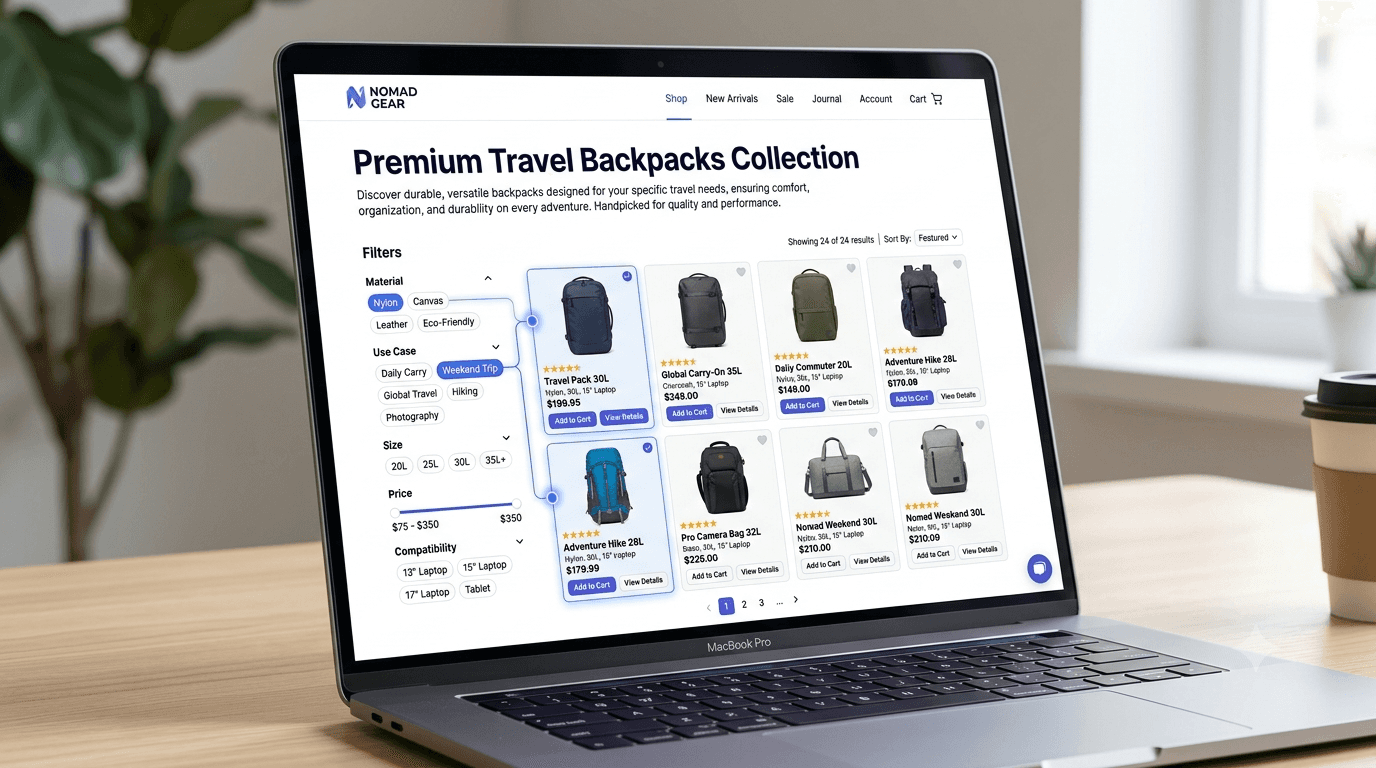
Take a collection called "Travel Backpacks."
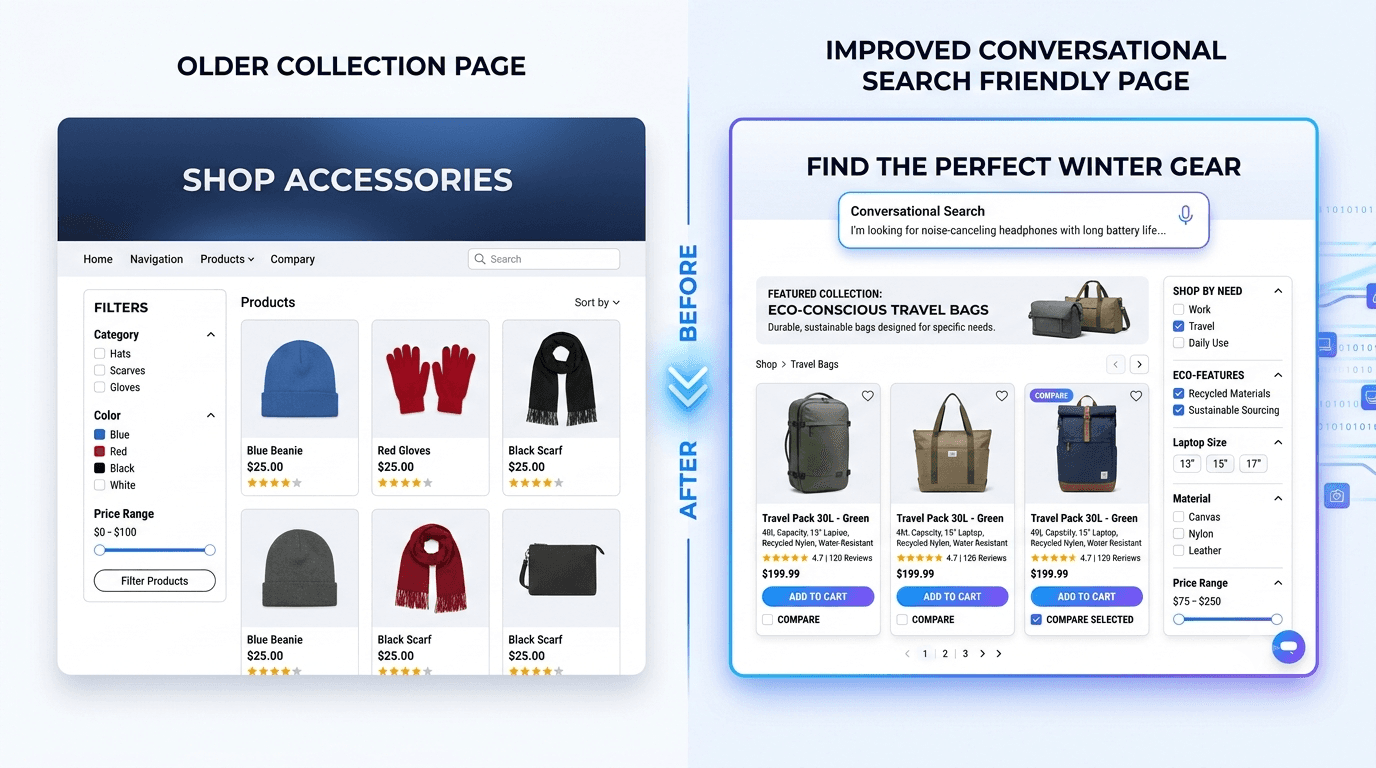
A basic version might show twenty backpacks with filters for price, colour, and brand.
A stronger version could also explain which backpacks work well for weekend trips, which are suitable for laptops, which are lighter to carry, and which are better for wet weather.
Now the page gives shoppers more help before they even click into a product.
It also gives search systems clearer information about the products inside the collection and the situations they suit.
XENA's 2026 E commerce Playbook covers this wider shift in shopping journeys and product discovery.
Start With the Shopper's Real Goal
A keyword tells you what someone typed.
It doesn't always tell you why they're shopping.
Take "standing desks."
One person may need a desk for a small flat. Someone else may want enough room for two monitors. Another shopper may care about cable storage or a wide height range.
Those details matter.
So when you're planning a collection page, ask what shoppers are trying to get done. Look at the problems they mention, the features they compare, and the conditions they attach to their searches.
The main page title can still be simple.
"Standing Desks" works perfectly well.
The rest of the page can explain who different desk styles suit, what features matter, and how shoppers can narrow down their choices.
That gives the page much more depth without repeating the same keyword over and over.
The same idea applies to product detail pages. XENA's guide to building high converting product listings explains how search intent can shape stronger product content.
Make the Collection Introduction Useful
A lot of collection page copy exists because someone decided the page "needed SEO text."
You can usually tell.
It reads something like:
"Shop our premium collection of men's running shoes. Find the best men's running shoes for every occasion from our range of men's running shoes."
Nobody talks like that.
And it doesn't help someone choose a product.
A better introduction might explain that the collection includes lightweight shoes for daily walking, cushioned models for longer distances, weather resistant options, and shoes designed for added stability.
That's useful straight away.
The shopper gets a quick sense of what's available. Search systems also get more context around the collection.
Keep this section fairly short.
People usually arrive on a collection page because they want to browse products. Give them enough information to understand the range, then let them shop.
Long walls of copy can get in the way.
Use the Questions Customers Already Ask
Conversational search often sounds like a customer speaking to a salesperson.
That's useful because your customers are already giving you content ideas.
A mattress shopper may ask:
"Which mattress is best for side sleepers?"
"Which mattress stays cool at night?"
"What works well for couples?"
"Which firmness level should I choose?"
Those questions tell you which details matter most.
You can use those ideas across the page in short buying guides, comparison sections, filter labels, product card details, and links to deeper articles.
The page becomes easier to understand because the information follows the same concerns people have while shopping.
You don't need dozens of FAQ sections.
A few helpful answers in the right places can do far more.
Product Attributes Carry a Lot of Weight
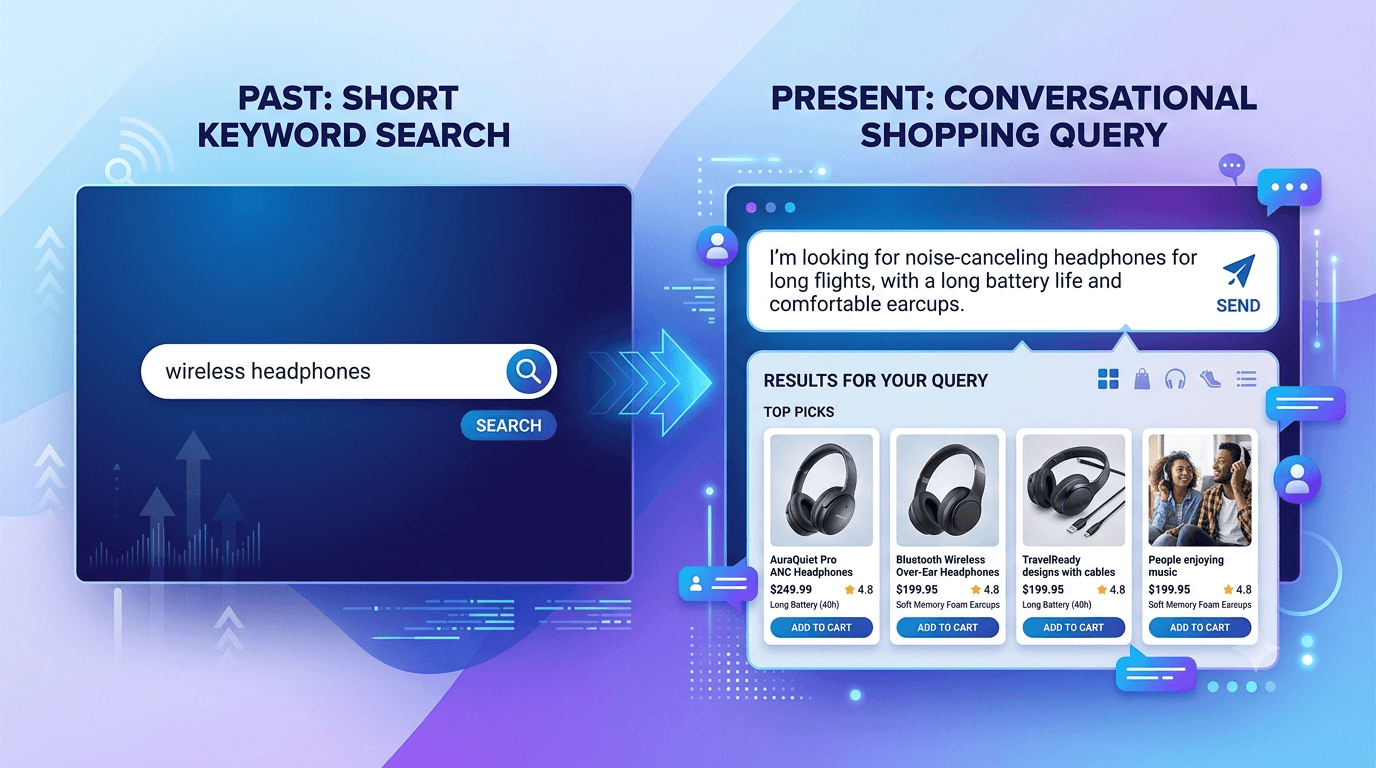
Conversational searches often include very specific requirements.
Someone might want headphones with noise cancellation, a comfortable fit for long flights, strong battery life, and a price under £200.
If your product data only says "Wireless Headphones," there isn't much detail to work with.
Rich product attributes make a difference.
That includes material, dimensions, compatibility, capacity, fit, weight, finish, intended use, size range, and any other detail that helps people compare products.
Consistency matters too.
If one product says "water resistant," another says "weather resistant," and several don't include the feature at all, the collection becomes harder to filter and understand.
Clean, complete product data also supports stronger merchandising across your site.
XENA's guide to attribute rich listings explains how better product details can support both visibility and conversion.
Make Filters Sound Like Real Shopping Decisions
Most ecommerce filters start with the basics.
Price. Brand. Colour. Size.
Those are useful.
But shoppers often think in more practical terms.
Someone buying cookware may care about induction compatibility, dishwasher safety, oven temperature, pan size, or coating type.
A luggage shopper may care about cabin size, trip length, laptop storage, expandable capacity, shell material, and weight.
A skincare shopper may care about skin type, texture, fragrance, ingredients, or a specific concern.
Good filters make it easier to move from a broad category to a much more specific need.
And that closely matches the way conversational searches work.
Customer reviews are a useful source of language here.
XENA BrandVoice can help identify repeated themes and phrases across customer feedback. Those insights can show how people naturally describe benefits, frustrations, features, and use cases.
That language can feed into filters, collection copy, merchandising labels, and product descriptions.
Learn more about XENA BrandVoice.
Add Helpful Buying Guidance Without Blocking the Products
Collection pages still need to feel like shopping pages.
So keep educational content easy to scan and place it where it makes sense.
A carry on luggage page, for example, could include a short section on choosing the right size, another on hard shell versus soft shell cases, and a simple guide to lightweight options.
These sections answer common questions without taking over the page.
They can also link to longer articles where shoppers can read more.
That creates a useful path between your collection pages, product pages, and blog content.
XENA's Practical AI Stack for Ecommerce covers how search, merchandising, analytics, and optimisation increasingly connect across the customer journey.

Build Strong Internal Links
Collection pages often sit in the middle of your site structure.
They connect broad categories with smaller subcategories and individual products.
That makes internal linking especially important.
A hiking footwear collection might link to waterproof hiking shoes, lightweight hiking shoes, women's hiking boots, winter hiking footwear, and a guide to choosing hiking shoes.
Each link helps a shopper move closer to what they need.
It also gives search engines clearer clues about how your pages relate to each other.
Product discovery should never depend entirely on a site's internal search box. Important products and subcategories should be reachable through normal links.
Breadcrumbs help too.
A path such as:
Home > Women's Clothing > Dresses > Summer Dresses
makes the structure easy to follow for both people and search engines.
Check Whether Every Product Can Be Crawled
Collection pages often use infinite scroll or a "load more" button.
That can feel smooth for shoppers, but it needs to be implemented carefully.
Search crawlers may not interact with a page in the same way a person does. If additional products only appear after a click or scroll action and there are no crawlable URLs behind them, some products may be harder to discover.
Large collections need a clear crawl path.
Pagination, crawlable links, and sensible URL structures can help search engines reach deeper products in the catalog.
This is easy to overlook, especially on stores with hundreds or thousands of SKUs.
Be Careful With Filter URLs
Filters can create a huge number of page variations.
Imagine a clothing category with filters for size, colour, price, material, fit, pattern, and availability.
Those combinations can quickly produce thousands of URLs.
Some filtered pages may deserve their own search visibility because people genuinely look for those combinations.
Others add very little value.
Choose carefully which filtered pages should be available for indexing.
Your technical setup should prevent low value combinations from creating unnecessary crawl work or near duplicate pages.
Use Structured Data Where It Fits
Structured data helps search engines understand page content more clearly.
Product markup is especially useful on individual product pages where the information refers to a specific item.
Collection pages serve a different role.
They're usually better supported by clear page structure, strong internal links, useful category copy, accurate breadcrumbs, and well organised product listings.
The product pages inside the collection can then carry detailed product information such as price, availability, ratings, and offers.
Keep the markup aligned with what the page actually represents.
Product Cards Need More Than a Name and Price
Product cards are often overlooked during collection page optimisation.
That's a mistake.
If someone reaches a collection looking for a lightweight waterproof jacket, the product grid should make it easy to see which options match that need.
A product image, name, and price may not be enough.
A few carefully chosen details can make comparison much easier.
For a jacket, that might be weight, waterproof rating, fit, or intended use.
For a laptop, it could be screen size, memory, battery life, and processor.
For furniture, it might be dimensions, material, and room size.
Choose the details that help shoppers decide what to click next.
Then make sure the product page carries the same information in more depth.
XENA's product page optimisation guide covers ways to make that next step clearer and more useful.
Your Customers Already Know the Language You Need
Reviews are packed with phrases people actually use.
Support tickets are too.
So are site searches, return reasons, chat messages, and sales questions.
A customer may say "easy to wipe clean" while your catalog uses the phrase "non porous coating."
They may search for "good for a tiny kitchen" while your product team calls the item "space efficient."
They may keep mentioning that a bag feels heavy during travel even though weight barely appears in the product copy.
Those details are valuable.
They show what people notice, care about, and ask before buying.
Use that language when it improves clarity.
It can shape category copy, filters, product attributes, comparisons, and buying guides.
Example: Improving an Office Chair Collection
Imagine an online store with a collection called "Ergonomic Office Chairs."
The page shows sixteen chairs.
There is a short paragraph at the top, plus filters for price and colour.
Now consider this search:
"What is a comfortable office chair for working eight hours a day if I'm tall and need good lower back support?"
The existing page doesn't give the shopper much help.
A stronger version could explain that the range includes chairs designed for longer work sessions, adjustable lumbar support, deeper seats, headrest options, and models suited to taller users.
The filters could include recommended height, seat depth, lumbar adjustment, headrest, armrest adjustment, upholstery, and maximum weight capacity.
Product cards could surface the most useful ergonomic features.
And a short section below the products could explain what to look for when buying a chair for long desk sessions.
The page now answers more of the shopper's real questions before they open a product.
Track What Happens After the Changes
Rankings still matter.
But they shouldn't be the only number you watch.
Look at the range of searches bringing people to the collection.
Check whether longer and more specific queries are generating impressions.
Watch how often shoppers use filters.
Measure how many people move from the collection to a product page.
Look at conversion rate and revenue from sessions that begin on collection pages.
You can also compare performance before and after improving product attributes, collection copy, internal links, and filters.
Google currently groups traffic from its AI search experiences into standard web search reporting in Search Console, so your own site analytics remain important for understanding shopper behaviour.
Patterns matter more than one isolated metric.
If a collection begins attracting more specific queries and those visitors move deeper into the site, that's useful evidence that the page is matching intent more closely.
Good Conversational Search Optimisation Starts With Better Merchandising
The strongest collection pages answer basic shopping questions quickly.
What is this category?
Who is it for?
What are the main differences between the products?
Which features matter?
How can I narrow the options?
Which product should I look at next?
Answer those questions clearly and the page becomes easier to shop.
Search systems also get more useful context.
That's why conversational search fits so naturally with good ecommerce merchandising.
XENA's 2026 Ready E commerce Playbook looks at how AI shopping tools, retail media, and changing search behaviour are reshaping product discovery.
For collection pages, the practical next step is simple.
Pick one important category.
Read the searches, reviews, and customer questions connected to it.
Check whether your filters reflect those needs.
Look for missing product attributes.
Rewrite weak category copy.
Improve the links to relevant subcategories, products, and guides.
Then measure how shoppers respond.
A useful collection page should feel a bit like a good salesperson.
It understands the category, knows which details matter, and helps people narrow down their choices without making the process harder.
That's exactly the kind of page conversational search can work with.