Shopping Is Moving Into the Chat Box
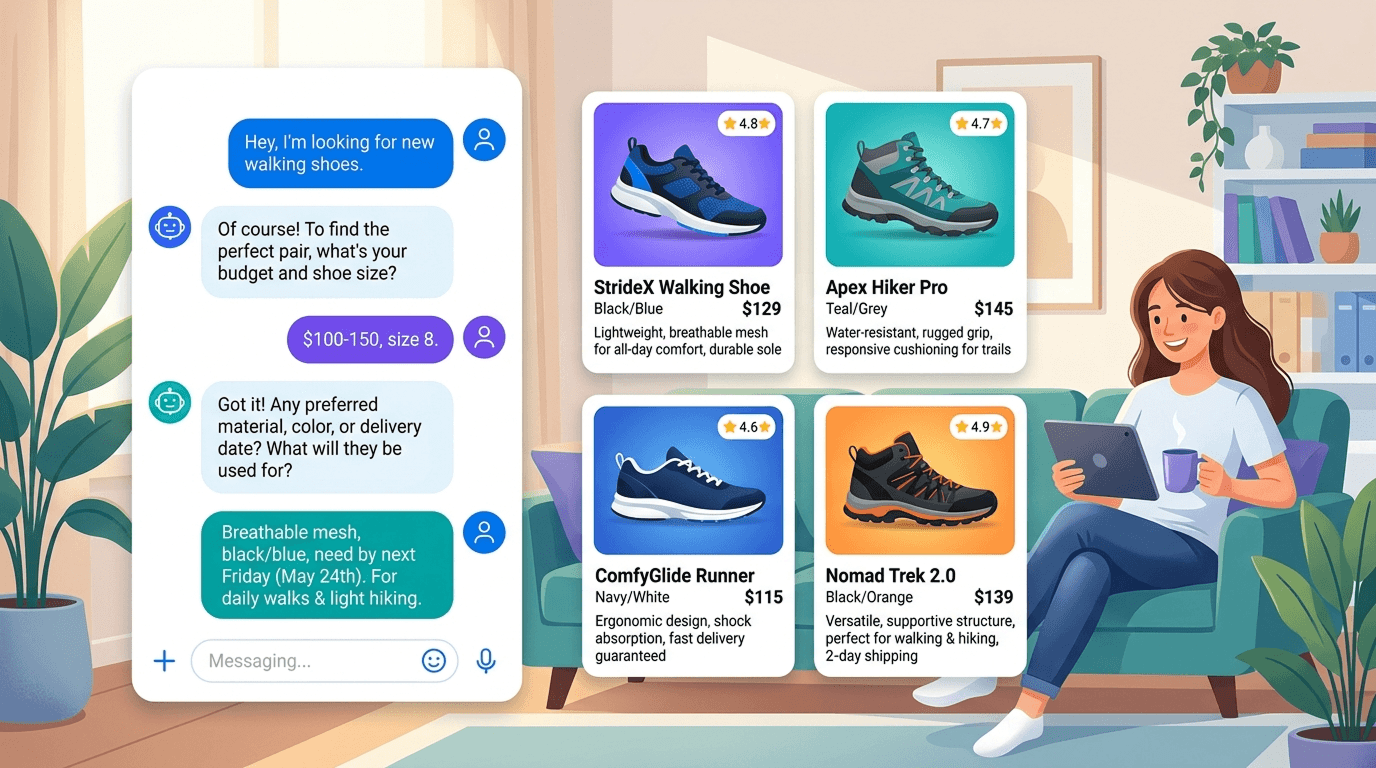
A customer needs a lightweight carry-on backpack for a three-day business trip. It must be waterproof, fit in an overhead bin, have a laptop sleeve, and cost less than $100. A traditional search might leave that customer opening tab after tab, comparing measurements, scanning reviews, and slowly forgetting why they needed a backpack in the first place.
ChatGPT gives them another route. They can describe everything they need in one message, answer a few follow-up questions, and receive a smaller set of relevant options. ChatGPT’s shopping tools can research products across the web and consider details such as specifications, price, availability, images, reviews, and merchant information. (OpenAI Help Center)
That changes how brands should think about visibility. Your product needs enough clear information for ChatGPT to understand when it fits a request. A catchy slogan can help your brand sound interesting, though it won’t explain whether your backpack fits a 16-inch laptop. Details do that job.
This shift connects closely with how Answer Engine Optimization is changing D2C commerce. Search engines have trained brands to focus on keywords. Conversational shopping adds questions, preferences, budgets, situations, and personal concerns to the mix. Brands preparing for this change should also read Your Next Customer Has an AI Buyer, which looks at how AI assistants may shape future buying decisions.
How ChatGPT Decides Whether a Product Fits
A shopper may ask for “running shoes,” or they may ask for “wide-fit road running shoes under $120 with no leather and enough cushioning for long walks.” The second request gives ChatGPT far more context. It includes fit, price, material, activity, and comfort preferences.
Your product information needs to answer those details. ChatGPT may use product descriptions, structured catalog data, pricing, availability, reviews, and information about the seller when presenting products or merchants. OpenAI says merchant selection can consider factors such as availability, price, quality, and whether the seller is the product maker or primary merchant. (OpenAI Help Center)
This means visibility starts long before someone lands on your store. Your product page, feed, images, reviews, buying guides, and stock data all help create a usable picture of the item. When those sources disagree, the picture gets blurry. When they agree, ChatGPT has a better chance of matching the product with the right request.
The same idea appears in XENA’s guide to building high-converting product listings in 2026. Strong listings reflect search intent, customer behavior, and the details people need before making a decision.
Make Sure ChatGPT Can Reach Your Store
Your first technical task is making your public product pages accessible. OpenAI recommends allowing OAI-SearchBot to crawl your site and making sure your hosting provider or content delivery network accepts traffic from OpenAI’s published IP addresses. There’s no guaranteed top position in ChatGPT Search, though accessible pages can be considered for inclusion. (OpenAI Help Center)
Review your robots.txt settings, firewall rules, canonical links, redirect chains, and server response codes. Product pages should open without requiring a login, location confirmation, or several pop-ups. Important content should remain available even when complicated scripts fail to load.
Place the product title, description, price, stock status, images, specifications, shipping information, and return terms where they can be found easily. Think of the page as a shop assistant. An assistant who answers every question with “click three more times” won’t be employee of the month.
Technical access also affects reporting. Publishers that allow OAI-SearchBot can track referral traffic from ChatGPT through analytics tools because ChatGPT search referrals include an identifying source parameter. (OpenAI Help Center)
Give ChatGPT Complete Product Facts
Many product pages are filled with polished language and missing information. “Made for everyday adventures” sounds friendly, yet it could describe shoes, luggage, sunglasses, or a surprisingly confident sandwich box.
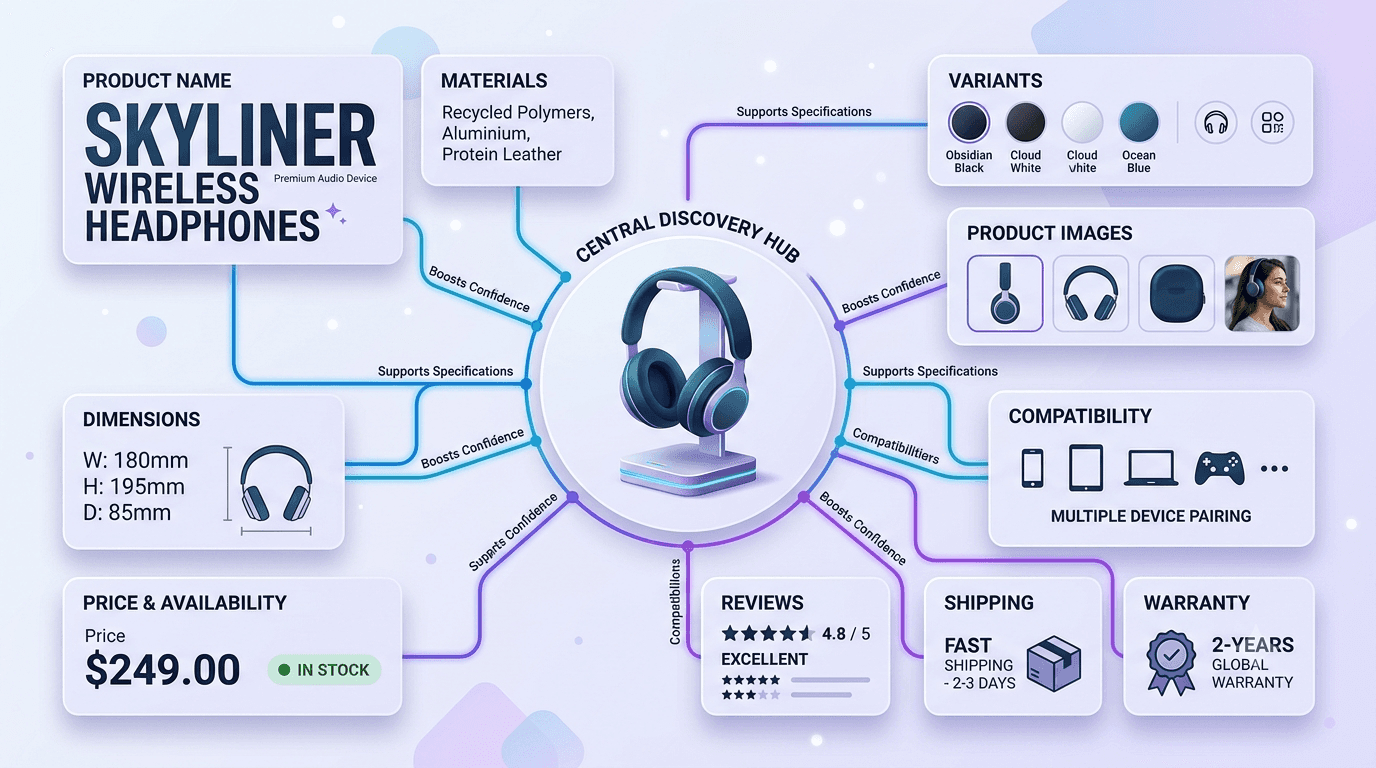
A useful product page explains what the item is, who it suits, how it’s used, what it’s made from, how large it is, and what comes in the package. It should also cover compatibility, care instructions, warranty terms, shipping expectations, safety details, and important limitations.
The exact fields depend on the category. A skincare page may need ingredients, skin type, texture, fragrance information, application guidance, and package size. An electronics page may need device compatibility, battery life, charging type, software requirements, dimensions, and warranty coverage. A clothing page may need fabric, fit, measurements, stretch, wash instructions, and size guidance.
XENA’s guide to attribute-rich listings that rank and convert explains why complete attributes matter for product discovery and conversion. The Product Detail Page Playbook goes deeper into the titles, images, pricing, keywords, and proof that help shoppers make a confident choice.
Complete fields also make catalog management easier. XENA’s article on why product listing management matters shows how accurate listings support visibility, trust, and lower return rates across sales channels.
Write for the Questions Customers Actually Ask
Customers don’t always use neat category keywords. They describe what’s bothering them. They want a pan that works on induction, fits in a small cupboard, and won’t require forty minutes of scrubbing. They want headphones that remain comfortable with glasses during long calls. They want moisturizer that sits well under makeup and doesn’t contain fragrance.
Study support emails, site searches, customer reviews, return reasons, advertising search terms, and pre-purchase questions. These sources reveal the language buyers use and the details that shape their decisions.
Place those answers naturally across your product title, description, specifications, frequently asked questions, image captions, comparison content, and supporting articles. Keep the wording direct. Repeating “best lightweight business travel backpack” six times won’t make the page more helpful. It may make readers wonder whether the backpack wrote the listing itself.
XENA’s guide to effective AI-powered product descriptions offers a useful framework for creating descriptions at scale while keeping them clear and relevant. The article on AI-generated product content and seller risk is also helpful when setting up human review for generated copy.
Use Proof Instead of Fluffy Claims
Words such as “premium,” “powerful,” and “advanced” need support. Replace loose claims with measurements, materials, test results, certifications, or clearly explained features.
A bottle described as having excellent temperature control should include the expected number of hours and the conditions used for testing. A travel-friendly bag should state its dimensions, weight, capacity, pocket layout, and airline suitability. Sustainable packaging should name the material, certification, refill system, or measured reduction in packaging.
Clear limitations matter too. If a jacket handles light rain, say so. If a charger supports only certain device models, list them. Accurate boundaries prevent poor recommendations, disappointed customers, and returns that begin with, “Well, the picture made it look bigger.”
For more ways to turn product information into stronger sales content, see XENA’s advanced product listing strategies and its guide to mastering product page optimization.
Keep Every Variant Clear
Variants are a common source of catalog confusion. A product may come in several sizes, colors, materials, pack quantities, or device configurations. Each version needs its own stable identifier and accurate supporting data.
The selected image should match the selected color. The displayed price should match the pack quantity. Dimensions and compatibility details should match the exact version being sold. A phone case for one device model shouldn’t quietly inherit the compatibility statement from another.
Internal catalog labels also need to make sense outside the warehouse. “BLK V2 LG” may be useful to your operations team. “Black, Version 2, Large” is more helpful to shoppers and discovery systems.
Keep variant names consistent across your website, feed, inventory system, marketplace listings, and advertising channels. XENA’s 2026 listing optimization guide covering search, images, enhanced content, and reviews gives more detail on keeping the full product
Build a Clean, Current Product Feed
A structured product feed gives ChatGPT clear catalog fields instead of making it piece information together from scattered page elements. OpenAI says product feeds provide the catalog data needed to index products, understand core attributes, and present accurate information in shopping experiences. Feed fields can cover titles, descriptions, identifiers, prices, availability, images, seller context, and destination links. (OpenAI Developers)
OpenAI currently recommends that most merchants begin with product feeds. A feed isn’t required when ChatGPT can crawl the site, though it gives the merchant more control over accuracy and freshness. (OpenAI)
Treat the feed as a live part of your store. Prices change, stock moves, promotions end, and new variants appear. Sometimes the wrong image slips into a record and a coffee grinder spends an afternoon pretending to be a garden hose. Regular checks keep those surprises away from customers.
Review titles, descriptions, identifiers, variant relationships, prices, inventory, image links, product URLs, shipping details, and promotional dates. XENA’s product feed optimization guide provides a deeper look at feed accuracy, completeness, images, pricing, updates, and performance monitoring.
Use Images That Answer Questions
Product images may appear inside ChatGPT shopping results, so they need to communicate quickly. Your main image should identify the item without visual clutter. It should have good lighting, accurate colors, a clean background, and enough resolution to stay clear when resized.
Supporting images can show scale, materials, texture, use cases, package contents, dimensions, and compatibility. A diagram may explain which devices work with an accessory. A lifestyle image may show whether a chair fits under a small desk. A close-up may help a shopper understand fabric or finish.
Add useful file names and alt text that describe what each image shows. Label optional accessories clearly. Customers have a special talent for noticing that the stylish stand shown in every image costs an extra $49.
Strong images also support product-page conversion. The Product Detail Page Playbook and XENA’s product page optimization guide explain how visual content can answer objections before a shopper leaves the page.
Turn Reviews Into Better Product Data
ChatGPT may use public reviews when researching and comparing products. Reviews can reveal fit, comfort, durability, noise, installation difficulty, packaging quality, or customer support experiences that aren’t covered in the main description. (OpenAI Help Center)
Encourage honest reviews after customers have had enough time to use the product. Then study recurring comments. If buyers keep saying that a shirt runs small, update the size guide. If assembly causes confusion, improve the instructions. If customers repeatedly praise an unexpected use case, consider adding it to the page when the claim is accurate and safe.
Returns can provide similar clues. XENA’s article on the hidden benefits of returns for e-commerce brands explains how return data can reveal product, listing, and customer-experience problems. Reviews and returns are often free research, though they occasionally arrive in all caps.
Publish Content Around Real Buying Problems
A product page can’t answer every question without becoming longer than some airport novels. Supporting articles give you room to explain the deeper parts of a purchase.
Create buying guides, comparison pages, sizing resources, ingredient explainers, setup tutorials, care guides, and troubleshooting content. Each article should answer a real customer question and link naturally to the relevant products.
A luggage brand might explain how to choose the right cabin bag size. A skincare brand could compare ingredients for different skin concerns. A home office company could publish a guide to selecting a desk for a small room. ChatGPT Search can cite useful web sources, giving educational content another chance to introduce your brand. (OpenAI Help Center)
This wider content strategy fits with XENA’s guide to AI-driven e-commerce personalization, where search intent and customer behavior help shape more relevant experiences. It also supports the ideas covered in the 2025 e-commerce growth playbook, which connects AI, retail media, and customer trust.
Keep Price, Stock, Shipping, and Returns Accurate
A product can match the shopper’s needs perfectly and still lose the sale because the price is old or the item is unavailable. ChatGPT may consider price, availability, seller quality, and merchant information when displaying product options. (OpenAI Help Center)
Show the current selling price clearly. Explain additional shipping costs. Keep stock data accurate and use realistic delivery estimates. Return and warranty terms should be easy to understand.
Check for conflicting details across your store, feed, marketplaces, and reseller pages. A product shouldn’t have three different weights, two warranty periods, and a mystery color that exists only on one forgotten listing.
Consistent information builds confidence. It also gives ChatGPT fewer reasons to favor a source with cleaner data.
Use XENA to Find Listing Gaps Faster
Large catalogs often contain incomplete fields, weak descriptions, outdated images, and mismatched variants. Reviewing every SKU by hand can take weeks.
XENA Foresight helps e-commerce teams assess listing quality and improve product content at scale. Teams can use it to spot weak titles, missing attributes, unclear descriptions, and other issues that may reduce visibility or conversion.
Start with your highest-value products. Compare each listing with the questions customers ask before buying. Any unanswered question becomes a possible content update.
XENA’s article on agentic AI in e-commerce explains how teams can connect search terms, reviews, advertising data, and performance signals to ongoing content decisions. This turns listing improvement into a regular process rather than an annual cleanup nobody looks forward to.

Measure ChatGPT as a Discovery Channel
Create a reporting view for visits from ChatGPT and track which pages receive traffic. Review product views, time on page, add-to-cart activity, sales, and assisted conversions. A shopper arriving from ChatGPT may have already compared several products, so that visit could carry stronger buying intent than a broad search click.
Run regular product discovery checks as well. Ask questions that reflect real customer needs and include price limits, dimensions, materials, compatibility, delivery requirements, and common objections. Check which products appear, what information is shown, and which sources are cited.
Results can change based on the wording of the question, location, availability, user preferences, and updated catalog information. Look for recurring patterns. If another product keeps appearing because its specifications are clearer, you’ve found a useful improvement idea.
This ongoing test-and-learn approach matches XENA’s view of listings as active performance assets. The guide to building high-converting listings in 2026 explains how listings should keep evolving with customer intent and performance data.
Clear Product Data Gives You a Better Shot
Getting products seen in ChatGPT takes several connected improvements. Your pages need to be accessible, your listings need useful details, your feed needs current information, and your images need to answer real questions. Reviews, guides, return data, and analytics add more context.
Start with the products that matter most to your business. Ask what a customer would need to know before recommending each one to a friend, then make those answers easy to find across every channel.
Explore more guides on product discovery, AI commerce, listing optimization, and e-commerce growth on the XENA Intelligence blog.