Your Competitors Will Leave Clues Before They Gain Visibility
Competitors rarely announce that they have started investing in Answer Engine Optimization. There is usually no campaign launch, press release, or obvious change to their homepage.
Instead, their investment becomes visible through a collection of smaller changes.
Their articles begin answering highly specific customer questions. Their product pages contain more complete attributes. Their comparison content becomes more balanced and useful. Their brand appears more frequently when shoppers ask AI systems for recommendations.
Individually, each change may look like routine marketing work. Together, they can reveal that a competitor is deliberately preparing to become part of AI generated answers.
This matters because AEO results often appear after the foundational work has already been completed. By the time a competitor consistently appears in product recommendations, comparison answers, and buying guidance, they may have spent months improving content, product data, authority, and technical accessibility.
The goal is not to wait until they dominate. The goal is to notice the investment while it is still being built.
AEO Investment Is Broader Than Publishing FAQ Content
AEO is sometimes reduced to writing questions and answers. That is only one part of the work.
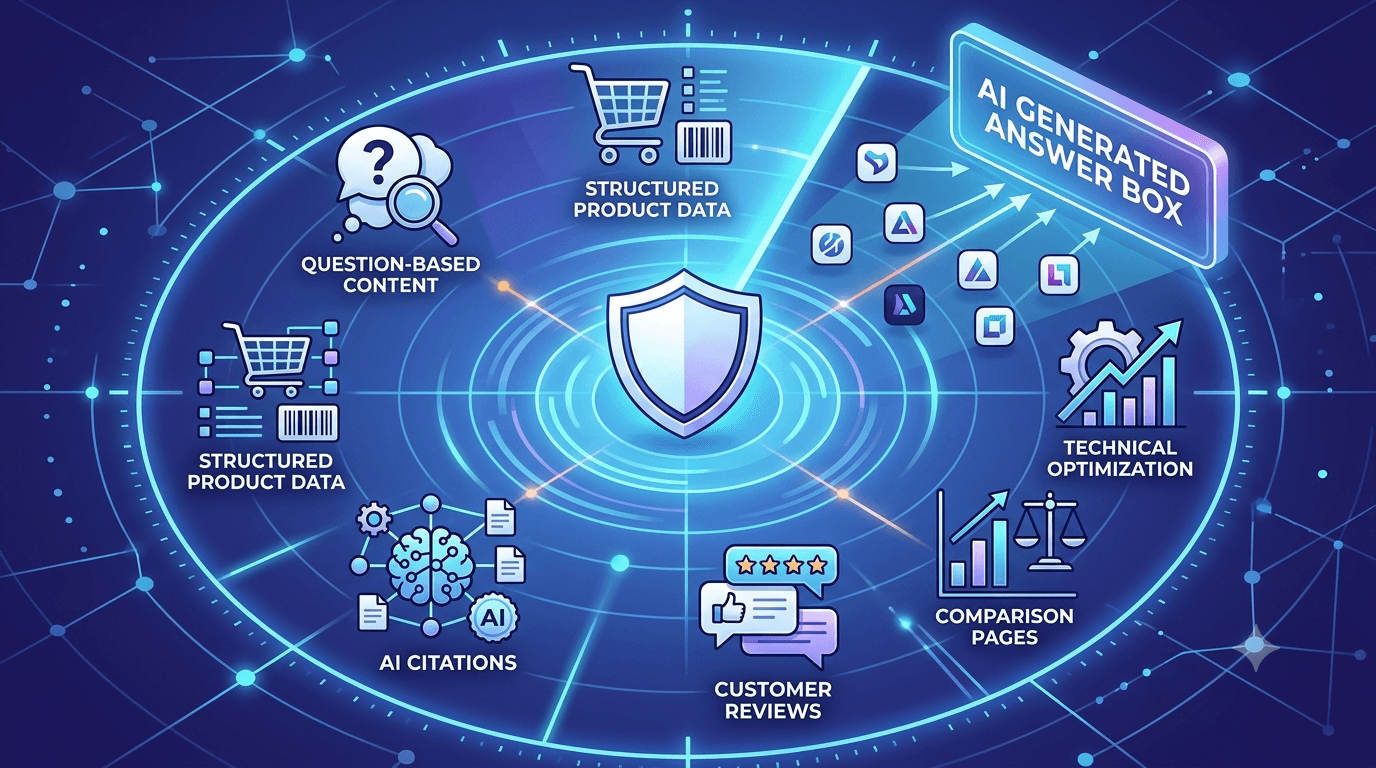
A serious AEO strategy connects customer questions, product information, technical accessibility, topical authority, reviews, internal linking, and brand credibility. It helps an answer engine understand what a business offers, who its products are suitable for, which claims can be trusted, and when the brand should be recommended.
This is why AEO does not replace traditional search optimization. Current search guidance confirms that there is no special AI schema or secret machine readable file required for inclusion in AI search experiences. Strong technical SEO, useful content, crawlable pages, accurate structured data, and clear internal links remain essential. (Google for Developers)
For a closer look at this shift, XENA’s guide to how AEO is changing D2C commerce explains why brands now need to optimize for both rankings and recommendations.
Signal One: Their Content Starts Sounding Like Customer Conversations
One of the clearest signs of AEO investment is a change in how a competitor chooses and structures content.
Traditional keyword content often begins with a broad phrase such as “best running shoes” or “coffee maker guide.” Answer focused content goes deeper. It addresses questions such as which running shoes suit wide feet and daily walking, which coffee maker works in a small kitchen, or which product is easier to maintain.
Look at the competitor’s most recent articles and compare them with content published six or twelve months earlier.
Are the new titles more specific? Do introductions answer the main question quickly? Are sections written around follow up questions? Does the content address suitability, limitations, comparisons, pricing, compatibility, or real life use cases?
A consistent shift toward detailed buyer questions is rarely accidental. It suggests the competitor is mapping conversational search intent rather than publishing only around short keywords.
AI search systems can break complex questions into related subtopics and consult multiple sources before creating an answer. Content that covers those connected subtopics has more opportunities to become useful supporting material. (Google for Developers)
Signal Two: Their Product Pages Become Much More Specific
A competitor investing in AEO will often improve product information before making visible changes to brand messaging.
Review several of their important product pages. Look for newly added dimensions, materials, compatibility information, ingredients, care instructions, warranty details, shipping expectations, return terms, use cases, package contents, and product limitations.
These details matter because answer engines need to match products with specific conditions.
A statement such as “perfect for active lifestyles” provides very little context. A statement explaining that a bottle holds 750 milliliters, fits standard vehicle cup holders, keeps drinks cold for a tested period, and should not be used with carbonated liquids gives a recommendation system something concrete to evaluate.
Pay close attention to whether their page now explains who should buy the product and who should not. Clear limitations are a strong maturity signal. Brands focused only on promotional copy tend to avoid limitations. Brands focused on accurate recommendations understand that suitability is more valuable than vague positivity.
XENA’s Product Detail Page Playbook provides additional context on building pages that support discovery while answering the questions shoppers need resolved before purchasing.
Signal Three: Their Content Is Becoming a Connected Knowledge System
A competitor may publish more articles without having a real AEO strategy. Volume alone is not enough.
The stronger signal is connection.
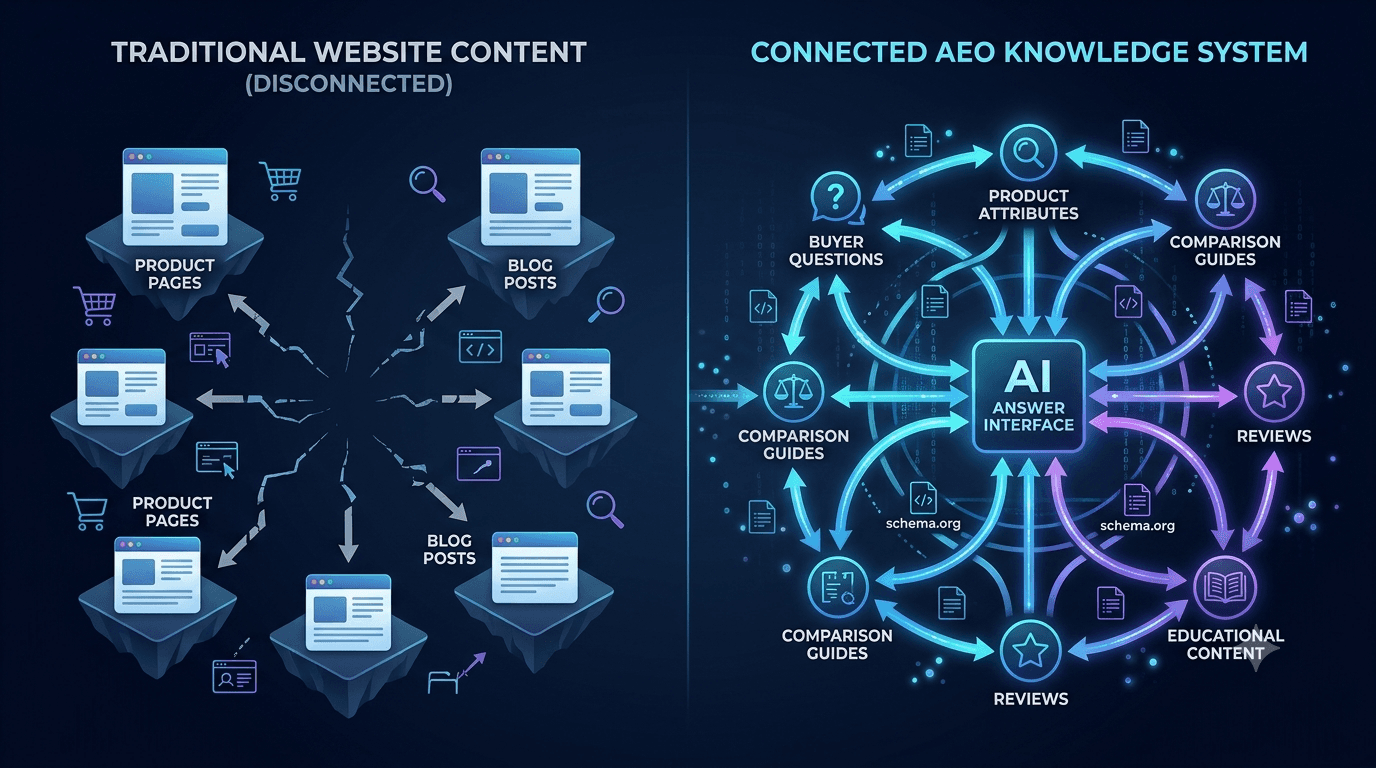
Look for a central guide that links to product comparisons, individual use cases, troubleshooting resources, glossary pages, product pages, and supporting research. Then check whether those pages link back to one another naturally.
This structure helps visitors move from a broad question to a precise answer. It also helps search and answer systems understand the relationships between topics, products, customer problems, and brand expertise.
A skincare brand, for example, might connect an ingredient guide to articles about sensitive skin, fragrance concerns, product layering, seasonal routines, and relevant product pages. A kitchen brand might connect cookware materials with cleaning guides, induction compatibility, size comparisons, and recipe demonstrations.
When a competitor begins building these connected topic clusters, they may be trying to establish authority around an entire decision journey rather than rank one page for one phrase.
This shift is also discussed in XENA’s analysis of the AI retail search transformation, where product discovery increasingly depends on intent, context, and complete product information.
Signal Four: Their Structured Product Information Is Improving
Some of the most important AEO investments are invisible to ordinary shoppers.
Inspect a competitor’s product pages using a structured data testing tool or by reviewing the page source. Look for accurate product, offer, organization, review, shipping, return, and availability information.
The presence of structured data does not prove an AEO strategy by itself. Many websites have basic markup installed by default. The stronger signal is completeness and consistency.
Does the structured price match the visible price? Is availability current? Are product identifiers stable? Are variants clearly differentiated? Are ratings supported by visible reviews? Are shipping and return details included?
Structured product data can help search systems understand price, availability, ratings, shipping information, return policies, product variants, and other attributes. Providing both accurate page markup and current product feed information can improve eligibility across product discovery experiences. (Google for Developers)
A sudden improvement across many product pages may indicate investment in catalog infrastructure, feed management, or technical search optimization. That is a stronger signal than adding a single FAQ section.
Signal Five: Their Brand Is Appearing in More Independent Sources
Answer engines do not need to rely entirely on what a brand says about itself.
They may use reviews, publishers, communities, expert commentary, retailer pages, product databases, and other independent sources to evaluate a recommendation.
Search for your competitor’s brand alongside important category questions. Review recent articles, interviews, product roundups, creator content, customer discussions, and professional resources.
Has the competitor gained more mentions in credible publications? Are subject matter experts discussing the company? Are product claims repeated consistently across independent sources? Are authoritative pages linking to the competitor’s educational content?
A growing third party footprint can indicate that the competitor is investing in digital public relations, expert partnerships, product seeding, original research, or authority building.
The quality of these mentions matters more than the raw quantity. Twenty copied announcements may provide less value than one detailed product evaluation written by a credible specialist.
Signal Six: Their Reviews Are Shaping Their Marketing Language
Reviews contain the exact phrases customers use when describing problems, outcomes, objections, and unexpected use cases.
A competitor investing seriously in AEO may begin using that language across product descriptions, comparison pages, support content, and buying guides.
Compare recent reviews with the wording on the competitor’s updated pages. Look for repeated phrases related to fit, comfort, installation, durability, flavor, texture, portability, maintenance, or compatibility.
Suppose reviewers repeatedly praise a travel bag because it fits under smaller airline seats. If the competitor later adds under seat measurements, packing examples, and airline use cases to its product page, it is likely turning customer language into searchable product knowledge.
This is valuable for both conversion and AI discovery. Natural customer language helps connect formal product attributes with the way real people describe their needs.
Signal Seven: Their Comparison Content Becomes More Honest
Weak comparison content says the competitor’s product is better in every possible situation.
Strong comparison content explains tradeoffs.
Look for pages comparing product sizes, materials, models, price ranges, features, or use cases. Check whether the content helps the reader choose, even when a different option may suit a particular need better.
Balanced comparison content is a strong AEO signal because it resembles the work an answer engine is trying to perform. It defines decision criteria, explains differences, identifies ideal users, and acknowledges limitations.
A competitor may also begin publishing pages that answer “best for” questions. These pages might explain which model is best for beginners, small spaces, frequent travel, sensitive users, limited budgets, or professional use.
When these pages contain clear evidence rather than unsupported claims, they become useful sources for recommendation driven discovery.
The growth of personal buying assistants will make this type of clarity even more important. XENA’s article on how AI buyers may reshape commerce explores why complete, trustworthy product context will increasingly influence which brands are selected.
Signal Eight: Their AI Visibility Improves Across Repeated Tests
The most direct way to assess competitor AEO activity is to monitor actual answer engine results.
Do not test one broad prompt and draw a conclusion. Results can vary based on phrasing, location, product availability, user context, and the engine being used.
Create a stable group of buyer style questions for your category. Include discovery questions, product comparisons, problem based questions, budget constraints, material preferences, compatibility needs, and common objections.
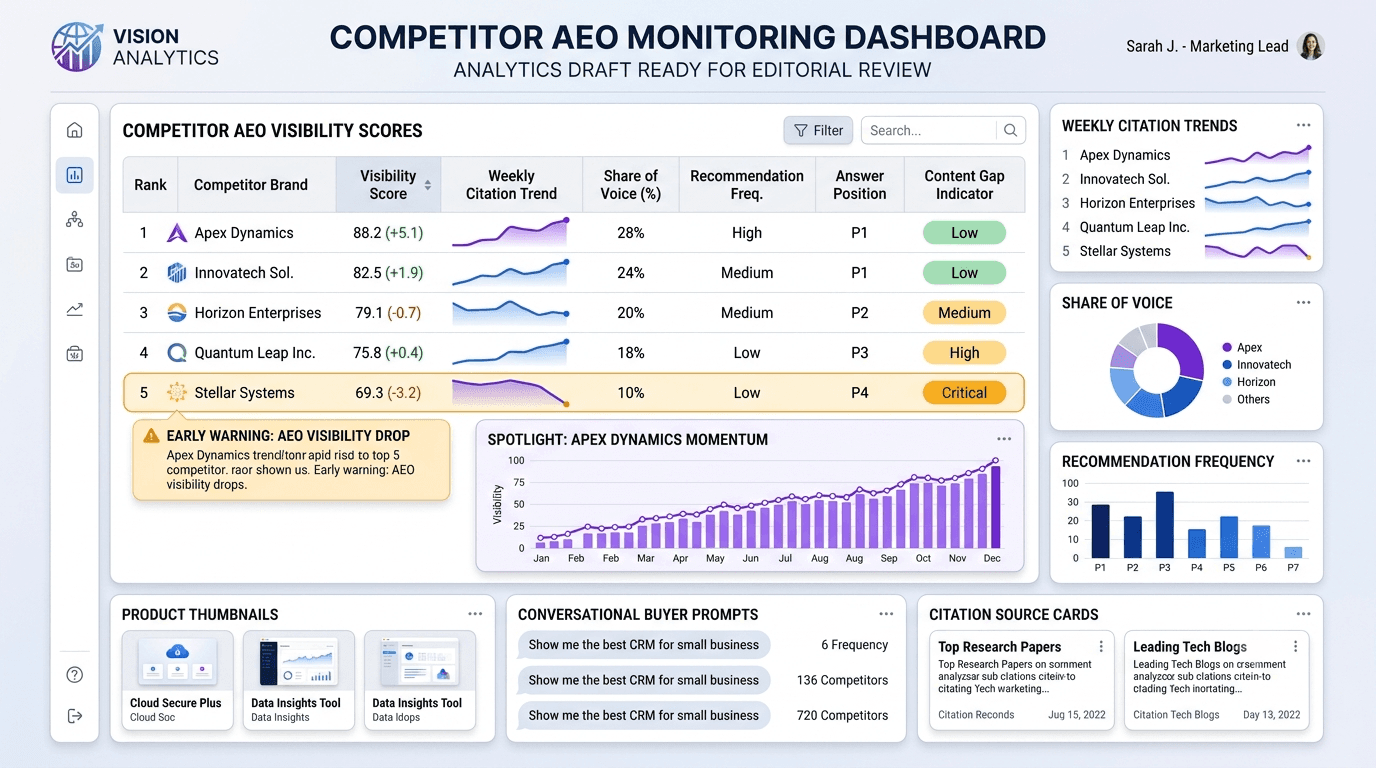
Run the same questions regularly. Record which brands are mentioned, which products are recommended, what order they appear in, which pages are cited, and whether the product details are accurate.
The important signal is not one appearance. It is momentum.
A competitor that moves from occasional mentions to frequent recommendations across several question types is probably improving the signals that answer systems use. If the cited pages also change from retailer listings to the competitor’s own guides and product pages, its content authority may be strengthening.
XENA SearchPanel is designed for this type of monitoring. It measures AI visibility by product, compares performance with competitors, tracks citation rate and share of voice, displays real answer engine responses, and records changes over time. (xenaintelligence.com)
This replaces occasional manual checks with a repeatable view of who is gaining visibility, for which buyer intents, and why.
Signal Nine: Their Publishing Cadence Has Become More Strategic
A sudden increase in content production can signal new investment, although speed alone does not confirm AEO work.
Study the pattern behind the publishing.
Are several articles being released around one product category? Are old pages being refreshed instead of abandoned? Are new articles filling obvious gaps in the customer journey? Are product pages and supporting guides being updated at the same time?
An organized cadence suggests the competitor has moved beyond isolated content creation. It may be operating from a question map, content brief system, or category authority plan.
You can also look for changes in the company’s hiring activity. Roles related to AI search, structured content, product information, digital public relations, technical SEO, content operations, or generative discovery may reveal where the brand is allocating resources.
The exact job title matters less than the combination of responsibilities.
Build a Simple Competitor AEO Investment Score
You do not need perfect data to compare competitors.
Score each competitor across five areas: answer focused content, product data completeness, technical clarity, independent authority, and AI answer visibility.
Use a score from zero to two for each area. Zero means there is little visible evidence. One means the activity is present but inconsistent. Two means the activity appears systematic across multiple pages, products, or queries.
A total score below four suggests limited visible investment. A score between four and seven suggests the competitor is experimenting. A score above seven suggests a coordinated AEO program may already be underway.
Repeat the assessment monthly. The direction of movement is often more useful than the absolute score.
A competitor moving from three to six deserves attention, even when another competitor remains at eight. The first business may be increasing investment rapidly while the second is maintaining work completed earlier.
What to Do When You Spot the Signals
The wrong response is to copy every page your competitor publishes.
Begin with the questions that directly influence purchases in your category. Use site search terms, customer service conversations, reviews, returns, marketplace questions, sales calls, and advertising search terms to identify what customers actually want to know.
Next, evaluate whether your product pages answer those questions with specific, verifiable information. Improve missing attributes, comparison context, compatibility details, use cases, limitations, shipping expectations, and return terms.
Then create supporting content around questions that cannot be answered comfortably on a product page. Build buying guides, comparison resources, educational articles, setup instructions, care guides, and troubleshooting pages. Connect them through meaningful internal links.
Finally, measure answer visibility over time. Track mentions, recommendations, citation sources, factual accuracy, share of voice, and the types of questions where competitors continue to win.
This approach turns AEO from a vague trend into an operating discipline.
For a wider view of how connected data and faster optimization support modern commerce teams, read The 2026 AI Commerce Playbook.
The Best Time to Detect AEO Investment Is Before the Results Look Obvious
Competitors do not become dominant in AI answers overnight.
They improve the content that explains their products. They create pages around specific customer needs. They clean up product data. They strengthen independent authority. They test how their brand appears in answer engines. Then they repeat the process.
The advantage comes from recognizing this pattern early.
Do not wait for a competitor to appear in every recommendation before taking AEO seriously. Watch the structure of its content, the quality of its product data, the growth of its citations, and the consistency of its AI visibility.
Those signals will tell you where the market is moving before a traditional traffic report does.
Explore more strategies for AI search, product discovery, e-commerce automation, and sustainable marketplace growth on the XENA Intelligence blog.