Your Conversion Problem May Be Hiding in Plain Sight
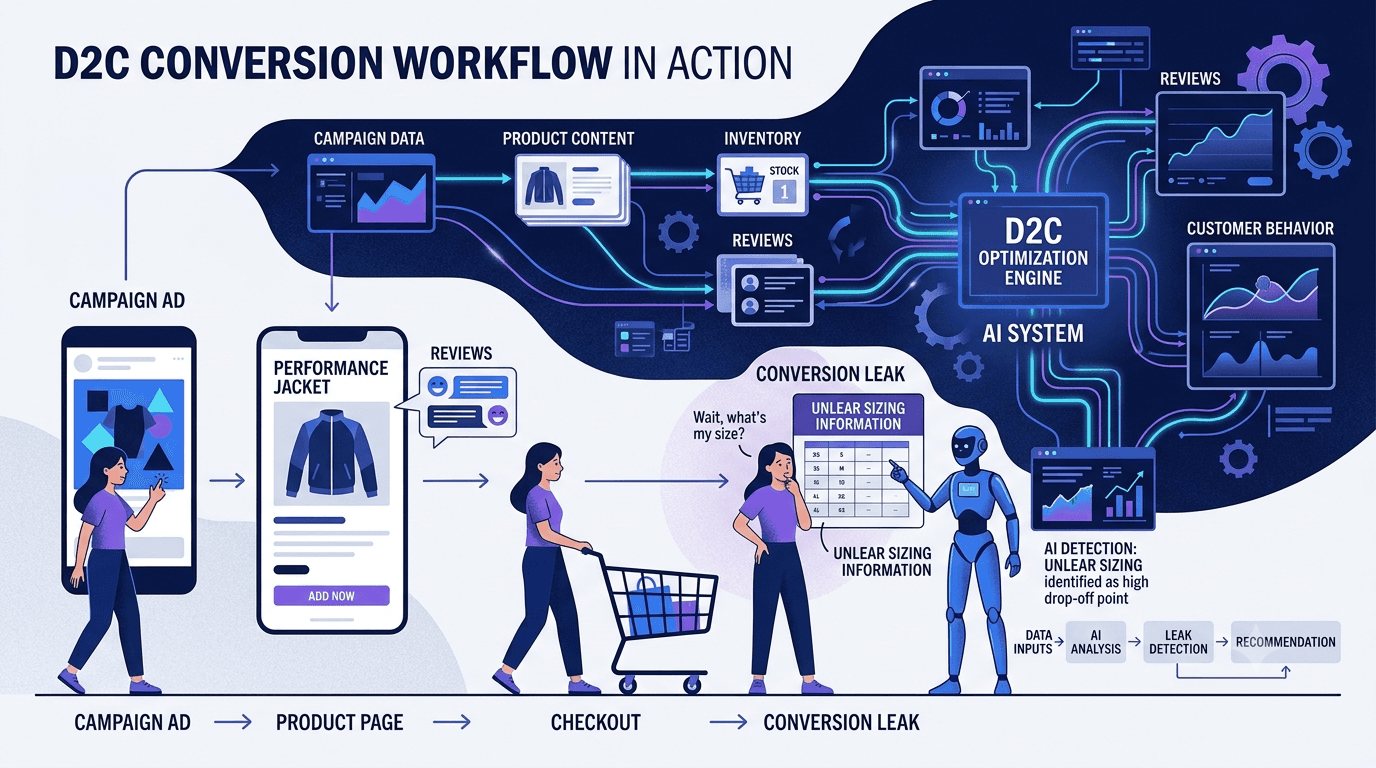
A shopper clicks an ad for a pair of running shoes.
The ad promises comfort for long distances. The product page focuses on style. The size guide is hard to find. Reviews mention that the shoes run small. The most popular size is nearly sold out.
The shopper leaves.
One dashboard records a click. Another records a product page visit. A third records low stock. The review platform holds the sizing complaints. Each system sees part of the problem.
The team sees it days later.
An AI conversion workflow connects those signals while the shopper journey is still active. It can spot the gap between the ad promise and the product page, flag the sizing concern, detect the stock risk, and recommend the next action.
Speed matters. AI platforms are projected to influence about $20.57 billion in United States retail ecommerce spending during 2026, almost four times the 2025 figure. Many of those purchases will still finish on a brand or retailer website, which keeps the product page and checkout experience at the center of conversion. (EMARKETER)
What Is an AI Conversion Workflow?
An AI conversion workflow is a connected process that watches customer and business signals, finds a likely sales problem, recommends an action, carries out approved changes, and measures what happens next.
Think of it as a loop.
A shopper searches, clicks, browses, asks a question, adds an item to the cart, or leaves. At the same time, prices change, inventory moves, ads spend money, reviews arrive, and competitors adjust their offers.
AI reads those signals together.
Then it helps the team answer a useful question: What should change right now to give this product a better chance of converting?
Current agentic commerce research points toward focused agents built for specific jobs, such as product discovery, bundle creation, reordering, and shopping support. Discovery and conversion are receiving the most attention first, while broader loyalty and post purchase uses continue to develop. (Commercetools)
XENA’s guide to agentic AI in ecommerce explains how teams can move from passive reporting to systems that support faster daily decisions.
Step One: Find the Real Source of Conversion Friction
A falling conversion rate rarely explains itself.
The cause may be poor traffic quality. It may be a weak product page, an unclear shipping promise, a price change, an expired discount, missing stock, or a review trend that has started to worry shoppers.
AI can compare several signals at once.
Imagine a skincare brand running paid ads for a new moisturizer. Click through rate is strong, yet sales stay flat. An AI workflow reviews search terms, ad copy, product page behavior, customer questions, and recent reviews.
It finds that shoppers are repeatedly asking whether the product is fragrance free. The answer exists deep inside the ingredient section, while the ad never mentions it.
That’s a fixable problem.
The workflow can suggest moving the fragrance information near the top of the page, adding it to the product title, updating the ad message, and testing a new image that shows the key ingredient claims.
A weekly report may show the same issue later. By then, the campaign has already spent more money sending shoppers to a page that doesn’t answer their main question.
The 2026 AI Commerce Playbook offers a wider view of how ecommerce teams can connect prediction, automation, and clear operating rules.
Step Two: Turn Product Data Into a Conversion Tool
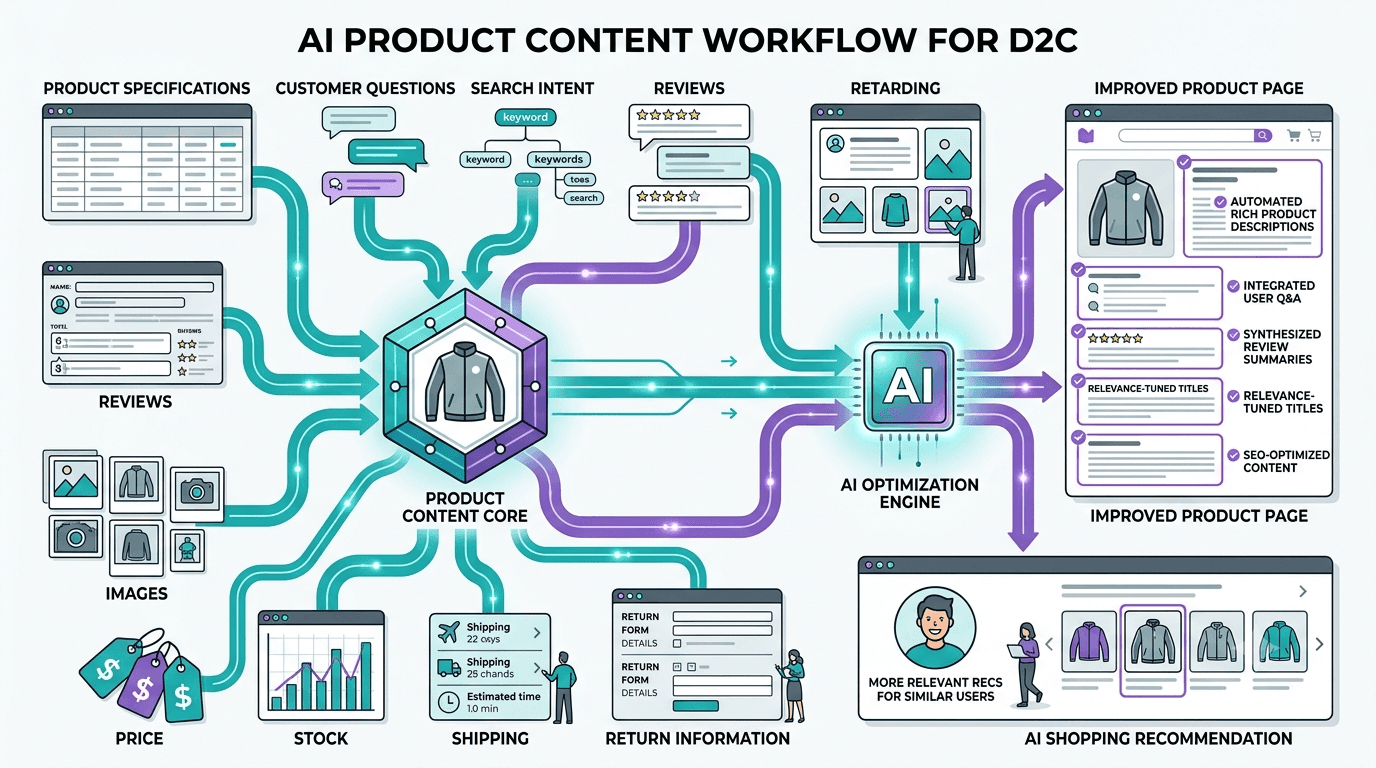
AI shopping systems need clear facts.
They may compare materials, ingredients, dimensions, compatibility, availability, delivery, reviews, and return terms before recommending a product. Systems built for agentic commerce also need reliable access to product data, APIs, and checkout steps so they can understand what can actually be purchased. (Invisible Technologies)
Incomplete data creates gaps.
A shopper may ask for a carry on suitcase that weighs less than three kilograms and fits a certain airline’s cabin limits. A product page that says “lightweight and travel friendly” gives very little help.
A strong page gives the exact weight, dimensions, capacity, wheel type, shell material, lock details, warranty, and airline fit guidance.
Those details help AI systems judge relevance. They also help people buy with more confidence.
Recent consumer research found that 31 percent of shoppers were most likely to trust an AI recommendation when it included detailed product descriptions and specifications. (Salsify)
So the workflow should check every important product page for missing attributes, vague claims, outdated prices, conflicting information, and unanswered buyer questions.
XENA Foresight uses AI to improve product listings and support stronger marketplace visibility. (Xena Intelligence) Teams can pair that work with XENA’s guide to the AI retail search shift, which shows how product content can match the way shoppers now describe needs and use cases.
Step Three: Match the Message to the Shopper’s Intent
A single product can appeal to several types of buyers.
A backpack may attract commuters, students, photographers, and weekend travelers. Each group cares about different details.
The commuter wants laptop protection and rain resistance. The student cares about storage and price. The photographer needs padded compartments. The traveler checks weight, cabin size, and security.
An AI workflow can group search terms, ad queries, site searches, and customer questions by intent. It can then connect each intent with the most relevant message, landing page, image, or offer.
That creates a cleaner path from interest to purchase.
A customer searching for “backpack for rainy bike commute” should reach a page that quickly shows waterproof material, reflective details, laptop protection, and a secure fit.
Generic copy slows the decision. Specific answers move it forward.
This approach also supports Generative Engine Optimization, or GEO. Generative search tools gather information from several sources and use it to answer detailed questions. Clear pages, structured product facts, useful comparisons, and direct answers can improve a brand’s chances of appearing in those responses. (Salsify)
For a closer look at this discovery layer, read How AEO Is Changing the Future of D2C Commerce.
Step Four: Adjust Campaigns While Intent Is Fresh
Customer demand changes throughout the day.
A product can start trending after a creator post. A competitor may run out of stock. A promotion may increase traffic faster than expected. Conversion may fall after a price change.
Static campaign settings miss many of these shifts.
An AI workflow can watch conversion rate, cost per sale, margin, stock, placement, search intent, and time of day. When a signal moves outside an approved range, the system can respond.
It may lower spend on a low stock product. It may move budget toward a better converting search theme. It may flag an ad whose promise doesn’t match the landing page. It may recommend a fresh creative when response begins to weaken.
The rules matter.
A D2C team should define margin limits, stock limits, budget caps, target conversion rates, and actions that still need human approval. Clear boundaries help automation move quickly without creating avoidable risk.
XENA 360 brings sales tracking, ad optimization, and operational data into one view, giving ecommerce teams a shared source of performance information. (Xena Intelligence) XENA’s ecommerce growth playbook for 2026 explains how predictive signals and frequent campaign updates can support profitable growth.
Step Five: Recover Shoppers Before They Disappear
Many abandoned carts are treated the same way.
The shopper receives a reminder. Then perhaps a discount.
That approach ignores the reason the person left.
A shopper may have been worried about delivery time. Another may have needed sizing help. Someone else may have found the return policy confusing. A fourth shopper may simply have been interrupted.
AI can use session behavior, customer questions, cart contents, location, stock, and past interactions to choose a more useful response.
A shopper who spent time reading the size guide may receive fit advice and an easy exchange message.
A shopper who checked delivery details may receive an updated arrival estimate.
A returning customer may receive a reminder based on the product category they already use.
The message becomes more relevant because it responds to a visible concern.
And timing helps. A clear answer delivered while the purchase is still fresh can recover a sale without training every customer to wait for a coupon.
Step Six: Feed Returns and Reviews Back Into the Workflow
The conversion process doesn’t end at checkout.
Returns, reviews, support requests, and repeat purchases show whether the original promise matched the real product experience.
Suppose a clothing brand improves its product page and sees more sales. Two weeks later, returns rise because buyers say the fit is tighter than expected.
The workflow should catch that pattern.
It can recommend updating the size guide, changing the fit description, adding model measurements, adjusting ad copy, and answering the issue in the FAQ.
That protects future conversion quality.
Higher sales with higher returns can hide a weak customer experience. A useful AI workflow tracks the sale and what happened after it.
Reviews also give AI shopping systems richer context about real use cases, benefits, and common concerns. Product stories, social proof, and clear specifications can influence whether a recommendation feels credible to the shopper. (EMARKETER)
XENA’s article on preparing for customers with AI buyers shows how these signals can shape both discovery and purchase decisions.

Start With One Conversion Leak
You don’t need to automate the whole customer journey at once.
Choose one costly problem.
It might be high product page exits, weak conversion from paid traffic, repeated product questions, rising cart abandonment, or returns caused by unclear expectations.
Connect the few data sources needed to understand that problem. Set one clear target. Give the workflow a small group of approved actions. Then measure the result.
For example, a D2C skincare brand could begin with one hero product.
The workflow watches paid search terms, product page behavior, customer questions, stock, reviews, and conversion. It finds the most common unanswered concern. The team updates the page and campaign message. The system tracks whether conversion improves and whether returns stay stable.
That’s a useful starting point.
Once the loop works, the brand can extend it to more products, channels, and customer moments.
The Fastest Team Often Wins the Sale
D2C brands already have plenty of data.
The gap sits between seeing a problem and fixing it.
AI conversion workflows can shorten that gap. They help teams catch friction earlier, improve product information, match messages to intent, adjust campaigns faster, and learn from what happens after the purchase.
The result is a customer journey that feels clearer and easier.
And that’s what conversion needs.