View More Blogs

E-commerce Insights

Inventory as a Growth Lever in 2026: Predictive Demand and Smart Allocation

How modern inventory decisions unlock margin, speed, and customer loyalty in 2026

Why inventory is quietly your strongest growth channel

Most teams treat inventory as a constraint that marketing needs to work around. In 2026 the inverse is true. The best growth programs start with a live view of demand risk and inventory opportunity, then let campaigns, pricing, and content react to that reality. If you have not aligned supply signals with marketing yet, start by skimming XENA’s take on the evolution of AI in e-commerce so you see how predictive models convert operational data into revenue moves.


Predictive demand that informs spend, price, and content

Forecasts are only useful if they change what you do today. Tie unit level predictions to three levers. Spend should scale with predicted sell through and inventory cover, not just with last click ROAS. Price and promotional intensity should flex in advance of stock outs or overstock risk, not after the fact. Content should highlight variants and bundles that balance demand across the catalog. If you need a playbook for connecting predictions to daily execution, use XENA’s PPC playbook for 2026 to align budgets and pacing with forecasted demand, then layer in creative rules from our guide on AI transforming ecommerce personalization.

Dynamic bundles that raise AOV and protect margin

Bundles are more than a merchandising trick. They are an inventory balancing tool. Pair fast movers with slower complements to raise average order value while smoothing depletion rates. Rotate components based on upcoming supply, not just on historical conversion. If you are new to automation that powers these decisions, XENA’s overview of e-commerce marketing automation shows how to set triggers, map data, and keep storefront logic tidy. For practical inspiration, these five game changing AI use cases include tactics you can ship without a rebuild.


Smart allocation across marketplace, DTC, and social

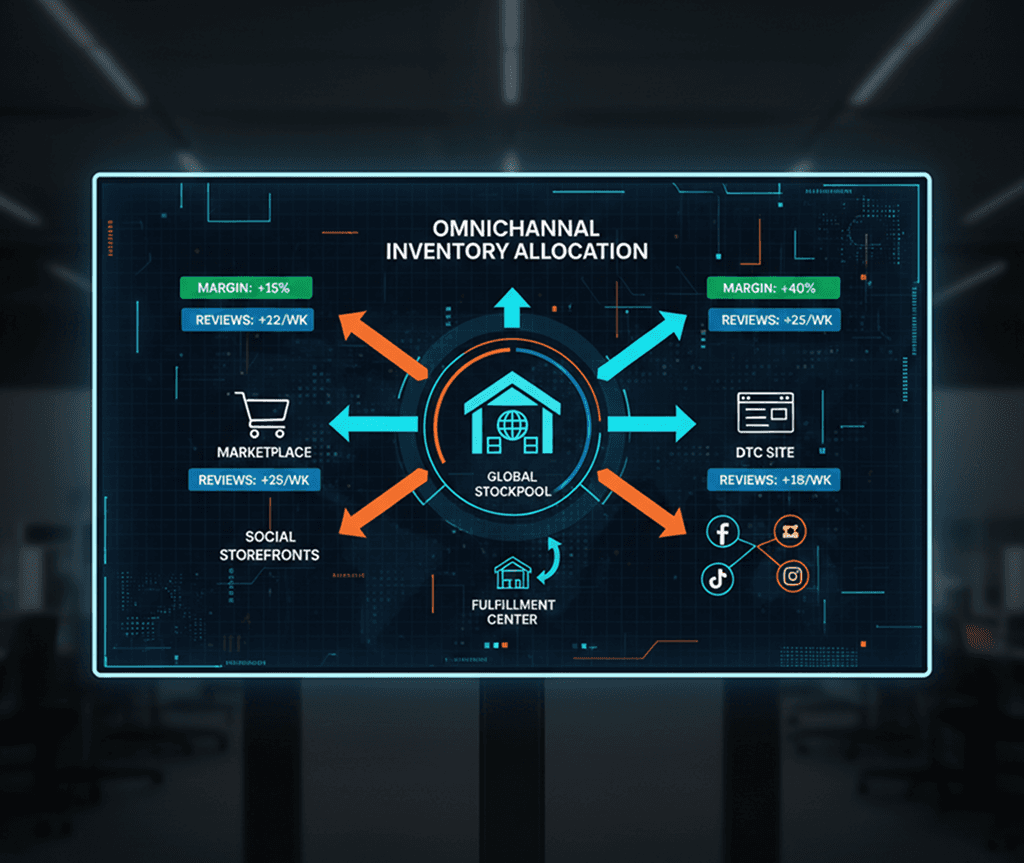
Inventory allocation should mirror real buyer intent across channels. Send depth to the listings and placements that compound reviews and visibility, but protect DTC availability for high margin repeat buyers. When social spikes push sudden demand, throttle marketplace bids and surface waitlist experiences on DTC rather than draining profitable stock. To understand how social discovery converts when supply is ready, read XENA’s explainer on what social commerce is and our take on social and marketplace partnerships. If you also sell on Amazon, keep fees in your margin math with this breakdown of individual vs professional plans and this primer on getting started on Amazon.

Hourly optimization that respects stock reality

Bids and budgets that ignore inventory burn lead to either stock outs or stale stock. Tie paid media controls to inventory cover, inbound ETAs, and forecast error bands. When risk rises, pause hero variants and push substitute SKUs, bundles, or adjacent categories that still satisfy intent. For marketplace ads, borrow structures from our walkthrough on Amazon ad automation, then add inventory based rules from the PPC playbook so changes happen automatically.

The playbook you can ship this quarter

Consolidate inventory, pricing, and campaign data in one view that refreshes hourly. Define thresholds for low cover, overstock, and forecast variance, then map each threshold to a set of actions. Actions include bid changes, creative swaps, bundle rotations, and channel reallocation. Review results weekly, not annually, and keep improving the thresholds. If you want a quick pairing while you build, combine the PPC playbook with our guide to marketing automation so your system reacts faster than the market.

How XENA Intelligence helps

XENA Intelligence turns inventory signals into action. Our predictive analytics forecast demand and inventory cover at the SKU level, then our hourly optimization engine adjusts bids, budgets, placements, and featured products in real time. The expert support layer helps you set bundle strategies, channel allocation rules, and margin guardrails that fit your business. If you want a quick primer before you roll this out, start with the evolution of AI in e-commerce and the overview of AI driven personalization to see how your first party data fuels smarter inventory decisions.

Why inventory is quietly your strongest growth channel

Most teams treat inventory as a constraint that marketing needs to work around. In 2026 the inverse is true. The best growth programs start with a live view of demand risk and inventory opportunity, then let campaigns, pricing, and content react to that reality. If you have not aligned supply signals with marketing yet, start by skimming XENA’s take on the evolution of AI in e-commerce so you see how predictive models convert operational data into revenue moves.


Predictive demand that informs spend, price, and content

Forecasts are only useful if they change what you do today. Tie unit level predictions to three levers. Spend should scale with predicted sell through and inventory cover, not just with last click ROAS. Price and promotional intensity should flex in advance of stock outs or overstock risk, not after the fact. Content should highlight variants and bundles that balance demand across the catalog. If you need a playbook for connecting predictions to daily execution, use XENA’s PPC playbook for 2026 to align budgets and pacing with forecasted demand, then layer in creative rules from our guide on AI transforming ecommerce personalization.

Dynamic bundles that raise AOV and protect margin

Bundles are more than a merchandising trick. They are an inventory balancing tool. Pair fast movers with slower complements to raise average order value while smoothing depletion rates. Rotate components based on upcoming supply, not just on historical conversion. If you are new to automation that powers these decisions, XENA’s overview of e-commerce marketing automation shows how to set triggers, map data, and keep storefront logic tidy. For practical inspiration, these five game changing AI use cases include tactics you can ship without a rebuild.


Smart allocation across marketplace, DTC, and social

Inventory allocation should mirror real buyer intent across channels. Send depth to the listings and placements that compound reviews and visibility, but protect DTC availability for high margin repeat buyers. When social spikes push sudden demand, throttle marketplace bids and surface waitlist experiences on DTC rather than draining profitable stock. To understand how social discovery converts when supply is ready, read XENA’s explainer on what social commerce is and our take on social and marketplace partnerships. If you also sell on Amazon, keep fees in your margin math with this breakdown of individual vs professional plans and this primer on getting started on Amazon.

Hourly optimization that respects stock reality

Bids and budgets that ignore inventory burn lead to either stock outs or stale stock. Tie paid media controls to inventory cover, inbound ETAs, and forecast error bands. When risk rises, pause hero variants and push substitute SKUs, bundles, or adjacent categories that still satisfy intent. For marketplace ads, borrow structures from our walkthrough on Amazon ad automation, then add inventory based rules from the PPC playbook so changes happen automatically.


The playbook you can ship this quarter

Consolidate inventory, pricing, and campaign data in one view that refreshes hourly. Define thresholds for low cover, overstock, and forecast variance, then map each threshold to a set of actions. Actions include bid changes, creative swaps, bundle rotations, and channel reallocation. Review results weekly, not annually, and keep improving the thresholds. If you want a quick pairing while you build, combine the PPC playbook with our guide to marketing automation so your system reacts faster than the market.

How XENA Intelligence helps

XENA Intelligence turns inventory signals into action. Our predictive analytics forecast demand and inventory cover at the SKU level, then our hourly optimization engine adjusts bids, budgets, placements, and featured products in real time. The expert support layer helps you set bundle strategies, channel allocation rules, and margin guardrails that fit your business. If you want a quick primer before you roll this out, start with the evolution of AI in e-commerce and the overview of AI driven personalization to see how your first party data fuels smarter inventory decisions.

Why inventory is quietly your strongest growth channel

Most teams treat inventory as a constraint that marketing needs to work around. In 2026 the inverse is true. The best growth programs start with a live view of demand risk and inventory opportunity, then let campaigns, pricing, and content react to that reality. If you have not aligned supply signals with marketing yet, start by skimming XENA’s take on the evolution of AI in e-commerce so you see how predictive models convert operational data into revenue moves.


Predictive demand that informs spend, price, and content

Forecasts are only useful if they change what you do today. Tie unit level predictions to three levers. Spend should scale with predicted sell through and inventory cover, not just with last click ROAS. Price and promotional intensity should flex in advance of stock outs or overstock risk, not after the fact. Content should highlight variants and bundles that balance demand across the catalog. If you need a playbook for connecting predictions to daily execution, use XENA’s PPC playbook for 2026 to align budgets and pacing with forecasted demand, then layer in creative rules from our guide on AI transforming ecommerce personalization.

Dynamic bundles that raise AOV and protect margin

Bundles are more than a merchandising trick. They are an inventory balancing tool. Pair fast movers with slower complements to raise average order value while smoothing depletion rates. Rotate components based on upcoming supply, not just on historical conversion. If you are new to automation that powers these decisions, XENA’s overview of e-commerce marketing automation shows how to set triggers, map data, and keep storefront logic tidy. For practical inspiration, these five game changing AI use cases include tactics you can ship without a rebuild.


Smart allocation across marketplace, DTC, and social

Inventory allocation should mirror real buyer intent across channels. Send depth to the listings and placements that compound reviews and visibility, but protect DTC availability for high margin repeat buyers. When social spikes push sudden demand, throttle marketplace bids and surface waitlist experiences on DTC rather than draining profitable stock. To understand how social discovery converts when supply is ready, read XENA’s explainer on what social commerce is and our take on social and marketplace partnerships. If you also sell on Amazon, keep fees in your margin math with this breakdown of individual vs professional plans and this primer on getting started on Amazon.

Hourly optimization that respects stock reality

Bids and budgets that ignore inventory burn lead to either stock outs or stale stock. Tie paid media controls to inventory cover, inbound ETAs, and forecast error bands. When risk rises, pause hero variants and push substitute SKUs, bundles, or adjacent categories that still satisfy intent. For marketplace ads, borrow structures from our walkthrough on Amazon ad automation, then add inventory based rules from the PPC playbook so changes happen automatically.


The playbook you can ship this quarter

Consolidate inventory, pricing, and campaign data in one view that refreshes hourly. Define thresholds for low cover, overstock, and forecast variance, then map each threshold to a set of actions. Actions include bid changes, creative swaps, bundle rotations, and channel reallocation. Review results weekly, not annually, and keep improving the thresholds. If you want a quick pairing while you build, combine the PPC playbook with our guide to marketing automation so your system reacts faster than the market.

How XENA Intelligence helps

XENA Intelligence turns inventory signals into action. Our predictive analytics forecast demand and inventory cover at the SKU level, then our hourly optimization engine adjusts bids, budgets, placements, and featured products in real time. The expert support layer helps you set bundle strategies, channel allocation rules, and margin guardrails that fit your business. If you want a quick primer before you roll this out, start with the evolution of AI in e-commerce and the overview of AI driven personalization to see how your first party data fuels smarter inventory decisions.

Why inventory is quietly your strongest growth channel

Most teams treat inventory as a constraint that marketing needs to work around. In 2026 the inverse is true. The best growth programs start with a live view of demand risk and inventory opportunity, then let campaigns, pricing, and content react to that reality. If you have not aligned supply signals with marketing yet, start by skimming XENA’s take on the evolution of AI in e-commerce so you see how predictive models convert operational data into revenue moves.


Predictive demand that informs spend, price, and content

Forecasts are only useful if they change what you do today. Tie unit level predictions to three levers. Spend should scale with predicted sell through and inventory cover, not just with last click ROAS. Price and promotional intensity should flex in advance of stock outs or overstock risk, not after the fact. Content should highlight variants and bundles that balance demand across the catalog. If you need a playbook for connecting predictions to daily execution, use XENA’s PPC playbook for 2026 to align budgets and pacing with forecasted demand, then layer in creative rules from our guide on AI transforming ecommerce personalization.

Dynamic bundles that raise AOV and protect margin

Bundles are more than a merchandising trick. They are an inventory balancing tool. Pair fast movers with slower complements to raise average order value while smoothing depletion rates. Rotate components based on upcoming supply, not just on historical conversion. If you are new to automation that powers these decisions, XENA’s overview of e-commerce marketing automation shows how to set triggers, map data, and keep storefront logic tidy. For practical inspiration, these five game changing AI use cases include tactics you can ship without a rebuild.


Smart allocation across marketplace, DTC, and social

Inventory allocation should mirror real buyer intent across channels. Send depth to the listings and placements that compound reviews and visibility, but protect DTC availability for high margin repeat buyers. When social spikes push sudden demand, throttle marketplace bids and surface waitlist experiences on DTC rather than draining profitable stock. To understand how social discovery converts when supply is ready, read XENA’s explainer on what social commerce is and our take on social and marketplace partnerships. If you also sell on Amazon, keep fees in your margin math with this breakdown of individual vs professional plans and this primer on getting started on Amazon.

Hourly optimization that respects stock reality

Bids and budgets that ignore inventory burn lead to either stock outs or stale stock. Tie paid media controls to inventory cover, inbound ETAs, and forecast error bands. When risk rises, pause hero variants and push substitute SKUs, bundles, or adjacent categories that still satisfy intent. For marketplace ads, borrow structures from our walkthrough on Amazon ad automation, then add inventory based rules from the PPC playbook so changes happen automatically.


The playbook you can ship this quarter

Consolidate inventory, pricing, and campaign data in one view that refreshes hourly. Define thresholds for low cover, overstock, and forecast variance, then map each threshold to a set of actions. Actions include bid changes, creative swaps, bundle rotations, and channel reallocation. Review results weekly, not annually, and keep improving the thresholds. If you want a quick pairing while you build, combine the PPC playbook with our guide to marketing automation so your system reacts faster than the market.

How XENA Intelligence helps

XENA Intelligence turns inventory signals into action. Our predictive analytics forecast demand and inventory cover at the SKU level, then our hourly optimization engine adjusts bids, budgets, placements, and featured products in real time. The expert support layer helps you set bundle strategies, channel allocation rules, and margin guardrails that fit your business. If you want a quick primer before you roll this out, start with the evolution of AI in e-commerce and the overview of AI driven personalization to see how your first party data fuels smarter inventory decisions.

Ready to Take Your E-Commerce Growth to the Next Level?

Discover how XENA helps brands and sellers optimize listings, boost visibility, and stay ahead in competitive marketplaces.

Book a Meeting

2025 XENA Intelligence Inc.

Louisville, Kentucky

2025 XENA Intelligence Inc.

Louisville, Kentucky