View More Blogs

E-commerce Insights

Holiday 2025 Changed E-commerce Buying Behavior. Here’s How Brands Can Win in 2026

Holiday 2025 E-commerce Insights and 2026 Growth Playbook

The holiday season that reset expectations

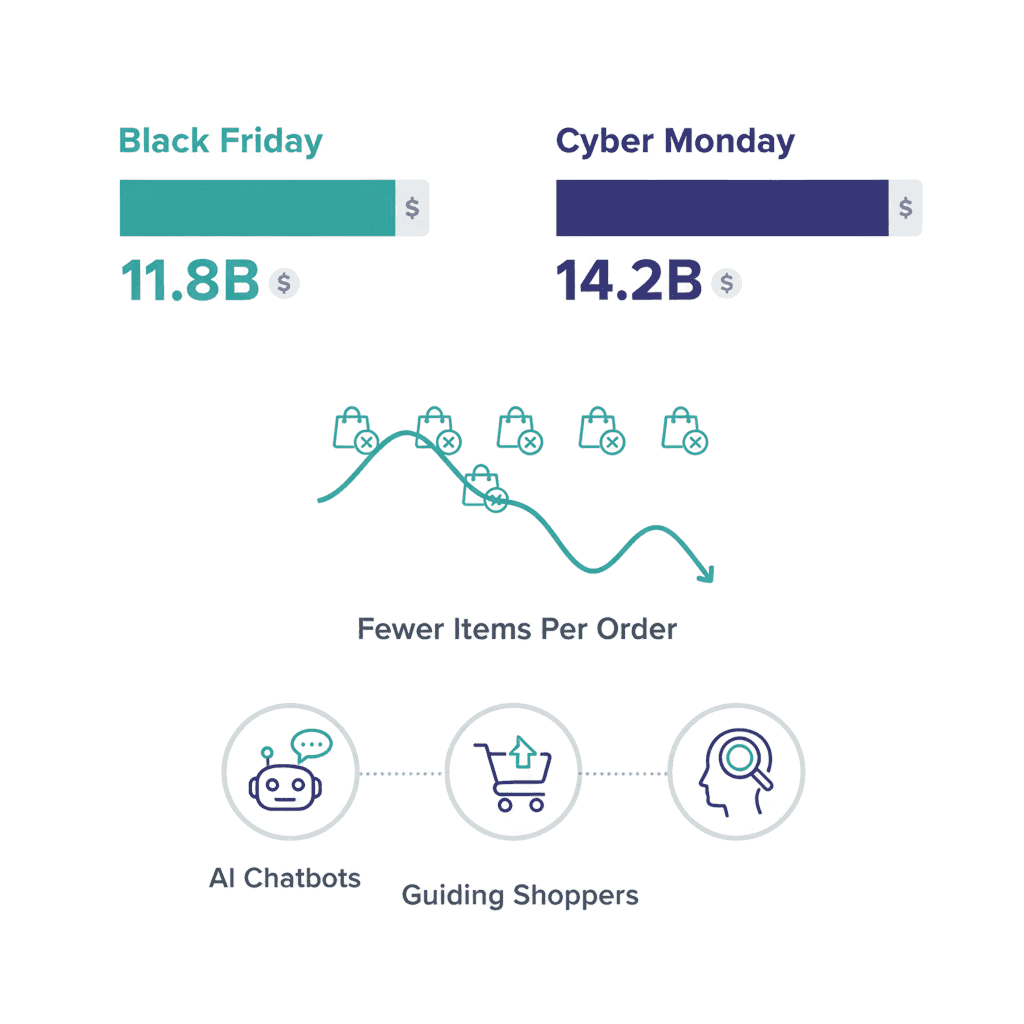
Holiday 2025 was a turning point for online retail. Shoppers spent aggressively on Black Friday, with U.S. online sales hitting a record 11.8 billion according to Adobe’s analysis, while AI shopping assistants drove an exceptional surge in traffic and deal discovery. Reuters

Cyber Monday continued the pattern. Total online spend was projected at 14.2 billion, up 6 percent year over year, but with shoppers purchasing fewer items as average prices rose and consumers traded up to higher value goods. Peak spend clustered in the late evening window between 8 p.m. and 10 p.m., where activity spiked sharply. Investopedia

In several international markets, promotional momentum was also strong. Analysts reported double digit lifts for Black Friday online sales, supported by policy shifts and direct to consumer offers that nudged hesitant buyers to convert. The Economic Times

What changed under the hood

The common thread wasn’t just discounts. AI quietly became a frontline sales channel. Retailers and marketplaces deployed conversational search and smart guides that matched shoppers to the right products faster, which helped lift revenue even as order counts flattened. Reuters

At the same time, retail media continued to concentrate budgets. Forecasts show the channel expanding again into 2026, with most incremental spend flowing to a small set of marketplace ad networks. For brands, this bifurcation raises the stakes on creative testing, budget pacing, and incrementality measurement. EMARKETER

Social commerce and short video also tightened their grip on discovery. Global trend reports point to rapid retailer adoption of Instagram and TikTok across multiple regions, which means your product content and creator program are now core inputs into paid efficiency, not just awareness. DHL Group

The 2026 growth playbook

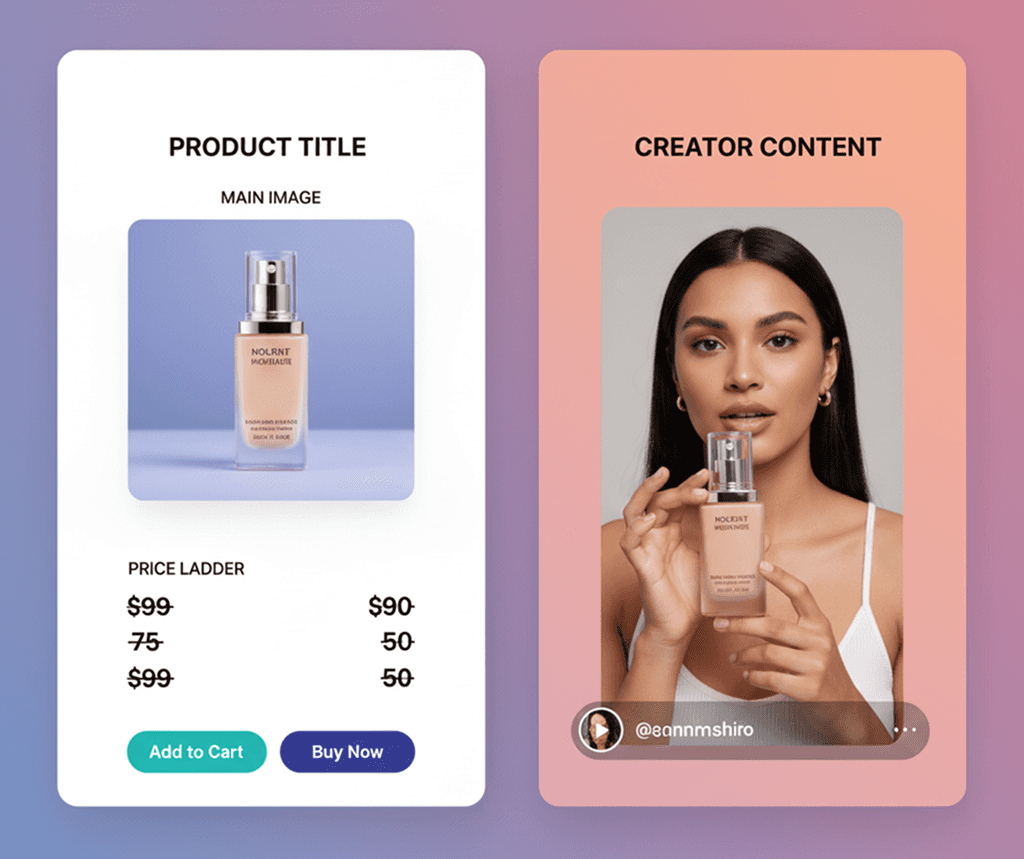
Step one is to embrace higher average order values without sacrificing velocity. Use price ladders and bundles to nudge customers toward premium variants while keeping an entry point that converts on cold traffic. If you need a quick primer on merchandising for conversion, revisit our take on product page optimization and messaging, then pressure test your value prop against the holiday learnings. Link: Product Page Optimization: A Masterclass in Boosting Online Sales

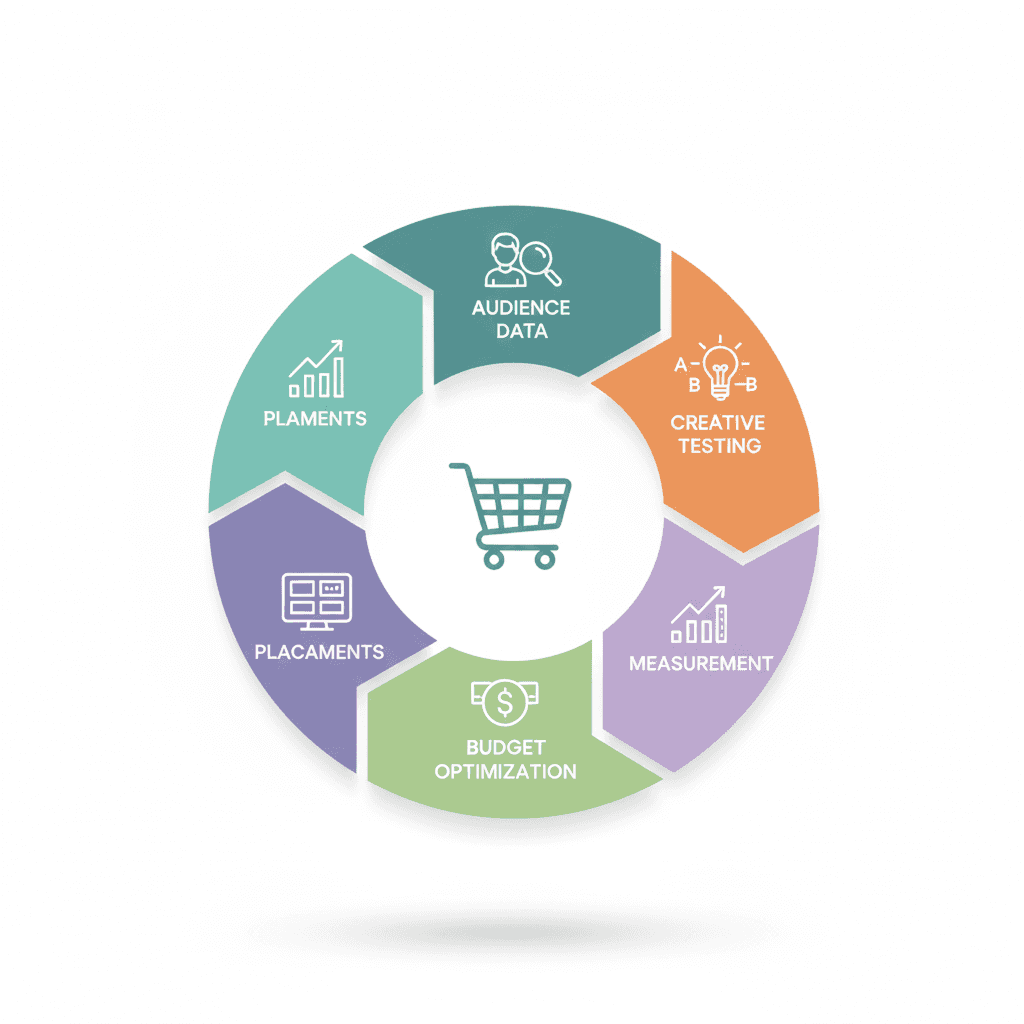
Step two is to make retail media a performance system instead of a spend bucket. Consolidate tests around audience, format, and creative rather than running scattered experiments. For a campaign structure that protects margin while ranking, our recent guide to profit first advertising is a helpful reference. Link: Amazon Advertising 2025 Playbook for Profit and Ranking

Step three is to align content, creators, and search. Short form video now influences retail media performance, not just top of funnel metrics. Start by tightening titles and imagery to win clicks from AI assisted shoppers who skim, then expand into creator whitelisting in your highest intent categories. If you are building the foundation, read our explanation of how AI is redefining personalization and where to start with dynamic content. Link: How AI Is Redefining Personalization in E-Commerce

Where XENA fits in

XENA Intelligence was built for this exact market. Our hourly optimization engine balances rank and profit as conditions change, our predictive analytics spot rising AOV opportunities before competitors pile in, and our expert team is available 24 by 7 when you need judgment on creative, bids, or inventory risk. Brands use XENA to forecast demand by price tier, auto rotate winning creatives, and push budget toward retail media placements that prove incrementality rather than clicks. If you are new to XENA, start with our overview of ad automation and how it links to creative testing and TACOS control. Link: Streamlining Success with Amazon Ad Automation

Practical next steps for Q1

Begin with a holiday postmortem that focuses on mix and margin instead of only revenue. Identify where AI driven discovery pushed traffic to your category and whether your content met those shoppers halfway. Tighten your price architecture, launch two or three creator powered videos per hero SKU, and move budget into retail media placements that demonstrate lift on new to brand customers. For more context on managing common e-commerce roadblocks as you scale, here is a concise rundown of the biggest obstacles and how to navigate them. Link: Top 5 problems faced by eCommerce brands

The bottom line

Holiday 2025 affirmed that shoppers will spend more when they can find the right product fast and feel confident in perceived value. AI discovery and retail media will keep accelerating in 2026, so the winners will be the brands that run tighter experiments, measure incrementality, and build product pages that convert at higher price points. Treat your media plan as an integrated engine and let your analytics, creative, and pricing strategies reinforce each other. The upside is real and the tools exist to capture it.

The holiday season that reset expectations

Holiday 2025 was a turning point for online retail. Shoppers spent aggressively on Black Friday, with U.S. online sales hitting a record 11.8 billion according to Adobe’s analysis, while AI shopping assistants drove an exceptional surge in traffic and deal discovery. Reuters

Cyber Monday continued the pattern. Total online spend was projected at 14.2 billion, up 6 percent year over year, but with shoppers purchasing fewer items as average prices rose and consumers traded up to higher value goods. Peak spend clustered in the late evening window between 8 p.m. and 10 p.m., where activity spiked sharply. Investopedia

In several international markets, promotional momentum was also strong. Analysts reported double digit lifts for Black Friday online sales, supported by policy shifts and direct to consumer offers that nudged hesitant buyers to convert. The Economic Times


What changed under the hood

The common thread wasn’t just discounts. AI quietly became a frontline sales channel. Retailers and marketplaces deployed conversational search and smart guides that matched shoppers to the right products faster, which helped lift revenue even as order counts flattened. Reuters

At the same time, retail media continued to concentrate budgets. Forecasts show the channel expanding again into 2026, with most incremental spend flowing to a small set of marketplace ad networks. For brands, this bifurcation raises the stakes on creative testing, budget pacing, and incrementality measurement. EMARKETER

Social commerce and short video also tightened their grip on discovery. Global trend reports point to rapid retailer adoption of Instagram and TikTok across multiple regions, which means your product content and creator program are now core inputs into paid efficiency, not just awareness. DHL Group


The 2026 growth playbook

Step one is to embrace higher average order values without sacrificing velocity. Use price ladders and bundles to nudge customers toward premium variants while keeping an entry point that converts on cold traffic. If you need a quick primer on merchandising for conversion, revisit our take on product page optimization and messaging, then pressure test your value prop against the holiday learnings. Link: Product Page Optimization: A Masterclass in Boosting Online Sales

Step two is to make retail media a performance system instead of a spend bucket. Consolidate tests around audience, format, and creative rather than running scattered experiments. For a campaign structure that protects margin while ranking, our recent guide to profit first advertising is a helpful reference. Link: Amazon Advertising 2025 Playbook for Profit and Ranking

Step three is to align content, creators, and search. Short form video now influences retail media performance, not just top of funnel metrics. Start by tightening titles and imagery to win clicks from AI assisted shoppers who skim, then expand into creator whitelisting in your highest intent categories. If you are building the foundation, read our explanation of how AI is redefining personalization and where to start with dynamic content. Link: How AI Is Redefining Personalization in E-Commerce


Where XENA fits in

XENA Intelligence was built for this exact market. Our hourly optimization engine balances rank and profit as conditions change, our predictive analytics spot rising AOV opportunities before competitors pile in, and our expert team is available 24 by 7 when you need judgment on creative, bids, or inventory risk. Brands use XENA to forecast demand by price tier, auto rotate winning creatives, and push budget toward retail media placements that prove incrementality rather than clicks. If you are new to XENA, start with our overview of ad automation and how it links to creative testing and TACOS control. Link: Streamlining Success with Amazon Ad Automation

Practical next steps for Q1

Begin with a holiday postmortem that focuses on mix and margin instead of only revenue. Identify where AI driven discovery pushed traffic to your category and whether your content met those shoppers halfway. Tighten your price architecture, launch two or three creator powered videos per hero SKU, and move budget into retail media placements that demonstrate lift on new to brand customers. For more context on managing common e-commerce roadblocks as you scale, here is a concise rundown of the biggest obstacles and how to navigate them. Link: Top 5 problems faced by eCommerce brands

The bottom line

Holiday 2025 affirmed that shoppers will spend more when they can find the right product fast and feel confident in perceived value. AI discovery and retail media will keep accelerating in 2026, so the winners will be the brands that run tighter experiments, measure incrementality, and build product pages that convert at higher price points. Treat your media plan as an integrated engine and let your analytics, creative, and pricing strategies reinforce each other. The upside is real and the tools exist to capture it.
The holiday season that reset expectations

Holiday 2025 was a turning point for online retail. Shoppers spent aggressively on Black Friday, with U.S. online sales hitting a record 11.8 billion according to Adobe’s analysis, while AI shopping assistants drove an exceptional surge in traffic and deal discovery. Reuters

Cyber Monday continued the pattern. Total online spend was projected at 14.2 billion, up 6 percent year over year, but with shoppers purchasing fewer items as average prices rose and consumers traded up to higher value goods. Peak spend clustered in the late evening window between 8 p.m. and 10 p.m., where activity spiked sharply. Investopedia

In several international markets, promotional momentum was also strong. Analysts reported double digit lifts for Black Friday online sales, supported by policy shifts and direct to consumer offers that nudged hesitant buyers to convert. The Economic Times


What changed under the hood

The common thread wasn’t just discounts. AI quietly became a frontline sales channel. Retailers and marketplaces deployed conversational search and smart guides that matched shoppers to the right products faster, which helped lift revenue even as order counts flattened. Reuters

At the same time, retail media continued to concentrate budgets. Forecasts show the channel expanding again into 2026, with most incremental spend flowing to a small set of marketplace ad networks. For brands, this bifurcation raises the stakes on creative testing, budget pacing, and incrementality measurement. EMARKETER

Social commerce and short video also tightened their grip on discovery. Global trend reports point to rapid retailer adoption of Instagram and TikTok across multiple regions, which means your product content and creator program are now core inputs into paid efficiency, not just awareness. DHL Group


The 2026 growth playbook

Step one is to embrace higher average order values without sacrificing velocity. Use price ladders and bundles to nudge customers toward premium variants while keeping an entry point that converts on cold traffic. If you need a quick primer on merchandising for conversion, revisit our take on product page optimization and messaging, then pressure test your value prop against the holiday learnings. Link: Product Page Optimization: A Masterclass in Boosting Online Sales

Step two is to make retail media a performance system instead of a spend bucket. Consolidate tests around audience, format, and creative rather than running scattered experiments. For a campaign structure that protects margin while ranking, our recent guide to profit first advertising is a helpful reference. Link: Amazon Advertising 2025 Playbook for Profit and Ranking

Step three is to align content, creators, and search. Short form video now influences retail media performance, not just top of funnel metrics. Start by tightening titles and imagery to win clicks from AI assisted shoppers who skim, then expand into creator whitelisting in your highest intent categories. If you are building the foundation, read our explanation of how AI is redefining personalization and where to start with dynamic content. Link: How AI Is Redefining Personalization in E-Commerce


Where XENA fits in

XENA Intelligence was built for this exact market. Our hourly optimization engine balances rank and profit as conditions change, our predictive analytics spot rising AOV opportunities before competitors pile in, and our expert team is available 24 by 7 when you need judgment on creative, bids, or inventory risk. Brands use XENA to forecast demand by price tier, auto rotate winning creatives, and push budget toward retail media placements that prove incrementality rather than clicks. If you are new to XENA, start with our overview of ad automation and how it links to creative testing and TACOS control. Link: Streamlining Success with Amazon Ad Automation

Practical next steps for Q1

Begin with a holiday postmortem that focuses on mix and margin instead of only revenue. Identify where AI driven discovery pushed traffic to your category and whether your content met those shoppers halfway. Tighten your price architecture, launch two or three creator powered videos per hero SKU, and move budget into retail media placements that demonstrate lift on new to brand customers. For more context on managing common e-commerce roadblocks as you scale, here is a concise rundown of the biggest obstacles and how to navigate them. Link: Top 5 problems faced by eCommerce brands

The bottom line

Holiday 2025 affirmed that shoppers will spend more when they can find the right product fast and feel confident in perceived value. AI discovery and retail media will keep accelerating in 2026, so the winners will be the brands that run tighter experiments, measure incrementality, and build product pages that convert at higher price points. Treat your media plan as an integrated engine and let your analytics, creative, and pricing strategies reinforce each other. The upside is real and the tools exist to capture it.

The holiday season that reset expectations

Holiday 2025 was a turning point for online retail. Shoppers spent aggressively on Black Friday, with U.S. online sales hitting a record 11.8 billion according to Adobe’s analysis, while AI shopping assistants drove an exceptional surge in traffic and deal discovery. Reuters

Cyber Monday continued the pattern. Total online spend was projected at 14.2 billion, up 6 percent year over year, but with shoppers purchasing fewer items as average prices rose and consumers traded up to higher value goods. Peak spend clustered in the late evening window between 8 p.m. and 10 p.m., where activity spiked sharply. Investopedia

In several international markets, promotional momentum was also strong. Analysts reported double digit lifts for Black Friday online sales, supported by policy shifts and direct to consumer offers that nudged hesitant buyers to convert. The Economic Times


What changed under the hood

The common thread wasn’t just discounts. AI quietly became a frontline sales channel. Retailers and marketplaces deployed conversational search and smart guides that matched shoppers to the right products faster, which helped lift revenue even as order counts flattened. Reuters

At the same time, retail media continued to concentrate budgets. Forecasts show the channel expanding again into 2026, with most incremental spend flowing to a small set of marketplace ad networks. For brands, this bifurcation raises the stakes on creative testing, budget pacing, and incrementality measurement. EMARKETER

Social commerce and short video also tightened their grip on discovery. Global trend reports point to rapid retailer adoption of Instagram and TikTok across multiple regions, which means your product content and creator program are now core inputs into paid efficiency, not just awareness. DHL Group


The 2026 growth playbook

Step one is to embrace higher average order values without sacrificing velocity. Use price ladders and bundles to nudge customers toward premium variants while keeping an entry point that converts on cold traffic. If you need a quick primer on merchandising for conversion, revisit our take on product page optimization and messaging, then pressure test your value prop against the holiday learnings. Link: Product Page Optimization: A Masterclass in Boosting Online Sales

Step two is to make retail media a performance system instead of a spend bucket. Consolidate tests around audience, format, and creative rather than running scattered experiments. For a campaign structure that protects margin while ranking, our recent guide to profit first advertising is a helpful reference. Link: Amazon Advertising 2025 Playbook for Profit and Ranking

Step three is to align content, creators, and search. Short form video now influences retail media performance, not just top of funnel metrics. Start by tightening titles and imagery to win clicks from AI assisted shoppers who skim, then expand into creator whitelisting in your highest intent categories. If you are building the foundation, read our explanation of how AI is redefining personalization and where to start with dynamic content. Link: How AI Is Redefining Personalization in E-Commerce


Where XENA fits in

XENA Intelligence was built for this exact market. Our hourly optimization engine balances rank and profit as conditions change, our predictive analytics spot rising AOV opportunities before competitors pile in, and our expert team is available 24 by 7 when you need judgment on creative, bids, or inventory risk. Brands use XENA to forecast demand by price tier, auto rotate winning creatives, and push budget toward retail media placements that prove incrementality rather than clicks. If you are new to XENA, start with our overview of ad automation and how it links to creative testing and TACOS control. Link: Streamlining Success with Amazon Ad Automation

Practical next steps for Q1

Begin with a holiday postmortem that focuses on mix and margin instead of only revenue. Identify where AI driven discovery pushed traffic to your category and whether your content met those shoppers halfway. Tighten your price architecture, launch two or three creator powered videos per hero SKU, and move budget into retail media placements that demonstrate lift on new to brand customers. For more context on managing common e-commerce roadblocks as you scale, here is a concise rundown of the biggest obstacles and how to navigate them. Link: Top 5 problems faced by eCommerce brands

The bottom line

Holiday 2025 affirmed that shoppers will spend more when they can find the right product fast and feel confident in perceived value. AI discovery and retail media will keep accelerating in 2026, so the winners will be the brands that run tighter experiments, measure incrementality, and build product pages that convert at higher price points. Treat your media plan as an integrated engine and let your analytics, creative, and pricing strategies reinforce each other. The upside is real and the tools exist to capture it.

Ready to Take Your E-Commerce Growth to the Next Level?

Discover how XENA helps brands and sellers optimize listings, boost visibility, and stay ahead in competitive marketplaces.

Book a Meeting

2025 XENA Intelligence Inc.

Louisville, Kentucky

2025 XENA Intelligence Inc.

Louisville, Kentucky