
Introduction
If your listing is not earning the click in search results and winning the add to cart on the page, every other part of your strategy works harder for less. The good news is you can turn a flat listing into a top performer with better intent mapping, tighter copy, and visuals that answer buyer objections before they arise. In this playbook you will learn how to rebuild each element of your listing so it ranks for the right terms and converts consistently. If you are just getting started and still setting up your seller presence, bookmark this XENA guide on how to sell on Amazon for free and come back once you are ready to optimize, because the steps below assume your catalog is live. You can also skim XENA’s plain language walkthrough of account types and first moves in the same getting started guide.
Get the title doing real work
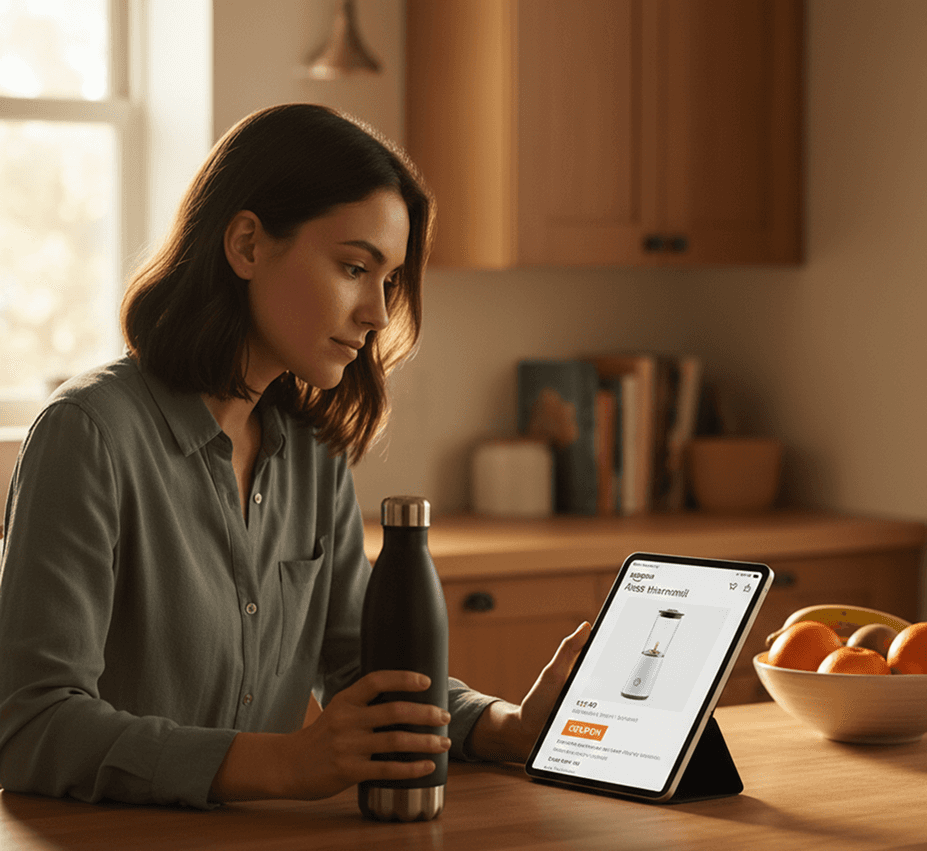
Your title is the first full sentence a shopper reads in search results. It needs to align with high intent search terms while remaining readable on mobile. Start with your primary buyer intent phrase and fold in two secondary phrases that describe form factor and use case. Resist the urge to cram every attribute. If you sell a stainless steel water bottle for gym and travel, a clean title that leads with the core phrase and then adds size and benefit will outperform a cluttered block of keywords. When you are done, check truncation on mobile and remove any redundant adjectives that do not change the decision. For more context on audience fit and marketplace nuance, this XENA explainer on the biggest challenges of selling on Amazon shows how crowded categories reshape how titles should read.
Bullets that answer questions before they become doubts
Shoppers skim bullets to reduce risk. Each line should remove a specific worry. One line should make sizing or compatibility obvious. One should handle materials or ingredients with clarity. One should provide a quick proof point such as a test result, warranty, or award. One should explain what happens after purchase such as onboarding, refills, or support. Keep the reading level simple and front load the benefit before the feature. If a bullet reads like a warehouse spec sheet, it is not helping. If it reads like a promise that can be kept, you are on the right track.
Descriptions and A plus content that tell a short story
Your product description and A plus modules are where you turn skimmers into buyers. Use the top module to restate your core value in one sentence, then guide the eye through three panels that show context of use, close up detail, and social proof. If you sell a kitchen tool, show the finished dish and the tool in hand instead of a floating product on white. Close with a comparison chart only if the options are truly different and the differences are visible at a glance. If you sell to business customers, learn how B2B buyers evaluate specs and compliance with XENA’s complete guide to Amazon Business, then adjust your content for that audience.
Images and video that carry the conversion load
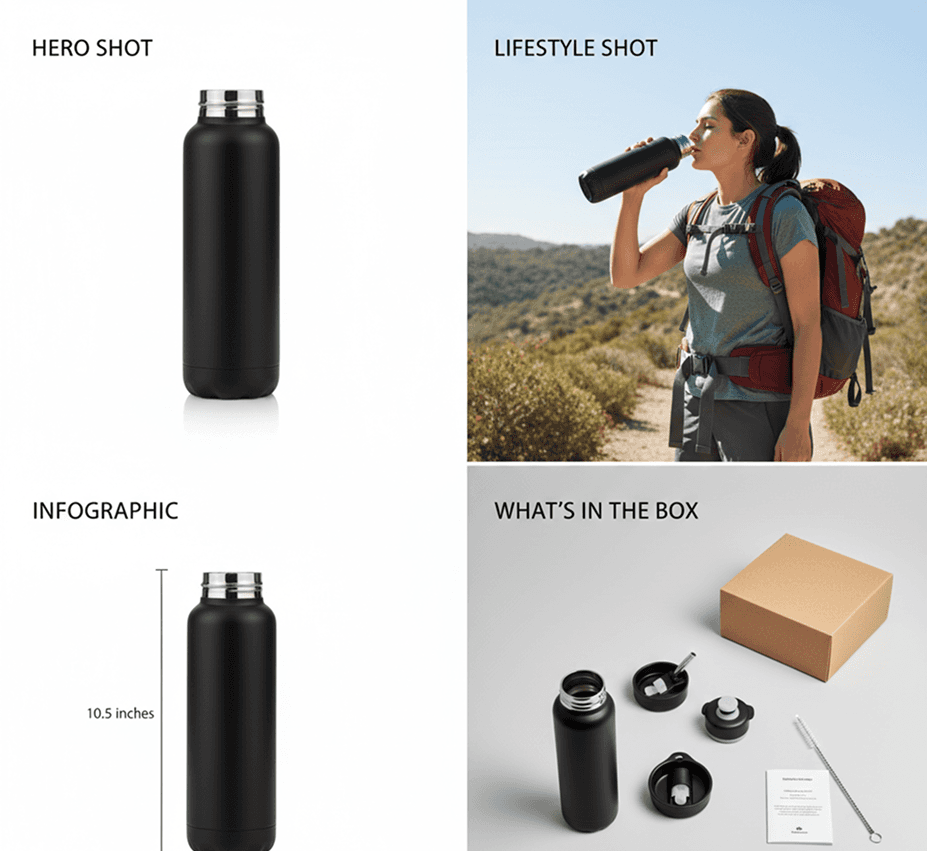
Your first image secures the click. Your next four images close the sale. Use one lifestyle image that shows scale in a real setting, one infographic that clarifies size and materials, one comparison shot that shows what comes in the box, and one benefit shot that shows the problem solved. Add a short video under forty five seconds that opens with the product in use, not with a logo bumper. Keep captions large and readable on a phone. Use natural light where possible and avoid heavy filters that change color accuracy.
Modern keyword strategy without the guesswork
Stop thinking of keywords as a dump of phrases and start thinking in clusters around buyer intents. Build a small set of anchor intents such as best budget, fastest, quietest, travel size, kid safe, or pet friendly. Then place those intents in the title, bullets, and back end search terms according to their importance. Track which phrases actually drive sessions and conversion, not just rank. Hourly and daily shifts now matter as categories move faster. This is exactly where the XENA Listing Optimizer helps. It monitors search term performance, suggests copy adjustments by intent cluster, and checks your image set against conversion best practices. For adjacent traffic strategies that influence on page storytelling, explore XENA’s take on Amazon and social media partnerships and apply those insights to your content plan.
Price, coupons, and perceived value on the page
On Amazon, price is a message. A small coupon or a time bound deal badge can lift perceived value, but it only works if the page already communicates quality and fit. If your primary image looks generic or your bullets are vague, a coupon just trains shoppers to expect a discount next time. Use pricing tactics to amplify a message of quality and reliability, not to make up for weak content.
Reviews and Q and A as content inputs
Treat reviews and questions as your ongoing copy brief. If buyers keep asking whether the charger is included, add an image that shows what is in the box and update your bullets. If reviewers praise a specific benefit, move that benefit higher in your bullets and rework the title to highlight it. When you reply to questions, write answers that can live in your description with minimal editing. Over time the page will evolve from guesswork to a reflection of what customers actually care about.
Mobile first layout checks
Most shoppers meet your listing on a phone. Read your title on a small screen and see where it cuts off. Tap through images and see if captions are readable without pinch zoom. Play your video with the sound off and confirm that the first two seconds show the product solving a problem. If any of these fail the glance test, fix them before you chase more traffic.
When to refresh and how to measure
Treat listing optimization as a rhythm. Set a monthly review to compare sessions, click through rate, and unit session percentage before and after any change. Only change one or two elements at a time so you can attribute impact. If you operate across consumer and business audiences, revisit your A plus story seasonally and swap modules that match the current buying cycle. For a broader checkpoint on how marketplace shifts affect your plan, revisit XENA’s overview of the biggest challenges for Amazon sellers and use it as a quick audit.
Conclusion
Winning on Amazon starts with a listing that speaks clearly to intent and looks great on a phone. If you get the title, bullets, visuals, and story right, the rest of your growth motions become easier. Use data to decide what to say, then use creative to make it convincing. When you are ready to scale, plug your listing into the XENA Listing Optimizer so every word and image keeps earning its spot.
Helpful XENA reads
Start with the essentials in the guide to selling on Amazon for free.
Plan for business buyers with the Amazon Business guide.
Tune your traffic narrative with insights on Amazon and social media partnerships.
Pressure test your strategy with the top challenges for Amazon sellers.

Introduction
If your listing is not earning the click in search results and winning the add to cart on the page, every other part of your strategy works harder for less. The good news is you can turn a flat listing into a top performer with better intent mapping, tighter copy, and visuals that answer buyer objections before they arise. In this playbook you will learn how to rebuild each element of your listing so it ranks for the right terms and converts consistently. If you are just getting started and still setting up your seller presence, bookmark this XENA guide on how to sell on Amazon for free and come back once you are ready to optimize, because the steps below assume your catalog is live. You can also skim XENA’s plain language walkthrough of account types and first moves in the same getting started guide.

Get the title doing real work
Your title is the first full sentence a shopper reads in search results. It needs to align with high intent search terms while remaining readable on mobile. Start with your primary buyer intent phrase and fold in two secondary phrases that describe form factor and use case. Resist the urge to cram every attribute. If you sell a stainless steel water bottle for gym and travel, a clean title that leads with the core phrase and then adds size and benefit will outperform a cluttered block of keywords. When you are done, check truncation on mobile and remove any redundant adjectives that do not change the decision. For more context on audience fit and marketplace nuance, this XENA explainer on the biggest challenges of selling on Amazon shows how crowded categories reshape how titles should read.
Bullets that answer questions before they become doubts
Shoppers skim bullets to reduce risk. Each line should remove a specific worry. One line should make sizing or compatibility obvious. One should handle materials or ingredients with clarity. One should provide a quick proof point such as a test result, warranty, or award. One should explain what happens after purchase such as onboarding, refills, or support. Keep the reading level simple and front load the benefit before the feature. If a bullet reads like a warehouse spec sheet, it is not helping. If it reads like a promise that can be kept, you are on the right track.
Descriptions and A plus content that tell a short story
Your product description and A plus modules are where you turn skimmers into buyers. Use the top module to restate your core value in one sentence, then guide the eye through three panels that show context of use, close up detail, and social proof. If you sell a kitchen tool, show the finished dish and the tool in hand instead of a floating product on white. Close with a comparison chart only if the options are truly different and the differences are visible at a glance. If you sell to business customers, learn how B2B buyers evaluate specs and compliance with XENA’s complete guide to Amazon Business, then adjust your content for that audience.

Images and video that carry the conversion load
Your first image secures the click. Your next four images close the sale. Use one lifestyle image that shows scale in a real setting, one infographic that clarifies size and materials, one comparison shot that shows what comes in the box, and one benefit shot that shows the problem solved. Add a short video under forty five seconds that opens with the product in use, not with a logo bumper. Keep captions large and readable on a phone. Use natural light where possible and avoid heavy filters that change color accuracy.
Modern keyword strategy without the guesswork
Stop thinking of keywords as a dump of phrases and start thinking in clusters around buyer intents. Build a small set of anchor intents such as best budget, fastest, quietest, travel size, kid safe, or pet friendly. Then place those intents in the title, bullets, and back end search terms according to their importance. Track which phrases actually drive sessions and conversion, not just rank. Hourly and daily shifts now matter as categories move faster. This is exactly where the XENA Listing Optimizer helps. It monitors search term performance, suggests copy adjustments by intent cluster, and checks your image set against conversion best practices. For adjacent traffic strategies that influence on page storytelling, explore XENA’s take on Amazon and social media partnerships and apply those insights to your content plan.
Price, coupons, and perceived value on the page
On Amazon, price is a message. A small coupon or a time bound deal badge can lift perceived value, but it only works if the page already communicates quality and fit. If your primary image looks generic or your bullets are vague, a coupon just trains shoppers to expect a discount next time. Use pricing tactics to amplify a message of quality and reliability, not to make up for weak content.
Reviews and Q and A as content inputs
Treat reviews and questions as your ongoing copy brief. If buyers keep asking whether the charger is included, add an image that shows what is in the box and update your bullets. If reviewers praise a specific benefit, move that benefit higher in your bullets and rework the title to highlight it. When you reply to questions, write answers that can live in your description with minimal editing. Over time the page will evolve from guesswork to a reflection of what customers actually care about.
Mobile first layout checks
Most shoppers meet your listing on a phone. Read your title on a small screen and see where it cuts off. Tap through images and see if captions are readable without pinch zoom. Play your video with the sound off and confirm that the first two seconds show the product solving a problem. If any of these fail the glance test, fix them before you chase more traffic.
When to refresh and how to measure
Treat listing optimization as a rhythm. Set a monthly review to compare sessions, click through rate, and unit session percentage before and after any change. Only change one or two elements at a time so you can attribute impact. If you operate across consumer and business audiences, revisit your A plus story seasonally and swap modules that match the current buying cycle. For a broader checkpoint on how marketplace shifts affect your plan, revisit XENA’s overview of the biggest challenges for Amazon sellers and use it as a quick audit.
Conclusion
Winning on Amazon starts with a listing that speaks clearly to intent and looks great on a phone. If you get the title, bullets, visuals, and story right, the rest of your growth motions become easier. Use data to decide what to say, then use creative to make it convincing. When you are ready to scale, plug your listing into the XENA Listing Optimizer so every word and image keeps earning its spot.
Helpful XENA reads
Start with the essentials in the guide to selling on Amazon for free.
Plan for business buyers with the Amazon Business guide.
Tune your traffic narrative with insights on Amazon and social media partnerships.
Pressure test your strategy with the top challenges for Amazon sellers.
Introduction
If your listing is not earning the click in search results and winning the add to cart on the page, every other part of your strategy works harder for less. The good news is you can turn a flat listing into a top performer with better intent mapping, tighter copy, and visuals that answer buyer objections before they arise. In this playbook you will learn how to rebuild each element of your listing so it ranks for the right terms and converts consistently. If you are just getting started and still setting up your seller presence, bookmark this XENA guide on how to sell on Amazon for free and come back once you are ready to optimize, because the steps below assume your catalog is live. You can also skim XENA’s plain language walkthrough of account types and first moves in the same getting started guide.

Get the title doing real work
Your title is the first full sentence a shopper reads in search results. It needs to align with high intent search terms while remaining readable on mobile. Start with your primary buyer intent phrase and fold in two secondary phrases that describe form factor and use case. Resist the urge to cram every attribute. If you sell a stainless steel water bottle for gym and travel, a clean title that leads with the core phrase and then adds size and benefit will outperform a cluttered block of keywords. When you are done, check truncation on mobile and remove any redundant adjectives that do not change the decision. For more context on audience fit and marketplace nuance, this XENA explainer on the biggest challenges of selling on Amazon shows how crowded categories reshape how titles should read.
Bullets that answer questions before they become doubts
Shoppers skim bullets to reduce risk. Each line should remove a specific worry. One line should make sizing or compatibility obvious. One should handle materials or ingredients with clarity. One should provide a quick proof point such as a test result, warranty, or award. One should explain what happens after purchase such as onboarding, refills, or support. Keep the reading level simple and front load the benefit before the feature. If a bullet reads like a warehouse spec sheet, it is not helping. If it reads like a promise that can be kept, you are on the right track.
Descriptions and A plus content that tell a short story
Your product description and A plus modules are where you turn skimmers into buyers. Use the top module to restate your core value in one sentence, then guide the eye through three panels that show context of use, close up detail, and social proof. If you sell a kitchen tool, show the finished dish and the tool in hand instead of a floating product on white. Close with a comparison chart only if the options are truly different and the differences are visible at a glance. If you sell to business customers, learn how B2B buyers evaluate specs and compliance with XENA’s complete guide to Amazon Business, then adjust your content for that audience.

Images and video that carry the conversion load
Your first image secures the click. Your next four images close the sale. Use one lifestyle image that shows scale in a real setting, one infographic that clarifies size and materials, one comparison shot that shows what comes in the box, and one benefit shot that shows the problem solved. Add a short video under forty five seconds that opens with the product in use, not with a logo bumper. Keep captions large and readable on a phone. Use natural light where possible and avoid heavy filters that change color accuracy.
Modern keyword strategy without the guesswork
Stop thinking of keywords as a dump of phrases and start thinking in clusters around buyer intents. Build a small set of anchor intents such as best budget, fastest, quietest, travel size, kid safe, or pet friendly. Then place those intents in the title, bullets, and back end search terms according to their importance. Track which phrases actually drive sessions and conversion, not just rank. Hourly and daily shifts now matter as categories move faster. This is exactly where the XENA Listing Optimizer helps. It monitors search term performance, suggests copy adjustments by intent cluster, and checks your image set against conversion best practices. For adjacent traffic strategies that influence on page storytelling, explore XENA’s take on Amazon and social media partnerships and apply those insights to your content plan.
Price, coupons, and perceived value on the page
On Amazon, price is a message. A small coupon or a time bound deal badge can lift perceived value, but it only works if the page already communicates quality and fit. If your primary image looks generic or your bullets are vague, a coupon just trains shoppers to expect a discount next time. Use pricing tactics to amplify a message of quality and reliability, not to make up for weak content.
Reviews and Q and A as content inputs
Treat reviews and questions as your ongoing copy brief. If buyers keep asking whether the charger is included, add an image that shows what is in the box and update your bullets. If reviewers praise a specific benefit, move that benefit higher in your bullets and rework the title to highlight it. When you reply to questions, write answers that can live in your description with minimal editing. Over time the page will evolve from guesswork to a reflection of what customers actually care about.
Mobile first layout checks
Most shoppers meet your listing on a phone. Read your title on a small screen and see where it cuts off. Tap through images and see if captions are readable without pinch zoom. Play your video with the sound off and confirm that the first two seconds show the product solving a problem. If any of these fail the glance test, fix them before you chase more traffic.
When to refresh and how to measure
Treat listing optimization as a rhythm. Set a monthly review to compare sessions, click through rate, and unit session percentage before and after any change. Only change one or two elements at a time so you can attribute impact. If you operate across consumer and business audiences, revisit your A plus story seasonally and swap modules that match the current buying cycle. For a broader checkpoint on how marketplace shifts affect your plan, revisit XENA’s overview of the biggest challenges for Amazon sellers and use it as a quick audit.
Conclusion
Winning on Amazon starts with a listing that speaks clearly to intent and looks great on a phone. If you get the title, bullets, visuals, and story right, the rest of your growth motions become easier. Use data to decide what to say, then use creative to make it convincing. When you are ready to scale, plug your listing into the XENA Listing Optimizer so every word and image keeps earning its spot.
Helpful XENA reads
Start with the essentials in the guide to selling on Amazon for free.
Plan for business buyers with the Amazon Business guide.
Tune your traffic narrative with insights on Amazon and social media partnerships.
Pressure test your strategy with the top challenges for Amazon sellers.

Introduction
If your listing is not earning the click in search results and winning the add to cart on the page, every other part of your strategy works harder for less. The good news is you can turn a flat listing into a top performer with better intent mapping, tighter copy, and visuals that answer buyer objections before they arise. In this playbook you will learn how to rebuild each element of your listing so it ranks for the right terms and converts consistently. If you are just getting started and still setting up your seller presence, bookmark this XENA guide on how to sell on Amazon for free and come back once you are ready to optimize, because the steps below assume your catalog is live. You can also skim XENA’s plain language walkthrough of account types and first moves in the same getting started guide.

Get the title doing real work
Your title is the first full sentence a shopper reads in search results. It needs to align with high intent search terms while remaining readable on mobile. Start with your primary buyer intent phrase and fold in two secondary phrases that describe form factor and use case. Resist the urge to cram every attribute. If you sell a stainless steel water bottle for gym and travel, a clean title that leads with the core phrase and then adds size and benefit will outperform a cluttered block of keywords. When you are done, check truncation on mobile and remove any redundant adjectives that do not change the decision. For more context on audience fit and marketplace nuance, this XENA explainer on the biggest challenges of selling on Amazon shows how crowded categories reshape how titles should read.
Bullets that answer questions before they become doubts
Shoppers skim bullets to reduce risk. Each line should remove a specific worry. One line should make sizing or compatibility obvious. One should handle materials or ingredients with clarity. One should provide a quick proof point such as a test result, warranty, or award. One should explain what happens after purchase such as onboarding, refills, or support. Keep the reading level simple and front load the benefit before the feature. If a bullet reads like a warehouse spec sheet, it is not helping. If it reads like a promise that can be kept, you are on the right track.
Descriptions and A plus content that tell a short story
Your product description and A plus modules are where you turn skimmers into buyers. Use the top module to restate your core value in one sentence, then guide the eye through three panels that show context of use, close up detail, and social proof. If you sell a kitchen tool, show the finished dish and the tool in hand instead of a floating product on white. Close with a comparison chart only if the options are truly different and the differences are visible at a glance. If you sell to business customers, learn how B2B buyers evaluate specs and compliance with XENA’s complete guide to Amazon Business, then adjust your content for that audience.

Images and video that carry the conversion load
Your first image secures the click. Your next four images close the sale. Use one lifestyle image that shows scale in a real setting, one infographic that clarifies size and materials, one comparison shot that shows what comes in the box, and one benefit shot that shows the problem solved. Add a short video under forty five seconds that opens with the product in use, not with a logo bumper. Keep captions large and readable on a phone. Use natural light where possible and avoid heavy filters that change color accuracy.
Modern keyword strategy without the guesswork
Stop thinking of keywords as a dump of phrases and start thinking in clusters around buyer intents. Build a small set of anchor intents such as best budget, fastest, quietest, travel size, kid safe, or pet friendly. Then place those intents in the title, bullets, and back end search terms according to their importance. Track which phrases actually drive sessions and conversion, not just rank. Hourly and daily shifts now matter as categories move faster. This is exactly where the XENA Listing Optimizer helps. It monitors search term performance, suggests copy adjustments by intent cluster, and checks your image set against conversion best practices. For adjacent traffic strategies that influence on page storytelling, explore XENA’s take on Amazon and social media partnerships and apply those insights to your content plan.
Price, coupons, and perceived value on the page
On Amazon, price is a message. A small coupon or a time bound deal badge can lift perceived value, but it only works if the page already communicates quality and fit. If your primary image looks generic or your bullets are vague, a coupon just trains shoppers to expect a discount next time. Use pricing tactics to amplify a message of quality and reliability, not to make up for weak content.
Reviews and Q and A as content inputs
Treat reviews and questions as your ongoing copy brief. If buyers keep asking whether the charger is included, add an image that shows what is in the box and update your bullets. If reviewers praise a specific benefit, move that benefit higher in your bullets and rework the title to highlight it. When you reply to questions, write answers that can live in your description with minimal editing. Over time the page will evolve from guesswork to a reflection of what customers actually care about.
Mobile first layout checks
Most shoppers meet your listing on a phone. Read your title on a small screen and see where it cuts off. Tap through images and see if captions are readable without pinch zoom. Play your video with the sound off and confirm that the first two seconds show the product solving a problem. If any of these fail the glance test, fix them before you chase more traffic.
When to refresh and how to measure
Treat listing optimization as a rhythm. Set a monthly review to compare sessions, click through rate, and unit session percentage before and after any change. Only change one or two elements at a time so you can attribute impact. If you operate across consumer and business audiences, revisit your A plus story seasonally and swap modules that match the current buying cycle. For a broader checkpoint on how marketplace shifts affect your plan, revisit XENA’s overview of the biggest challenges for Amazon sellers and use it as a quick audit.
Conclusion
Winning on Amazon starts with a listing that speaks clearly to intent and looks great on a phone. If you get the title, bullets, visuals, and story right, the rest of your growth motions become easier. Use data to decide what to say, then use creative to make it convincing. When you are ready to scale, plug your listing into the XENA Listing Optimizer so every word and image keeps earning its spot.
Helpful XENA reads
Start with the essentials in the guide to selling on Amazon for free.
Plan for business buyers with the Amazon Business guide.
Tune your traffic narrative with insights on Amazon and social media partnerships.
Pressure test your strategy with the top challenges for Amazon sellers.
Trending Blogs

The 2026 Amazon PPC Growth Stack: Creative speed, profit control, and hourly optimization

The 2026 Amazon PPC Growth Stack: Creative speed, profit control, and hourly optimization

The 2026 Amazon PPC Growth Stack: Creative speed, profit control, and hourly optimization

The 2026 Amazon PPC Growth Stack: Creative speed, profit control, and hourly optimization

Win December on Amazon: A Last-Mile Playbook for Holiday Sales

Win December on Amazon: A Last-Mile Playbook for Holiday Sales

Win December on Amazon: A Last-Mile Playbook for Holiday Sales

Win December on Amazon: A Last-Mile Playbook for Holiday Sales

The 2026 Product Listing Playbook: Content That Wins Clicks and Closes Carts

The 2026 Product Listing Playbook: Content That Wins Clicks and Closes Carts

The 2026 Product Listing Playbook: Content That Wins Clicks and Closes Carts